

Facial Volume Loss
Volume loss in the face. Fat pads and bone thin.
A gaunt face can develop at any weight. Cheeks flatten and sit lower, temples narrow, and a shadow forms under the eyes. What patients call hollow cheeks is fat pads that have slid downward and bone that has thinned underneath them, so the face has less support holding it up.

Facial Volume Loss
Volume loss in the face. Fat pads and bone thin.
A gaunt face can develop at any weight. Cheeks flatten and sit lower, temples narrow, and a shadow forms under the eyes. What patients call hollow cheeks is fat pads that have slid downward and bone that has thinned underneath them, so the face has less support holding it up.
CONCERN & CAUSES
Where the Volume Goes, Zone by Zone
Most people come in saying they look drawn and cannot say why. Volume leaves in zones, so the temples, the cheeks and the jawline each change on their own schedule. Rapid weight loss speeds it along, and so do years of sun. A sudden or one-sided change is worth a visit to your physician before any aesthetic treatment.
01
Temples Go Hollow Early
The temples usually go first. The fat pad over them thins, the sides of the forehead sink slightly inward, and the upper face narrows. It is the change that makes a face read gaunt at the top while your weight has not moved an ounce.
02
Cheek Pad Slides Down
The cheek fat pad descends as the ligaments holding it loosen. The high point of the cheek ends up low, the midface flattens, and the fold beside the mouth deepens even though the crease itself has changed little. This is the zone people call hollow cheeks.
03
A Groove at the Eye Socket
Bone recedes at the eye socket while the cheek fat slides away from it, and a groove opens between the two. The groove casts a fixed shadow that does not shift with the light, which is why a hollow under-eye reads as tiredness even on a rested face.
04
Lip Border, Chin and Jaw
The lip border loses its crispness and the corners start to sit lower. Below that, bone change at the chin and jaw draws the lower face inward, and fat pads that have dropped read as early jowls along an edge that used to look sharp.
Treatment Benefits
Volume Restored in Sequence Across Visits
The whole face is mapped before any zone is supported. Cheeks and temples usually come first, because support there lifts the tissue that folds lower down. Catherine Curtin, MSN, FNP-C has nearly 20 years in aesthetic medicine.

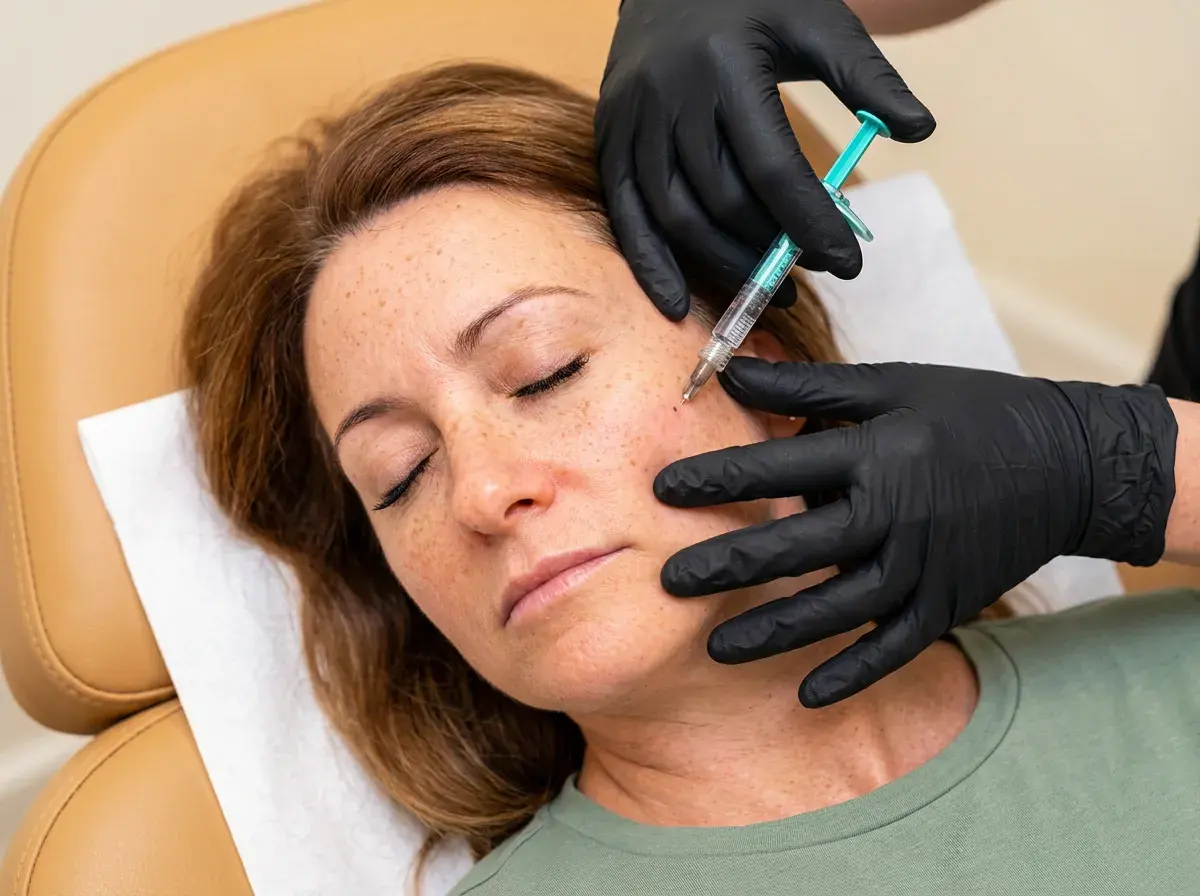
Dermal Filler
A gel made from hyaluronic acid, placed in mapped amounts against bone and beneath fat pads to put back support that has moved or thinned.
Sculptra Biostimulator
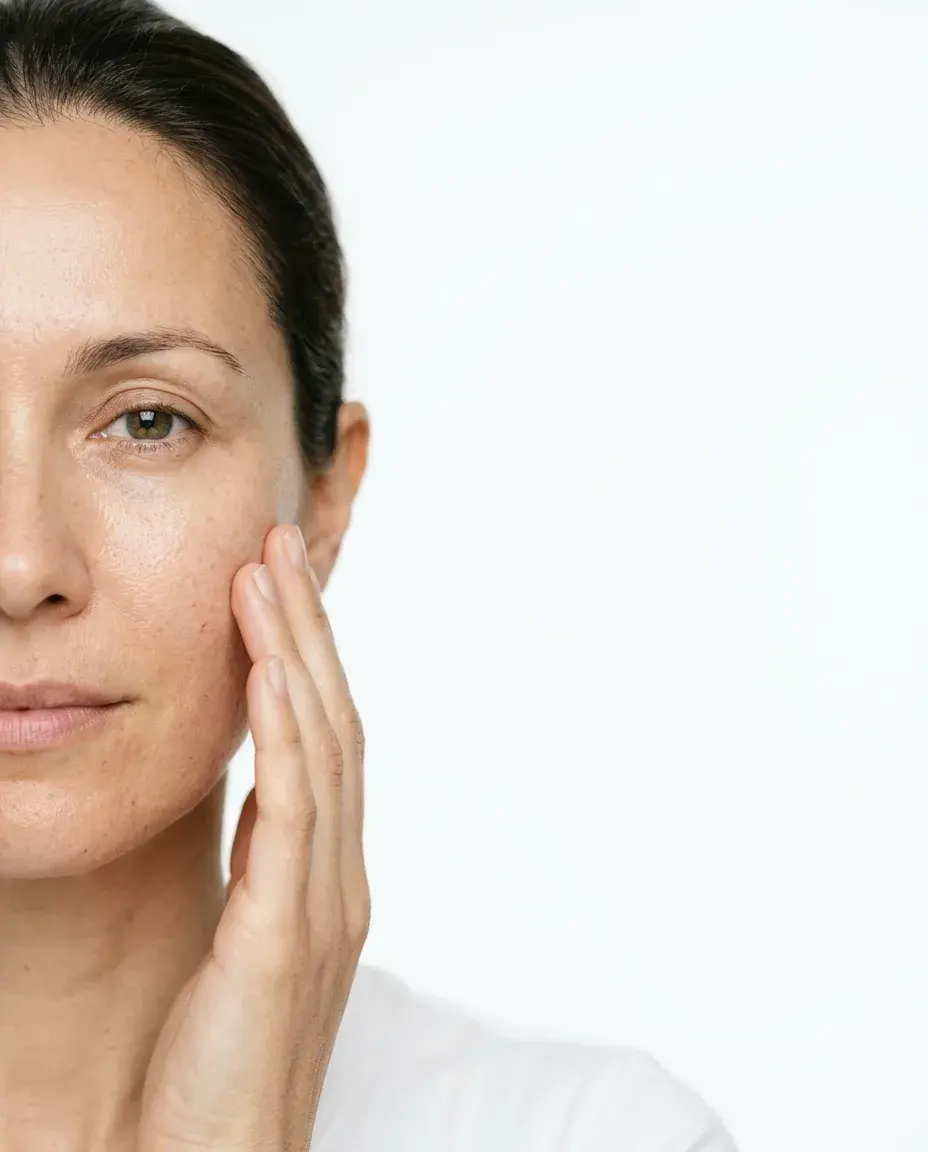
An injectable that works by stimulating your own collagen, given as a short series with the result building gradually across months.
What You Do Between Visits After Treatment
Filler and biostimulators restore support beneath the skin. The skin lying over that support keeps aging on its own, so daily sunscreen and a collagen-supporting routine are what keep the surface smooth over restored volume. These are the steps that happen at home.

Judge It Later

Treat for Firmness

Mind the Pressure

Support Between Visits

Weight Matters
Recommended Skincare Protocol
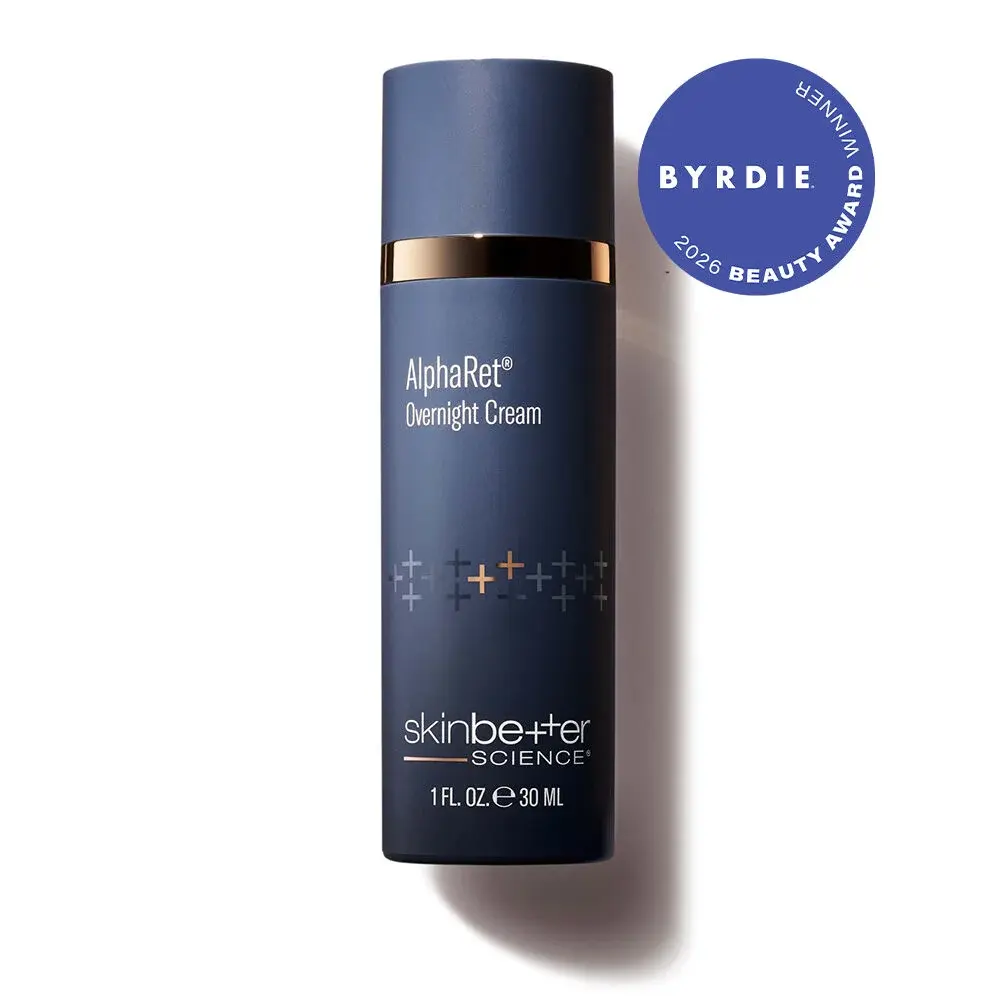
SkinBetter Science, Matched to Your Skin
SkinBetter Science is one of two lines stocked at the office, and its firming pieces are what Catherine reaches for after volume work. The strength is matched to your skin at your follow-up, so the surface stays calm while the structure underneath holds.









The Beauty Bank
What Membership Is For
Members pay less per unit.
Neuromodulators are $15.50 per unit. Catherine goes through the options at a complimentary consultation. There is no deposit. Members pay less per unit; the figures are on the Beauty Bank page.
One fee each month, with no deposit
Use it at either office, Bronxville or Bridgehampton
Your complimentary consultation is with Catherine Curtin, MSN, FNP-C



A full-face assessment comes before any single treatment.
Complimentary consultation. No deposit. A card holds the time.
FAQ
Common Questions About
Facial Volume Loss Treatment
Onset varies from person to person. The temples and the area under the eyes usually show it first, and genetics and sun exposure both affect how early that happens. Catherine grades which zones have changed at your consultation and sets the plan from there.
The hyaluronic acid lines used, Restylane and the RHA range, can both be dissolved. If a result does not feel like you, an injectable enzyme is placed at a follow-up visit to soften or remove what is there. Reversibility is one reason Catherine favors hyaluronic acid when balancing one zone against another.
Catherine works back toward the proportions you already had, a narrower target than filling every hollow. She places less product than a zone could hold, reviews the result at a follow-up visit, and adds only where more support is needed.
It depends on the product, the zone treated and how quickly your body metabolizes filler. Cheeks and the jawline generally hold longer than lips, which move all day. The timing of a smaller follow-up treatment is set with you once Catherine has reviewed how the result is holding.
Nothing collapses on you. Hyaluronic acid filler metabolizes gradually over months, so the face drifts back toward where it started at roughly the pace it would have taken anyway. Sculptra is the same story slower, because the collagen it prompted is your own. Stopping is a decision you can make at any visit.
Sometimes. The whole face is read first either way, because supporting one zone in isolation can make the untreated ones stand out more. Under-eyes are the clearest example: filling that hollow while the cheek behind it sits low often makes the area look heavier, so the cheek goes first and the under-eye follows.
Tightening firms lax skin. It does not put back what has gone. For a gaunt face the order usually runs the other way around: rebuild the support underneath with filler or a biostimulator, then use tightening so the skin sits smoothly over it.
It depends on which zones are supported and how much product a balanced result takes. Dermal filler is $750 to $900 per syringe. A biostimulator, Sculptra or Radiesse, is $850 per vial or syringe. There is no deposit. At your complimentary consultation Catherine gives you the whole range up front, so you can decide what to treat now and what to phase in later.
Yes. Volume restoration works well in your fifties, sixties and beyond. The plan looks different from the one written at thirty, because the skin lying over those zones is thinner now. The aim is unchanged: bring the support back and keep you recognizably yourself.
They rebuild support in different ways. Hyaluronic acid is a gel that holds tissue up from the moment it is placed, and it can be dissolved, which suits precise work on the cheek and jawline. Sculptra and Radiesse prompt your own collagen, so the change arrives gradually and works well when the thinning is diffuse across the face. The two are often used in sequence.