

Acne scars
The marks left behind by old acne.
Atrophic acne scars are small depressions left where inflammation destroyed collagen in the dermis. Ice pick, boxcar and rolling scars each sit at a different depth, and all of them catch light from the side, so the texture shows up more in some light than in others. A serum cannot reach that layer.

Acne scars
The marks left behind by old acne.
Atrophic acne scars are small depressions left where inflammation destroyed collagen in the dermis. Ice pick, boxcar and rolling scars each sit at a different depth, and all of them catch light from the side, so the texture shows up more in some light than in others. A serum cannot reach that layer.
CONCERN & CAUSES
Why Acne Leaves Scars
Inflammatory acne breaks down collagen in the dermis, and the repair that follows is rarely even. Where too little rebuilds, the surface above it sinks. That is an atrophic scar: lost tissue, the opposite of raised hypertrophic and keloid scarring. A cream on top of a deficit that deep does little.
01
Ice pick scars
Narrow and deep, closer to a puncture than a dip. They go further into the dermis than the other types, so they are treated at the deepest setting that can safely be used, and softening the edges is the realistic goal.
02
Boxcar scars
Wider depressions with sharp, defined edges, like small craters across the cheeks and temples. They sit at a moderate depth, which is the depth resurfacing and collagen-building work reaches most reliably.
03
Rolling scars
Shallow, soft waves that make a whole cheek look uneven before you can find a single scar. Underneath, fibrous bands tether the skin down and hold the surface low. Needling at depth works on those bands while new collagen builds beneath them.
04
Mixed texture
Alongside the pitting sit flat brown or red marks, post-inflammatory hyperpigmentation and post-inflammatory erythema, which are color changes in skin that is level with the surface. They fade on their own timeline and answer to different work than the dips do.
Treatment benefits
Layered Protocols for Pitted Acne Scars, Bronxville and Bridgehampton
Acne scars rarely respond to one tool. Catherine has nearly 20 years in aesthetic medicine, and she maps your scar types and the depth each one sits at before treatment begins. The sessions are then ordered from that map, so the deeper collagen work and the surface work each do their own job.
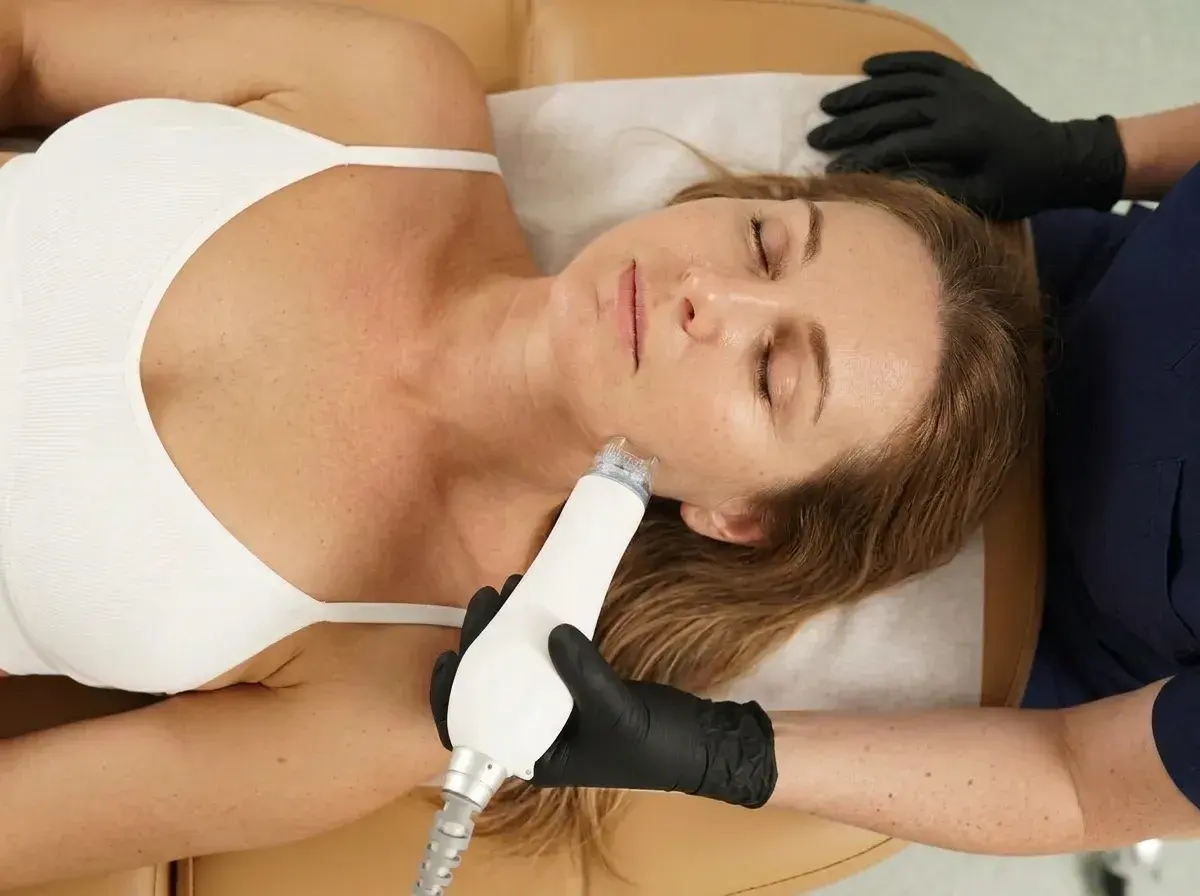
Vivace RF microneedling
Microneedling paired with radiofrequency energy, with the depth set area by area. A narrow ice pick scar and a soft rolling dip do not sit at the same level, so they do not get the same setting.
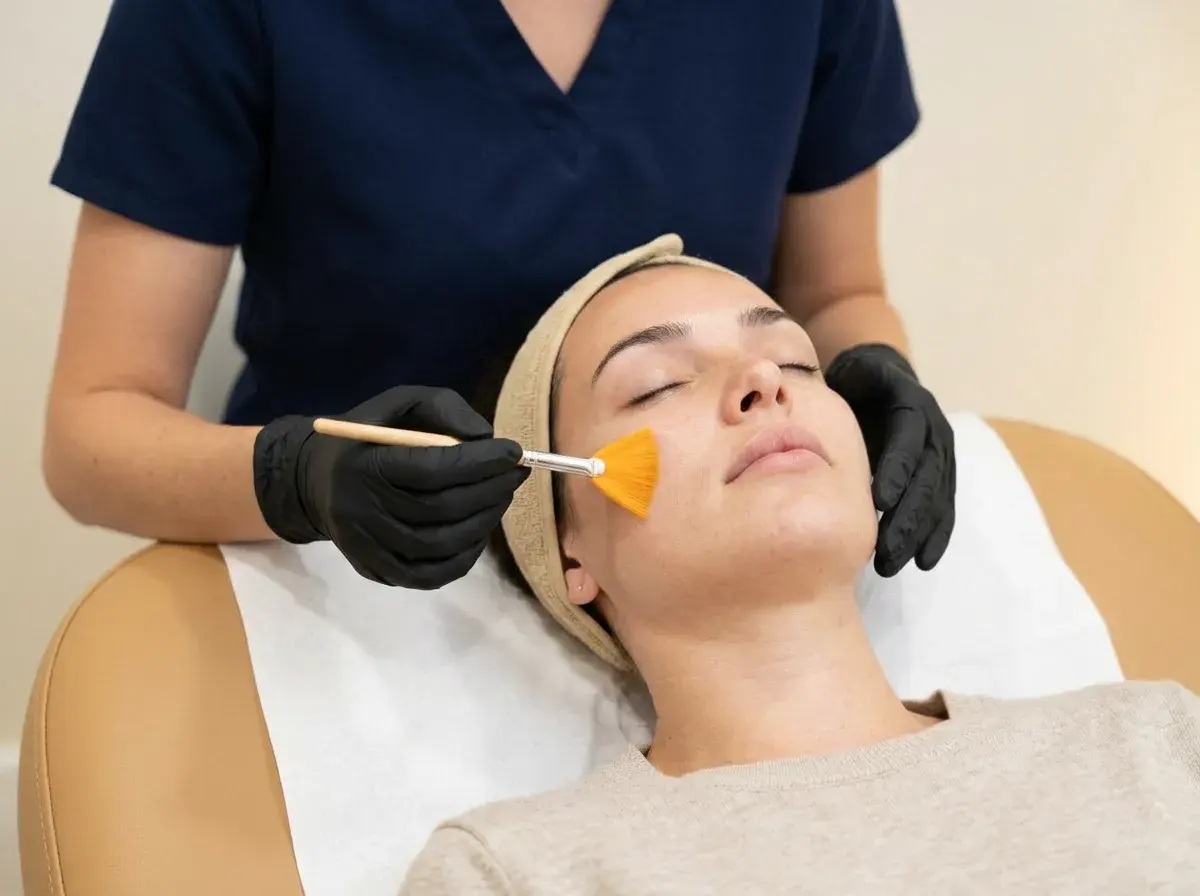
Chemical peels
An acid peel, chosen for your skin, that moves the top layers along faster and clears the flat discoloration old breakouts stamped into the surface.
Caring for Your Skin After Treatment
New collagen takes weeks to lay down, and it keeps building between visits. What you do at home in that window decides how much of each session you keep. None of it is complicated.

Cleanse gently

Treat texture daily

Support the rebuild

Mask support

Protect daily
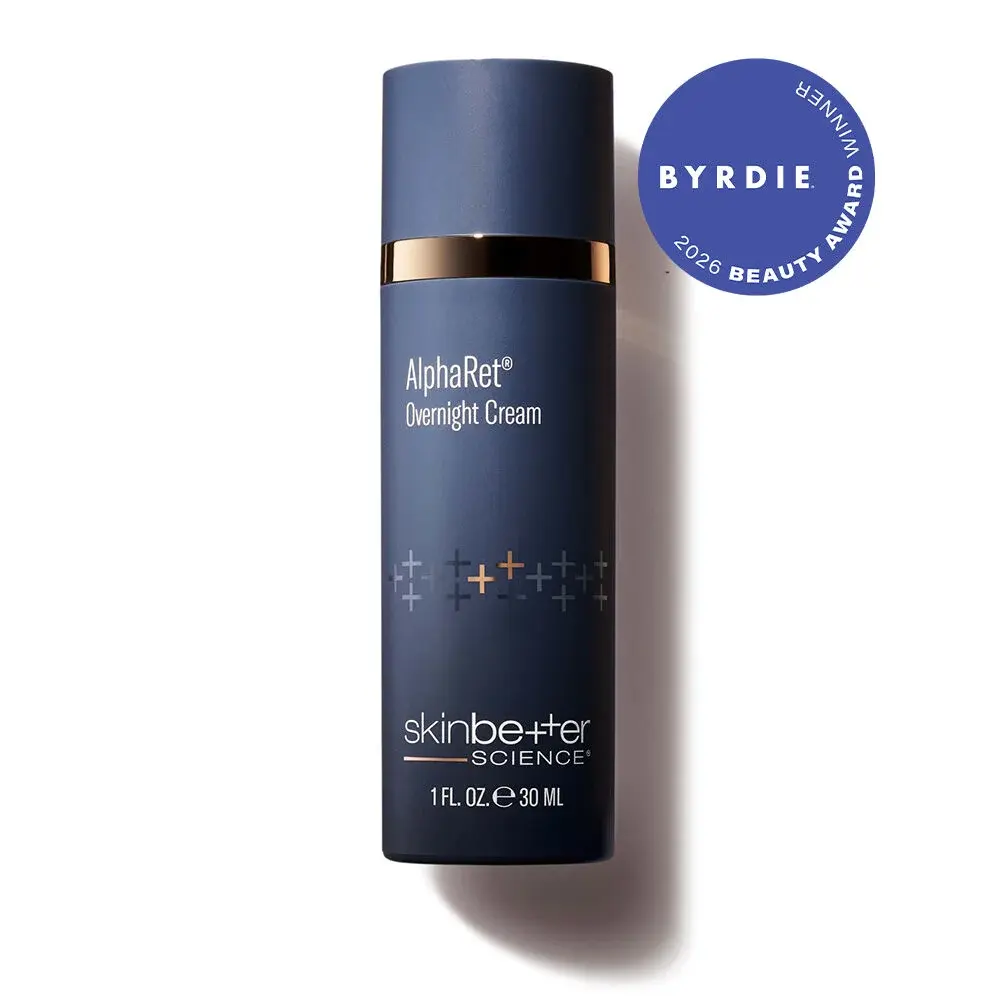
Recommended skincare support
Retinol for texture
A SkinBetter Science retinoid keeps surface turnover moving between visits, so the texture that was treated does not creep back before your next session.








The Beauty Bank
What Membership Is For
Members pay less per unit.
Neuromodulators are $15.50 per unit. Catherine goes through the options at a complimentary consultation. There is no deposit. Members pay less per unit; the figures are on the Beauty Bank page.
One fee each month, with no deposit
Use it at either office, Bronxville or Bridgehampton
Your complimentary consultation is with Catherine Curtin, MSN, FNP-C



A full-face assessment comes before any single treatment.
Complimentary consultation. No deposit. A card holds the time.
FAQ
Common Questions About
Acne Scar Treatment
Vivace RF microneedling is a main option for pitted scars, because the radiofrequency energy is delivered in the dermis where collagen was lost. For skin that also carries surface roughness and old discoloration, it is paired with a medical-grade peel. Which one leads depends on what the skin shows.
That depends on how deep your scars sit and how your skin answers the first session. Some people see a clear change early. Others need a longer series. Catherine gives you a realistic range at your consultation, then adjusts it as your skin shows more.
Deep atrophic scars are made shallower and less obvious, and that is the realistic result. Rebuilding collagen under a scar raises its floor toward the skin around it, so the dip casts less shadow. Narrow ice pick scars improve least. Catherine tells you at the consultation which of your scars she expects to move.
Ice pick scars are narrow and reach far down, more puncture than dip. Boxcar scars are wider, with defined edges. Rolling scars are soft waves caused by fibrous bands tethering the skin from underneath. Knowing which ones you have, and where they sit on your face, is most of the first visit.
Expect redness and mild swelling for a few days after RF microneedling, and some light flaking as a peel turns the surface over. How much depends on the depth used. At your consultation Catherine tells you what your own recovery is likely to look like, so you can plan around work and travel.
For most atrophic scarring, yes. The radiofrequency energy is delivered while the needles are at depth, so the collagen response reaches the dermal layer where the tissue was lost. For mild surface texture with no real pitting, a gentler standard microneedling series can be the better place to start.
Vivace RF microneedling is $900 per session, or $2,500 for three sessions, and scars improve across a series of three or more. Peel pricing and the number of sessions your scars need are set at your consultation, which is complimentary with no deposit.
They help with part of it. A medical-grade peel clears the flat brown and red discoloration old breakouts left on the surface and softens roughness, but it works above the depth where the pitting sits. Where a peel comes in the series depends on how much of your concern is color and how much is depth.
Active breakouts need to be under control before scars become the focus, so you are not treating old marks while new ones are still forming. At your visit Catherine looks at your skin and asks what your acne has been doing lately, then sets the timing for scar treatment with you.
Post-inflammatory pigment is a real risk in deeper skin tones, and Catherine asks about that history first. Energy and depth are set with it in mind, and daily sun protection is part of the plan from day one. If your skin marks easily, that is reflected in the settings from the first visit.