

Crow's feet
Crow's feet that stay after the smile.
Crow's feet are the fine lines that fan from the outer corner of each eye. They show first in photographs, when a smile ends and the fan holds its shape. Eye creams treat the surface and cannot reach the muscle that folds the skin, which is why the lines keep deepening. Treatment works on both the movement and the skin.

Crow's feet
Crow's feet that stay after the smile.
Crow's feet are the fine lines that fan from the outer corner of each eye. They show first in photographs, when a smile ends and the fan holds its shape. Eye creams treat the surface and cannot reach the muscle that folds the skin, which is why the lines keep deepening. Treatment works on both the movement and the skin.
CONCERN & CAUSES
Why crow's feet form
Crow's feet are the fine creases that fan out from the outer corner of each eye. The ones that need a smile to appear are dynamic lines. The ones holding their shape while your face rests are static. Which of the four drivers below is doing most of the work in your skin decides how they are treated.
01
Repeated muscle movement
The orbicularis oculi, the ring of muscle that circles each eye, tightens every time you laugh or squint into bright light. Decades of those small contractions pleat the same thin strip of skin, and eventually the fold stops letting go.
02
Thin, delicate skin
Eyelid skin is the thinnest on your face, and the skin just beside it is not far behind. It folds with very little effort and takes longer to spring back than your cheek does, so lines read deeper here while the rest of your skin still feels firm.
03
Sun exposure
Sunscreen usually stops short of the eyes. People are careful across the nose and cheeks, then skip the one area that squints all day in bright light. That UV breaks down collagen and elastin exactly where there is least of it to spare, and the lines etch in sooner.
04
Collagen loss with age
Collagen production declines with age, and the support beneath the skin thins with it. With less of that support, the skin at the outer eye creases more easily and holds the crease longer, until a line that once needed a smile shows up without one.
Treatment benefits
Softening Lines Beside the Eye While Your Smile Keeps Moving
Catherine Curtin, MSN, FNP-C, has nearly 20 years in aesthetic medicine. Botox or Dysport eases the muscle that folds the skin first, and Vivace RF microneedling treats the skin holding the line at a later visit.

Botox
A small dose of neuromodulator, set into the outer band of muscle that pleats your skin every time your eyes crease with a smile.

Looking After the Skin Around Your Eyes
Treatment eases what the muscle is doing. The skin beside your eyes still creases with movement and still takes UV every day, so daily care at home holds the result between visits. These are the habits Catherine asks for.

Cleanse gently

Treat daily

Hydrate the skin

Shade your eyes

Protect daily
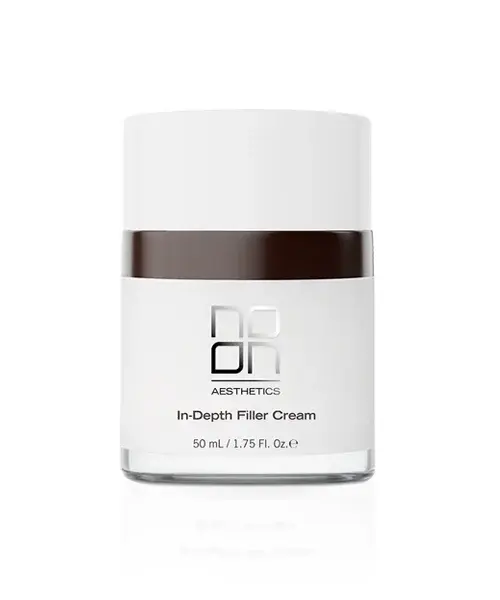
What Catherine sends home for the eye area
Targeted eye care
A focused eye treatment built around collagen support and hydration can soften how crow's feet, puffiness, and shadowing read. Used daily, it holds the thin skin steady and keeps the surface smoother through the stretch between appointments.









The Beauty Bank
What Membership Is For
Members pay less per unit.
Neuromodulators are $15.50 per unit. Catherine goes through the options at a complimentary consultation. There is no deposit. Members pay less per unit; the figures are on the Beauty Bank page.
One fee each month, with no deposit
Use it at either office, Bronxville or Bridgehampton
Your complimentary consultation is with Catherine Curtin, MSN, FNP-C



A full-face assessment comes before any single treatment.
Complimentary consultation. No deposit. A card holds the time.
FAQ
Common Questions About
Crow's Feet Treatment
The dose follows how strongly your muscles contract, where the lines sit at rest, and how much movement you want to keep. A lighter dose comes first and is refined at your follow-up. Botox and Dysport are $15.50 per unit, your consultation is complimentary, and there is no deposit.
Placed precisely, it should not. The band of muscle that crinkles the outer eye is treated, and the muscles that lift your cheeks and move your mouth keep doing their job. You should still laugh fully. Softer and more rested is the goal, with your expression intact.
Most people get a few months from a treatment around the eyes. These muscles are small and work constantly, so some patients find the effect fades here a little sooner than in the forehead. Booking the next session before the movement fully returns keeps the result even.
Not completely. A line driven by movement responds very well to a neuromodulator on its own. One already etched into the skin needs muscle work and skin treatment together, and that combination gives steady, visible softening over a series of visits while your expression stays your own.
A first softening usually shows within several days, and the full effect arrives at about two weeks. New crow's feet patients are seen again at that point so your eye movement can be checked, the lines reviewed, and any adjustment made.
Frozen, at the outer eye, looks like one flat corner on a face that is otherwise moving. The dose aims for softening, so the fan still shows faintly when you laugh hard and eases when you stop. That is deliberate, and it is also why the first dose is the lighter one.
Yes, and for a line already etched into the skin it is recommended. The neuromodulator is given first to ease the movement. The skin treatment follows at a later visit, usually Vivace radiofrequency microneedling or a gentle peel, with time left between the two. The spacing is set at your consultation.
Botox and Dysport are $15.50 a unit. The Beauty Bank page has the member figures. The total follows how many units your eye muscles need. Your consultation is complimentary and there is no deposit. Catherine gives a clear total range at that visit, based on your own anatomy.
Small pinpoint marks at the outer corner are the usual thing, and they fade quickly. Some people notice mild swelling in the same spot for a short while. Bruising around the eyes is possible, so tell Catherine if you have an event coming up and the appointment can be timed around it.
There is no fixed starting age. Some people begin in their late twenties while the fan still needs a smile to appear, others wait until the lines sit there at rest. The consultation looks at whether the crease is holding its shape and covers whether to treat now or watch it for a while.
Catherine stocks Botox, Dysport and Daxxify. Around the eye the choice follows what the muscle shows and what you have had before, and you are told which one is being used and why. If a product has not held as expected, switching it is one of the adjustments available at a later visit, alongside changing the dose.