
Your skin loses about one percent of its collagen every year after you turn 20, which means by the time you hit 40, nearly a quarter of your skin’s support structure is already gone. That steady decline is what causes sagging, deeper wrinkles, and that overall loss of firmness most people notice as they age. Understanding how collagen stimulation works can help you take control of that process and keep your skin looking younger for longer.
Table of Contents
- What Collagen Actually Does for Your Skin
- Signs Your Collagen Levels Are Dropping
- How Collagen Stimulation Treatments Work
- Best Treatments for Boosting Collagen Production
- What to Expect from Collagen Stimulation Results
- Taking Action for Firmer, Younger-Looking Skin
- Common Questions About Collagen Stimulation
What Collagen Actually Does for Your Skin
Your skin loses about 1% of its collagen every single year after you turn 20. That might not sound like much, but by the time you hit 50, you’ve lost roughly 30% of what you started with. Collagen is basically the protein that keeps your skin firm, smooth, and bouncy—think of it like the springs in a mattress that keep everything lifted and supported. When those springs start breaking down, things start to sag and wrinkle.
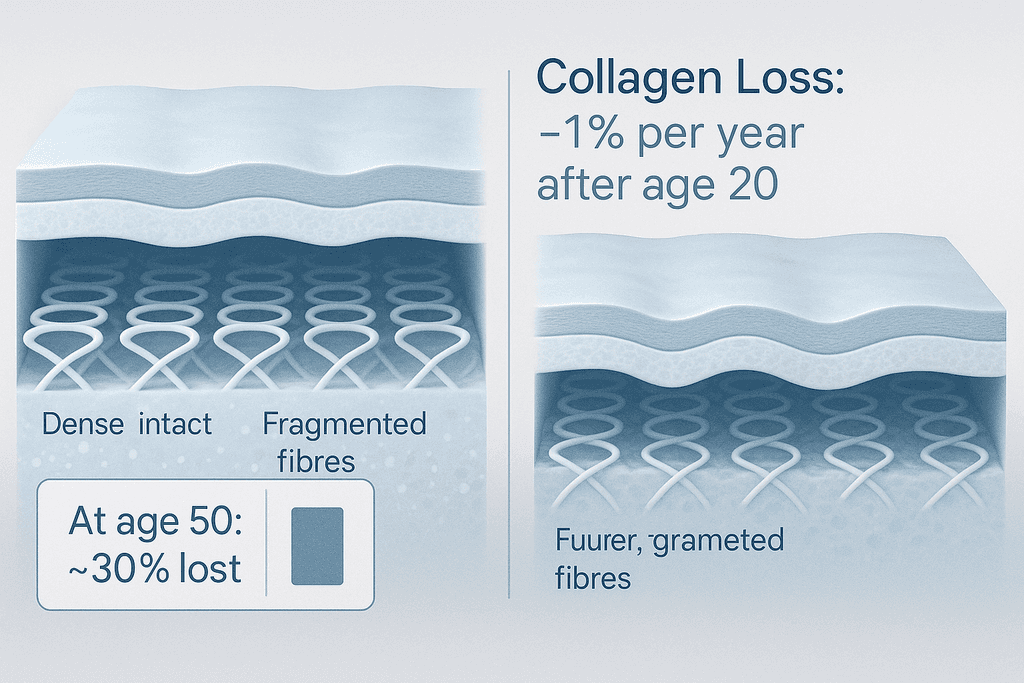
The way collagen works is pretty simple when you break it down. It sits in the deeper layers of your skin, forming a network of fibers that hold everything together. This network gives your skin its structure and strength, kind of like the frame of a house keeps the walls standing. When you’re young, your body makes plenty of collagen to keep this framework strong and tight.
How Collagen Breaks Down Over Time
The problem starts when your body slows down its collagen production and the existing collagen begins to break apart. Sun exposure speeds this up dramatically, along with smoking, stress, and just regular aging. As the collagen network weakens, your skin loses its ability to bounce back when you smile or frown, which is exactly when wrinkles start to form and stick around.
| Age Range | Collagen Loss | What You Notice |
|---|---|---|
| 20s | Production starts slowing | Skin still looks plump and recovers quickly |
| 30s | About 10% lost | Fine lines appear around eyes and mouth |
| 40s | About 20% lost | Deeper wrinkles form, skin feels thinner |
| 50s | About 30% lost | Noticeable sagging, loss of firmness |
| 60s+ | 40% or more lost | Significant volume loss and deeper folds |
Why Collagen Stimulation Matters
Here’s where things get interesting. Your skin can actually be triggered to make more collagen, even as you age. Research shows that certain treatments and ingredients can signal your skin cells to ramp up collagen production, essentially rebuilding that support structure from within. This is different from just putting something on top of your skin—it’s about waking up your body’s natural repair system.
At Beauty & Fly, treatments like Microneedling with PRP and Vivace Fractional therapy work by creating controlled micro-injuries that trigger your skin’s healing response, which includes making fresh collagen. It’s not about adding collagen from the outside, but rather convincing your skin to produce its own. The results take a few months to show up because collagen builds slowly, but that’s also why the improvements look natural and last longer than quick fixes.
Signs Your Collagen Levels Are Dropping
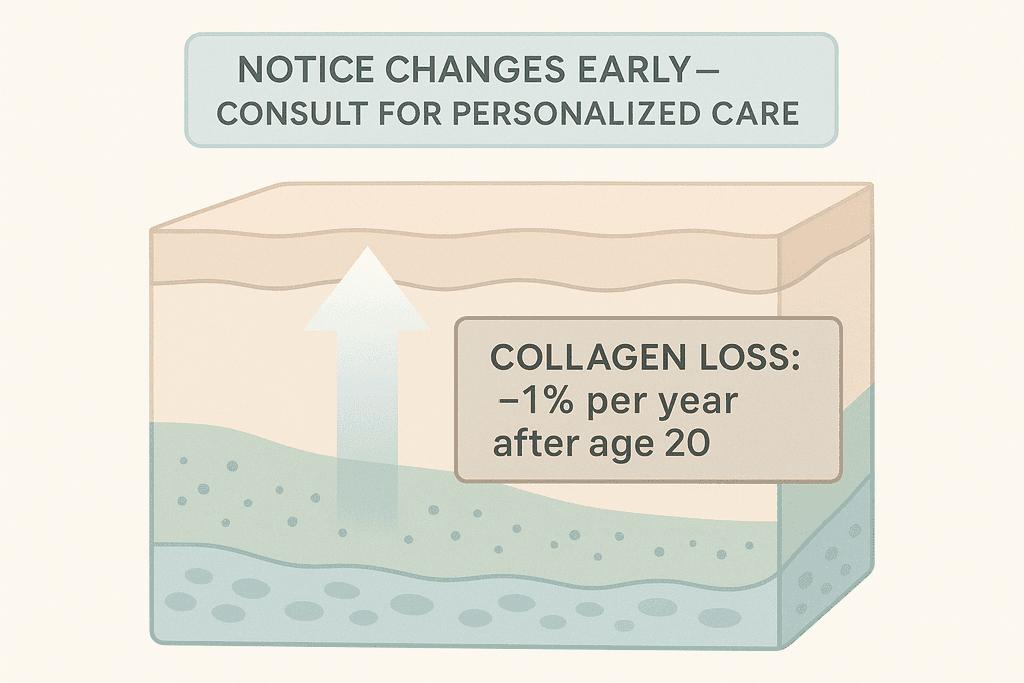
Your skin starts losing about 1% of its collagen every year after you turn 20. That might not sound like much, but by the time you hit your 40s, you’ve lost a significant amount of the protein that keeps your skin firm and smooth. The changes don’t happen overnight, which is why many people don’t notice until the signs become more obvious. Understanding what to look for can help you address collagen loss before it becomes more pronounced.
Signs Your Collagen Levels Are Dropping
The first place most people notice collagen loss is around their eyes and mouth. Fine lines start appearing in areas where your face moves the most, like crow’s feet at the outer corners of your eyes or smile lines around your mouth. Your skin might also start feeling different when you touch it, almost like it’s lost some of its bounce.
Common signs of declining collagen include:
- Skin that feels thinner and less plump than it used to
- Loss of definition along your jawline and cheeks
- Deeper wrinkles forming where you make expressions
- Skin that takes longer to bounce back when pinched
- Slower healing from minor cuts or blemishes
- Overall changes in how smooth your skin feels
The jawline and cheeks are particularly telling areas. When collagen levels drop, you might notice your face losing the firm contours it once had. This happens because collagen acts like a support structure under your skin, and when that structure weakens, gravity starts winning the battle.
How Collagen Stimulation Treatments Work
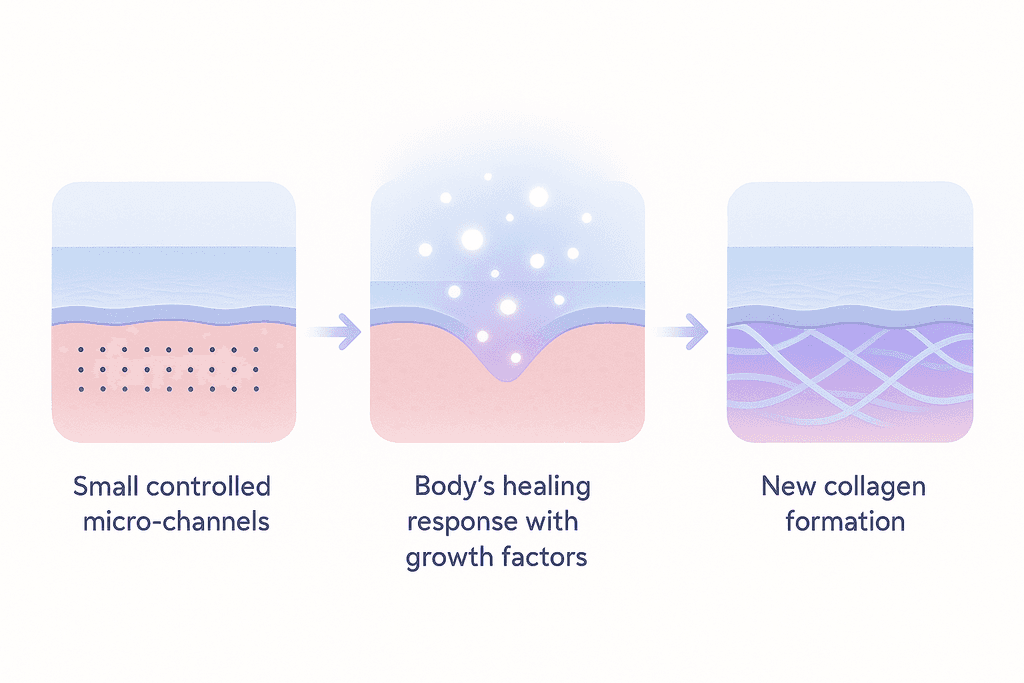
The science behind collagen stimulation is actually pretty straightforward once you understand the basic concept. Your body is incredibly good at healing itself, and collagen-boosting treatments take advantage of this natural ability. When your skin experiences a controlled micro-injury, your body responds by sending healing factors to that area and producing fresh collagen to repair what it thinks is damaged. It’s like tricking your skin into thinking it needs to rebuild itself.
How Collagen Stimulation Treatments Work
These micro-injuries are so small you can barely see them, but they’re enough to trigger your body’s repair response. The key word here is “controlled”, meaning the process is carefully managed to create just enough stimulation without causing actual harm. Research shows that Type I collagen, which makes up about 80% of skin collagen, responds particularly well to these stimulation techniques.
Different methods trigger collagen production in various ways:
- Microneedling creates tiny channels in the skin that prompt healing
- Radiofrequency energy heats deeper skin layers to stimulate collagen
- Laser treatments target specific depths to encourage renewal
- Chemical peels remove damaged surface layers, prompting regeneration
At Beauty & Fly, treatments like Microneedling with PRP combine the micro-injury approach with your own platelet-rich plasma, which contains growth factors that supercharge the collagen-building process. The Vivace Fractional treatment takes this further by adding radiofrequency energy to the microneedling, reaching deeper layers where collagen production happens.
The NOUVAderm laser works differently by using light energy to heat the deeper layers of your skin without damaging the surface. This heating effect tells your body to start making new collagen in those deeper layers. The reason results take time is simple: your body needs weeks and months to actually build new collagen fibers. You’re not getting instant results from a filler, you’re waiting for your own body to create real, lasting improvements.
Best Treatments for Boosting Collagen Production
Not all collagen stimulation treatments work the same way, and that’s actually a good thing because different skin concerns respond better to different approaches. Some treatments work on the surface layers of your skin, while others reach deeper into the dermis where most of your collagen lives. The best results often come from combining treatments that work at different depths and through different mechanisms.
Microneedling with PRP is like getting two treatments in one. The microneedling creates those controlled micro-injuries we talked about, while the PRP (made from your own blood) delivers concentrated growth factors directly into your skin. This combination approach tends to produce more dramatic results than either treatment alone.
The Vivace Fractional treatment adds radiofrequency energy to traditional microneedling. This means you’re getting both the micro-injury stimulation and the deep heating effect that triggers collagen production in layers the needles can’t reach. It’s particularly effective for people who want to address both surface texture issues and deeper firmness concerns at the same time.
- NOUVAderm laser: Works on deeper collagen layers without surface damage, minimal downtime
- Biostimulators: Injectable treatments that gradually stimulate your own collagen over several months
- VI Peel: Chemical exfoliation that removes damaged layers and prompts collagen renewal
Catherine Curtin doesn’t take a one-size-fits-all approach to collagen stimulation. During your consultation, she evaluates your specific skin concerns, your lifestyle, and how much downtime you can handle. Some people do best with a series of gentler treatments, while others prefer fewer sessions of more intensive procedures. The results from any of these treatments improve over several months as your body continues building new collagen.
What to Expect from Collagen Stimulation Results
If you’re expecting to walk out of your first collagen stimulation treatment looking ten years younger, you’re going to be disappointed. But if you understand how the process actually works, you’ll appreciate the gradual improvements that start appearing over the following weeks and months. Studies on collagen treatments show that the most significant improvements occur as new collagen fibers mature and reorganize, which takes time.
Most people notice initial changes within 2 to 4 weeks after their first treatment. Your skin might feel smoother or look a bit brighter, but these early changes are just the beginning. The real magic happens between 3 and 6 months as your body continues producing new collagen and the existing collagen fibers strengthen and reorganize themselves.
Timeline for typical collagen stimulation results:
- Weeks 1-2: Initial healing, skin may look slightly pink or feel sensitive
- Weeks 2-4: First visible improvements in texture and glow
- Months 2-3: Fine lines begin softening, skin feels firmer
- Months 3-6: Peak results as collagen continues building
- Months 6+: Maintenance phase to sustain improvements
Fine lines typically respond faster than deeper wrinkles because they require less collagen to fill in. Deeper wrinkles and significant volume loss usually need multiple treatment sessions to see substantial improvement. This is why Catherine often recommends a series of treatments spaced several weeks apart rather than expecting one session to solve everything.
The results you get from collagen stimulation look natural because you’re not adding anything artificial to your face. You’re simply helping your skin do what it used to do naturally when you were younger. Combining these treatments with quality skincare products like SkinBetter science helps maintain and enhance your results by supporting your skin’s health between treatment sessions. Most people need maintenance treatments every 6 to 12 months to keep their collagen levels from declining again.
Taking Action for Firmer, Younger-Looking Skin
Your body’s collagen production naturally slows down as you age, but that doesn’t mean you have to accept sagging skin and deep wrinkles as inevitable. The good news is that collagen stimulation treatments can help your skin rebuild what time has taken away. Starting these treatments earlier rather than later gives you better long-term results because your skin still has a strong foundation to work with.
The key is finding the right approach for your specific skin concerns. Not everyone needs the same treatment, and that’s where personalized care makes all the difference.
At Beauty & Fly, Catherine Curtin takes time to understand your skin goals and creates a customized treatment plan that might include microneedling with PRP, Vivace Fractional treatments, or NOUVAderm laser sessions for collagen stimulation. Since Catherine is the only provider, you’ll work with the same experienced professional every visit, which means your treatment plan evolves with your results.
Whether you’re just starting to notice fine lines or dealing with more advanced signs of aging, professional collagen stimulation can help you maintain firmer, smoother skin. The treatments work with your body’s natural healing process rather than against it.
If you’re in the Bronxville or Bridgehampton area, scheduling a consultation is the first step toward understanding which collagen-boosting treatments will work best for your skin. You might be surprised at what’s possible without surgery.
Common Questions About Collagen Stimulation
If you’re thinking about collagen stimulation treatments, you probably have some questions about how they work and what to expect. These treatments are becoming more popular because they help your skin create its own collagen naturally, which means results that look and feel like you. Here are the answers to the most common questions we hear from patients considering these treatments.
At what age should I start collagen stimulation treatments?
Most people start noticing collagen loss in their late 20s or early 30s, which is when preventive treatments make the most sense. That said, collagen stimulation works well at any age because it’s about helping your skin rebuild what it’s lost. At Beauty & Fly, Catherine Curtin evaluates each patient individually to recommend the right timing based on your skin’s current condition and your personal goals.
How long do collagen stimulation results last?
Results typically last anywhere from six months to two years, depending on which treatment you choose and how your body responds. Treatments like Microneedling with PRP and Vivace Fractional work by triggering your body’s natural collagen production, so improvements continue developing for several months after your session. Most patients maintain their results with periodic touch-up treatments.
Are collagen treatments painful?
Most collagen stimulation treatments involve minimal discomfort. Numbing cream is applied before procedures like microneedling or Vivace, so you’ll feel pressure but not pain. The NOUVAderm laser treatment feels like a warm sensation on the skin. Everyone’s pain tolerance is different, but most patients find these treatments very manageable.
Can I combine different collagen-boosting treatments?
Yes, combining treatments often gives better results than doing just one. For example, you might pair Microneedling with PRP and the VI Peel for comprehensive skin renewal. Catherine creates custom treatment plans that layer different approaches based on what your skin needs most, spacing them appropriately for safety and optimal results.
How is collagen stimulation different from fillers?
Fillers add volume immediately by placing gel-like substances under the skin, while collagen stimulation treatments work by encouraging your own body to produce more collagen over time. Fillers give instant results that fade as the product breaks down. Collagen stimulation builds gradual, natural improvements that can last longer because you’re actually improving your skin’s structure from within.
What’s the downtime after collagen stimulation treatments?
Downtime varies by treatment but is generally minimal. Microneedling and Vivace typically cause redness for one to three days, similar to a mild sunburn. The VI Peel involves visible peeling for about a week. The NOUVAderm laser has very little downtime, with most people returning to normal activities the same day. Catherine discusses expected downtime during your consultation so you can plan accordingly.