
Watching more hair collect in your brush each morning can feel alarming, but you’re far from alone in this experience. Over 80 million Americans deal with hair thinning, and the good news is that modern hair restoration techniques now offer effective non-surgical solutions that actually work. Understanding your options is the first step toward making a confident decision about restoring your hair’s natural fullness.
Table of Contents
Understanding Hair Loss and Thinning
About 50 million men and 30 million women in America deal with hair loss at some point in their lives. That’s a lot of people staring at their hairbrush wondering what’s going on. The truth is, losing some hair is totally normal—we shed between 50 to 100 hairs every single day. But when you start noticing more hair in the drain or your ponytail feels thinner, something might be disrupting your natural hair growth cycle.
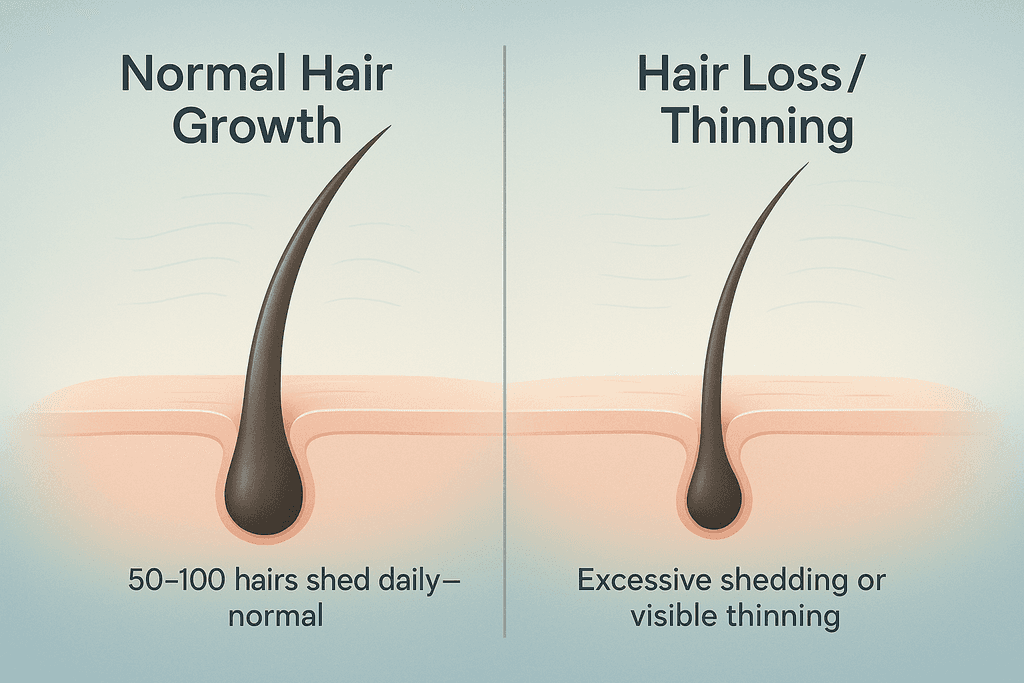
How Hair Grows and What Goes Wrong
Your hair goes through three main phases that repeat over and over. The growing phase lasts 2-7 years, then there’s a short transition phase, and finally a resting phase before the hair falls out and a new one starts growing. When this cycle gets messed up, you end up with more hair falling out than growing back in.
Several things can throw off this balance. Genetics plays the biggest role—if your parents dealt with thinning hair, you’re more likely to experience it too. Hormones are another major factor, especially changes during pregnancy, menopause, or thyroid issues.
Here are some other common culprits that disrupt healthy hair growth:
- Chronic stress that pushes hair follicles into the resting phase too early
- Poor nutrition or vitamin deficiencies, especially iron and protein
- Certain medications like blood thinners or antidepressants
- Autoimmune conditions that attack hair follicles
- Harsh styling practices like tight ponytails or chemical treatments
Who Experiences Hair Loss and When
Hair loss doesn’t discriminate, but it does follow some patterns. Men typically notice thinning earlier than women, often starting in their 20s or 30s. Women usually see changes later, often around menopause, though it can happen at any age.
| Cause | Who It Affects Most | Typical Age of Onset |
|---|---|---|
| Androgenetic Alopecia (Genetic) | Men and women | Men: 20s-30s, Women: 40s-50s |
| Hormonal Changes | Primarily women | Pregnancy, postpartum, menopause |
| Stress-Related (Telogen Effluvium) | Anyone | Any age, 2-3 months after stressful event |
| Aging | Everyone | Gradual after age 30 |
| Autoimmune (Alopecia Areata) | Anyone | Often before age 30 |
Why Acting Early Makes a Difference
Here’s something most people don’t realize—once a hair follicle stays dormant too long, it becomes much harder to wake it back up. The earlier you address thinning hair, the better your results will be with any treatment approach.
Modern hair restoration options work best when follicles are still active but just not producing healthy hair. Treatments like PRP Therapy for Hair Loss use your body’s own growth factors to stimulate those sleepy follicles back into action. At Beauty & Fly, we use this approach because it works with your natural biology rather than against it.
The good news is that hair restoration has come a long way. You don’t need surgery or harsh chemicals anymore. Understanding what’s causing your hair loss is the first step toward finding a solution that actually works for your specific situation.
PRP Therapy for Hair Restoration
About 50 million men and 30 million women in the United States deal with hair loss at some point in their lives. If you’ve noticed your hair getting thinner or your part widening, you’re definitely not alone. The good news is that PRP therapy offers a natural way to encourage your hair to grow back using your body’s own healing abilities. Instead of relying on harsh chemicals or invasive procedures, this treatment taps into something you already have—your own blood platelets.

PRP Therapy for Hair Restoration
Here’s how it works. Your blood contains platelets that are packed with growth factors, which are basically tiny proteins that help your body heal and regenerate tissue. When these growth factors are concentrated and injected into your scalp, they wake up dormant hair follicles and encourage new hair growth. Think of it like giving your hair follicles a wake-up call they can’t ignore.
The PRP Treatment Process:
- A small amount of blood is drawn from your arm, similar to a routine blood test
- The blood is placed in a centrifuge that spins it to separate the platelet-rich plasma
- The concentrated PRP is carefully injected into areas of your scalp where hair is thinning
- The entire process typically takes about 60 to 90 minutes
- Most people need a series of treatments spaced about 4 to 6 weeks apart initially
The beauty of PRP therapy is that it’s minimally invasive and uses your own biological material, which means there’s virtually no risk of allergic reactions or rejection. At Beauty & Fly, we use PRP therapy for hair loss as part of our approach to helping clients address thinning hair naturally. Results typically start showing up around three to six months after your initial treatment series, with continued improvement over time.
Most patients need maintenance treatments every six to twelve months to keep their results going strong. The timeline varies from person to person based on the extent of hair loss and how your body responds to treatment.
Other Professional Hair Restoration Options
While PRP therapy is highly effective on its own, it’s not the only tool in the hair restoration toolbox. Many people see even better results when they combine different approaches. Microneedling, for example, creates tiny channels in the scalp that not only stimulate collagen production but also help topical treatments penetrate deeper into the skin. This can be done alongside PRP or as a standalone treatment to boost circulation to the hair follicles.

Other Professional Hair Restoration Options
Professional-grade topical treatments are another piece of the puzzle. These aren’t the same products you’ll find at your local drugstore. Medical-grade formulations contain higher concentrations of active ingredients that actually make a difference in hair density and thickness.
| Treatment Type | Invasiveness | Downtime | Results Timeline |
|---|---|---|---|
| PRP Therapy | Minimal | None to 1 day | 3-6 months |
| Microneedling | Minimal | 1-2 days | 2-4 months |
| Laser Therapy | Non-invasive | None | 4-6 months |
| Topical Treatments | Non-invasive | None | 3-6 months |
Laser therapy uses low-level light to stimulate cellular activity in the scalp, which can improve hair thickness and slow down hair loss. When you combine multiple approaches—say, PRP with microneedling and medical-grade topicals—you’re attacking the problem from several angles at once, which often leads to better outcomes than any single treatment alone.
What to Expect During Hair Restoration Treatment
Your hair restoration journey starts with a thorough consultation where your provider examines your scalp, discusses your medical history, and talks about your goals. This isn’t a one-size-fits-all situation. Every person’s hair loss pattern is different, and the best treatment plan takes into account factors like your age, the extent of thinning, and what’s causing your hair loss in the first place. At Beauty & Fly, Catherine Curtin takes the time to create a personalized approach for each patient, ensuring you understand exactly what to expect and why certain treatments are recommended for your specific situation.
Before your first PRP treatment, there are a few simple things to keep in mind. Stay well-hydrated in the days leading up to your appointment and avoid taking anti-inflammatory medications like ibuprofen for about a week beforehand, as these can interfere with platelet function.
Pre-Treatment Checklist:
- Drink plenty of water for 2-3 days before treatment
- Avoid anti-inflammatory medications for one week prior
- Wash your hair the morning of your appointment
- Eat a good meal before coming in
- Avoid alcohol for 24 hours before treatment
During the actual treatment session, you might feel some mild discomfort from the injections, but most people describe it as totally manageable. Some providers use a numbing cream to make the process even more comfortable. After your treatment, you can usually go right back to your normal activities, though your scalp might be a bit tender or red for a day or two.
Post-Treatment Care:
- Avoid washing your hair for 24 hours after treatment
- Skip intense workouts for 1-2 days
- Stay out of direct sunlight and don’t use tanning beds
- Avoid swimming pools and hot tubs for a few days
- Don’t use harsh hair products or heat styling tools immediately after
The hardest part for most people is being patient. Hair grows slowly, and you won’t see dramatic changes overnight. Most patients start noticing less shedding around the two-month mark, with visible new growth appearing between three and six months. The full results continue to develop over the course of a year. Once you’ve completed your initial series of treatments, maintenance sessions help keep your results going strong for the long haul.
Choosing the Right Hair Restoration Approach for You
Not every hair restoration treatment works the same for everyone, and that’s where things get tricky. Your age, the pattern of your hair loss, your overall health, and even your budget all play a role in what will actually work for you. Some people respond incredibly well to PRP therapy, while others might need a different approach or a combination of treatments. The key is finding someone who takes the time to really look at your specific situation instead of pushing a one-size-fits-all solution.
Experience matters more than most people realize when it comes to hair restoration. A practitioner who’s been doing this for years knows how to spot the subtle differences between different types of hair loss and can adjust treatment plans accordingly.
What Makes a Treatment Plan Work
The best results come from personalized treatment plans that consider your unique hair loss pattern and goals. At Beauty & Fly, Catherine Curtin uses her 18 years of aesthetic medicine experience to create custom approaches for each patient’s hair restoration needs. This isn’t about following a script—it’s about understanding what’s happening with your hair and why.
- Your current health conditions and medications that might affect treatment
- The specific areas where you’re experiencing thinning or loss
- How quickly you’re losing hair and how long it’s been happening
- Your lifestyle factors that could impact results
- What you’re realistically hoping to achieve
Questions Worth Asking
Walking into a consultation without knowing what to ask can leave you confused and unsure. Here’s what you should actually be discussing with any provider before committing to hair restoration treatment.
Questions to Ask Your Provider During Hair Restoration Consultation
- How many years have you been performing hair restoration treatments specifically?
- What type of hair loss do I have, and why do you think this treatment will work for me?
- How many sessions will I likely need, and what’s the realistic timeline for seeing results?
- What are the potential side effects or risks I should know about?
- Can you show me before and after photos of patients with similar hair loss patterns?
- What happens if I don’t see the results we’re hoping for?
- Are there any lifestyle changes I should make to support the treatment?
Red Flags to Watch For
Some warning signs should make you think twice about moving forward with a provider. If someone guarantees dramatic results or pushes you to start treatment immediately without a thorough consultation, that’s a problem.
- Providers who won’t discuss potential downsides or limitations
- Practices that use high-pressure sales tactics or limited-time offers
- Anyone who can’t clearly explain why they’re recommending a specific treatment for you
- Lack of proper credentials or experience in aesthetic medicine
The investment in hair restoration goes beyond just money—it’s your time and emotional energy too. Setting realistic expectations from the start helps you avoid disappointment and makes the whole process less stressful. Most people don’t see overnight changes, and that’s completely normal. Hair restoration is a gradual process that requires patience and consistency.
Your Path to Fuller, Healthier Hair
Thinning hair doesn’t have to be something you just accept and live with. We’ve covered several hair restoration techniques in this post, from topical treatments and oral medications to more advanced options like microneedling and laser therapy. The most important thing to remember is that starting treatment early makes a real difference in your results.
Professional treatments tend to work better than over-the-counter options because they’re stronger and more targeted. PRP Therapy for Hair Loss uses growth factors from your own blood to wake up sleeping hair follicles and encourage new growth. It’s one of those treatments that sounds more complicated than it actually is.
The truth is, everyone’s hair loss situation is different. What works for your friend might not be the right fit for you. That’s why getting a proper evaluation matters more than trying random products you see online.
At Beauty & Fly, we take time to figure out what’s actually causing your hair to thin before recommending any treatment. Catherine Curtin has been doing this work for over 18 years, so she’s seen pretty much every type of hair loss pattern there is. The consultation process helps you understand your options without feeling pressured into anything.
If you’ve been noticing more hair in your brush or a wider part line, now’s a good time to explore what might help. Some questions probably came up while reading this, so let’s address the most common ones people ask about hair restoration.
Common Questions About Hair Restoration
If you’re thinking about treating thinning hair, you probably have questions about what to expect. Hair restoration can feel like a big decision, especially when you’re not sure which approach is right for you. Here are answers to the most common questions we hear from people considering their options.
Is PRP therapy painful?
Most people describe PRP therapy as mildly uncomfortable rather than painful. We apply a numbing cream before treatment, and the injections themselves feel like small pinches across the scalp. The whole process usually takes less than an hour, and any tenderness typically goes away within a day or two.
How long do hair restoration results last?
Results from PRP therapy can last anywhere from 12 to 18 months, though this varies from person to person. Your body’s natural aging process continues, so maintenance treatments help keep your results looking their best. At Beauty & Fly, Catherine works with you to create a treatment schedule that fits your goals and budget.
Am I a good candidate for hair restoration?
PRP therapy works best for people experiencing early to moderate hair thinning rather than complete baldness. If you still have active hair follicles in the treatment area, you’re likely a good candidate. Women and men both see results, and the treatment is safe for most adults who want a natural approach to hair restoration without surgery.
How many treatments will I need?
Most people start with three to four sessions spaced about four to six weeks apart. After that initial series, you’ll typically need maintenance treatments every six to twelve months. Everyone’s hair loss pattern is different, so the exact number depends on your specific situation and how your body responds.
Can hair restoration work for women?
Absolutely. Women actually make up a large portion of people seeking hair restoration treatments. Female pattern hair loss responds well to PRP therapy because it uses your body’s own growth factors to stimulate dormant hair follicles. The treatment is particularly effective for thinning along the part line and overall volume loss.
What is the difference between PRP and other treatments?
PRP therapy stands out because it uses your own blood’s healing properties rather than synthetic chemicals or medications. Unlike topical treatments that you apply daily, PRP works from within to encourage natural hair growth. It also doesn’t come with the side effects that some oral medications can cause, making it a safer option for many people who want natural-looking results.