
Your skin loses about one percent of its collagen every year after your mid-20s, which is why fine lines and sagging start to appear even when you’re taking good care of yourself. Unlike traditional fillers that simply add volume, biostimulators work with your body to rebuild what’s been lost by triggering your own natural collagen production. At Beauty & Fly, we use biostimulators as part of our approach to help clients achieve results that look like you, just refreshed.
Table of Contents
The Science Behind Skin Aging
Your skin loses about 1% of its collagen every single year after you turn 20. That might not sound like much at first, but by the time you hit 50, you’ve lost nearly a third of what you started with. Collagen and elastin are the proteins that keep your skin firm, smooth, and bouncy—think of them as the scaffolding that holds everything up. When that scaffolding starts to break down, your skin begins to sag, wrinkle, and lose its youthful shape.
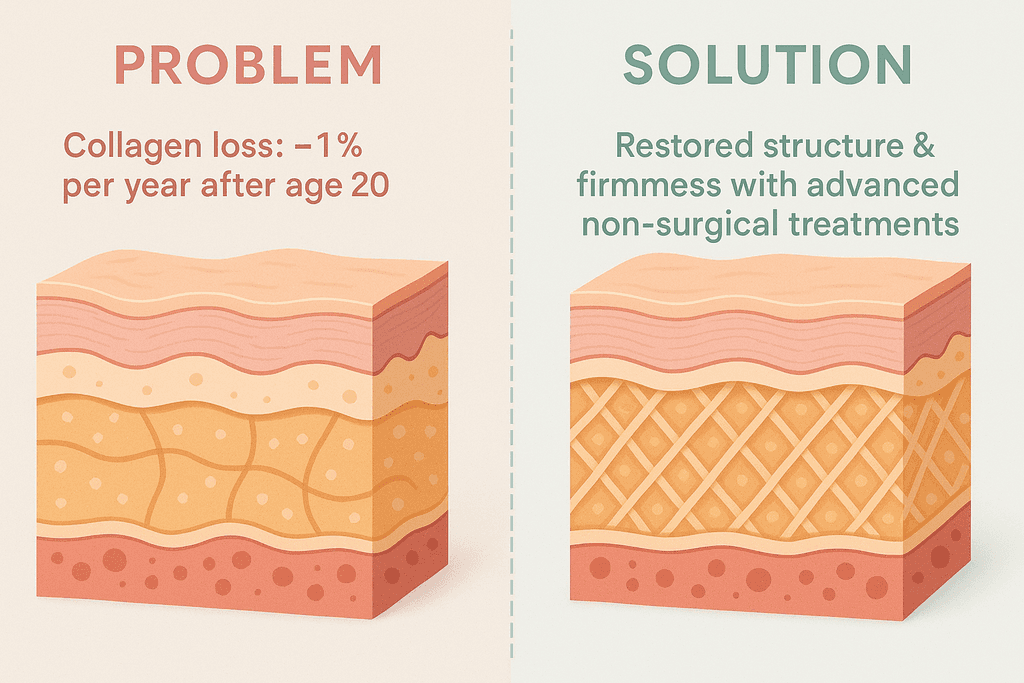
Most people don’t notice these changes right away because they happen slowly. But around your late 20s and early 30s, the signs start showing up—fine lines around your eyes, a little less fullness in your cheeks, maybe some hollowing under your eyes. The real problem isn’t just that you’re losing collagen, but that your body makes less and less of it as you age.
What Causes Volume Loss
Volume loss happens when the deeper layers of your skin start thinning out. It’s not just about wrinkles on the surface—it’s about what’s happening underneath. Several things speed up this process:
- Sun exposure breaks down collagen faster than normal aging
- Stress hormones can interfere with collagen production
- Poor sleep means your skin has less time to repair itself
- Smoking reduces blood flow to your skin cells
Why Surface Treatments Fall Short
Here’s where things get interesting. Most skincare products and even some treatments only work on the top layer of your skin. They might make your skin look better temporarily, but they don’t fix the structural problems underneath. Biostimulators work differently because they actually trigger your body to make new collagen instead of just filling in the gaps.
Think of it this way—putting filler in your face is like stuffing a pillow that’s losing its fluff. It works for a while, but it doesn’t fix why the pillow went flat in the first place. Rebuilding collagen is like making the pillow create its own new stuffing from the inside out.
Collagen Loss Timeline
| Age Range | Collagen Loss | Visible Changes |
|---|---|---|
| 20s | 1% per year begins | Minimal, mostly preventable |
| 30s | 10-15% total loss | Fine lines, slight volume loss |
| 40s | 20-25% total loss | Deeper wrinkles, noticeable sagging |
| 50s | 30% total loss | Significant volume loss, jowls form |
| 60s+ | 40%+ total loss | Major structural changes, thin skin |
At Beauty & Fly, we use biostimulators as part of our cosmetic injection services because they address what’s really causing your skin to age. Instead of just treating symptoms, we’re helping your body rebuild what it’s lost naturally over time.
How Biostimulators Actually Work
Your skin loses about 1% of its collagen every year after age 30, which explains why fine lines and sagging start showing up when you least expect them. Unlike traditional dermal fillers that simply add volume to specific areas, biostimulators take a completely different approach. They work with your body’s natural healing abilities to rebuild what time has taken away. The process is more subtle, more gradual, and ultimately more natural-looking than instant volume correction.
How Biostimulators Actually Work
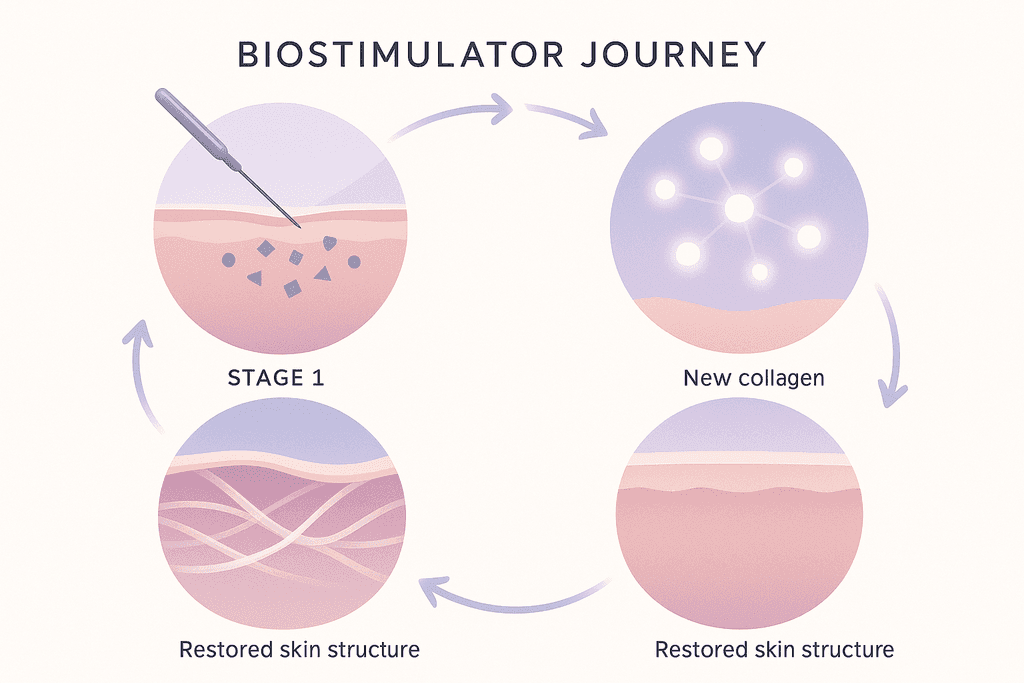
When a biostimulator is injected into your skin, your body recognizes the material as something that needs attention. This triggers a controlled healing response, similar to how your skin repairs itself after a minor injury. The difference is that this response is carefully directed to areas where you’ve lost volume and firmness over the years.
The biostimulator material acts as a scaffold that encourages your fibroblasts (the cells responsible for making collagen) to get back to work. Over the following weeks and months, these cells start producing fresh collagen around the injection sites. This isn’t borrowed volume from a gel, it’s your own tissue rebuilding itself from the inside out.
Different types of biostimulators use various materials to trigger this response. Some use poly-L-lactic acid, while others rely on calcium hydroxylapatite or polycaprolactone. Each has its own timeline and specific mechanism, but they all share the same goal of stimulating your natural collagen production rather than just filling space.
The gradual nature of biostimulators is actually their biggest advantage. Because results develop slowly over 8 to 12 weeks, the changes look completely natural. Nobody will notice you had “work done” because there’s no sudden transformation. Your skin just starts looking healthier, firmer, and more youthful as the weeks go by.
What Biostimulators Can Treat
The areas where biostimulators really shine are the ones where you’ve lost volume and thickness over time. Your cheeks might have flattened out, your temples may have hollowed, or your jawline could have lost its definition. These are the changes that make people look tired or older than they feel. Biostimulators address these concerns by rebuilding the underlying structure of your skin, not just masking the problem with temporary volume.
Treatment areas that respond particularly well include:
- Cheeks and midface areas where volume has diminished
- Temples that have become hollow or sunken
- Jawline and lower face for improved definition
- Nasolabial folds and marionette lines
- Overall skin texture and thickness improvements
Biostimulators work differently than traditional fillers in some important ways. While fillers are great for adding immediate volume to specific wrinkles or areas, biostimulators improve the quality of your skin itself. They’re better suited for treating overall volume loss and skin laxity rather than targeting one specific line or fold.
The texture improvements can be remarkable. As new collagen forms, your skin becomes thicker and more resilient. Fine lines soften because the skin underneath them has more support. According to research on biostimulator mechanisms, this collagen rebuilding process can continue for months after treatment, creating progressive improvements in skin quality.
Realistic expectations matter here. You won’t see dramatic changes overnight. Most people start noticing subtle improvements around week 4 to 6, with full results visible by month 3. The payoff is that these results can last 18 to 24 months or even longer, compared to the 6 to 12 months you might get from traditional fillers.
The Treatment Experience and What to Expect
Your first visit starts with a thorough consultation to understand what’s bothering you about your skin and what you hope to achieve. At Beauty & Fly, Catherine Curtin takes time to assess your facial structure, skin quality, and specific areas of concern. This isn’t a one-size-fits-all approach. She develops a personalized treatment plan based on your unique anatomy and goals, which might include biostimulators alone or combined with other treatments for optimal results.
The Treatment Experience and What to Expect
The actual injection process is straightforward and typically takes 30 to 45 minutes. Most biostimulators are mixed with lidocaine to minimize discomfort during treatment. You might feel some pressure and mild stinging, but it’s generally well-tolerated. The injections are placed strategically in areas where collagen rebuilding will have the most impact on your appearance.
Right after treatment, you’ll likely have some swelling and possibly minor bruising. This is completely normal and usually settles down within a few days. Your face might look a bit fuller immediately due to the fluid used to dilute the biostimulator, but this temporary volume goes away quickly. The real results come later as your collagen production ramps up.
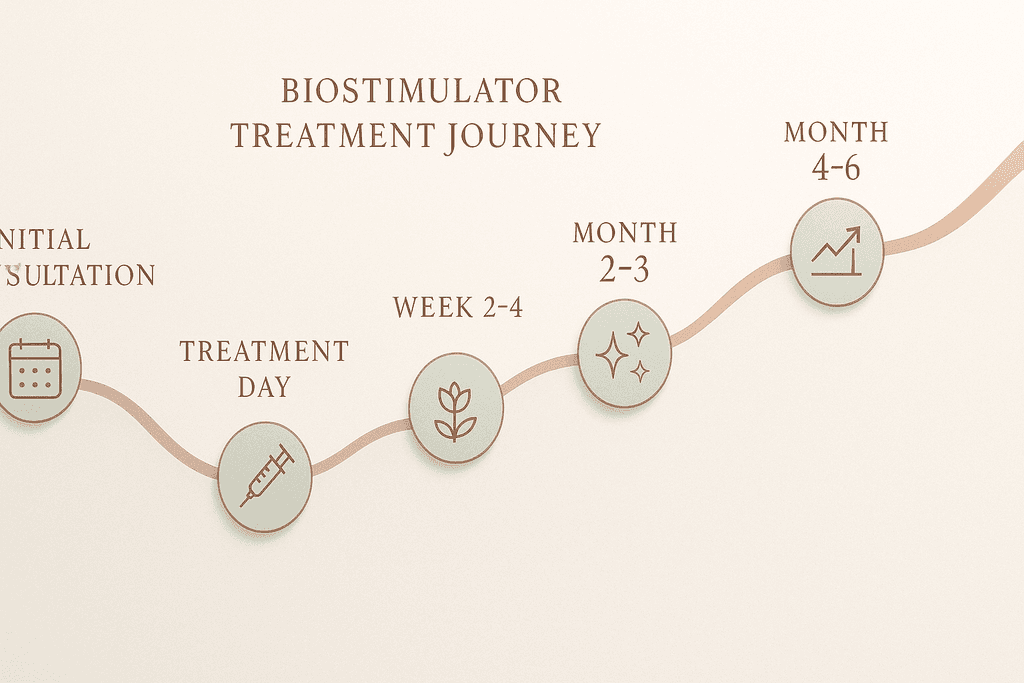
- Week 1-2: Initial swelling subsides, skin returns to baseline appearance
- Week 4-6: Subtle improvements start becoming noticeable
- Week 8-12: Progressive enhancement as collagen continues building
- Month 3-6: Full results visible with improved volume and skin quality
Most people need 2 to 3 treatment sessions spaced about 4 to 6 weeks apart for optimal results. After that, the effects typically last 18 months or longer. Some people choose to do maintenance treatments annually to keep their results going strong. The beauty of working with an experienced provider like Catherine is that she monitors your progress and adjusts the treatment plan as needed, ensuring you get the most natural and lasting results possible.
The gradual nature of biostimulators means you can ease into your results without anyone noticing you’ve had treatment. You just look more rested, refreshed, and like a better version of yourself. That’s the whole point of thoughtful aesthetic care.
Biostimulators vs. Traditional Fillers
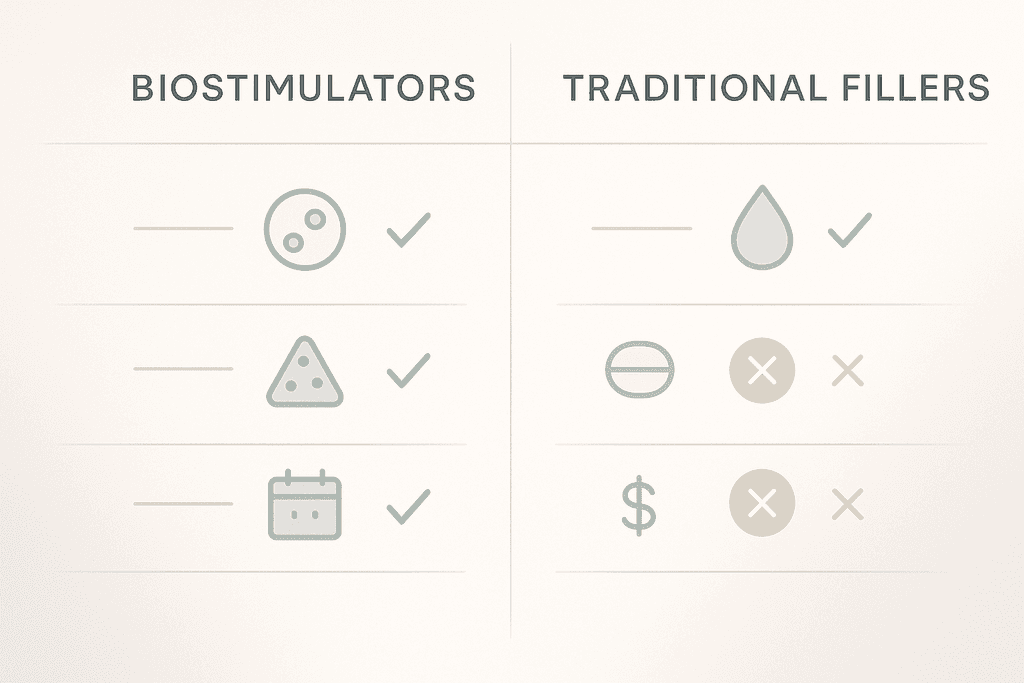
The choice between biostimulators and traditional dermal fillers isn’t always straightforward, and understanding the differences can save you time, money, and disappointment. Both treatments address volume loss and aging skin, but they work in fundamentally different ways. Traditional fillers act like spackling paste—they immediately fill in lines and add volume by physically occupying space under your skin. Biostimulators take a completely different approach by triggering your body to rebuild its own collagen over time, which means the results develop gradually but last significantly longer.
The timeline for seeing results differs dramatically between these two options. With traditional fillers, you walk out of your appointment with visible changes right away. Biostimulators require patience—you’ll typically need 2-3 treatment sessions spaced weeks apart, and the full results emerge over 3-6 months as your skin produces new collagen.
| Factor | Traditional Fillers | Biostimulators |
|---|---|---|
| How They Work | Add immediate volume with gel-like substances | Stimulate your body’s natural collagen production |
| Results Timeline | Immediate | Gradual over 3-6 months |
| Duration | 6-18 months typically | 2+ years |
| Number of Sessions | Usually one treatment | 2-3 sessions for optimal results |
| Best For | Specific lines, lips, targeted volume | Overall facial volume, skin quality, natural aging |
When Traditional Fillers Make More Sense
Some situations call for the immediate results that only traditional fillers can provide. If you have a specific event coming up or want to address a particular feature like thin lips or a deep nasolabial fold, fillers deliver instant gratification.
- You need results for an upcoming event or special occasion
- You want to enhance a specific feature like lips or cheeks
- You’re addressing isolated deep lines or folds
- You prefer to see exactly what you’re getting right away
When Biostimulators Offer Better Outcomes
Research shows that biostimulators like poly-L-lactic acid trigger genuine regenerative processes in your skin, according to gene analysis studies published in the Journal of Drugs in Dermatology. This makes them ideal for patients who want to address overall facial aging rather than just filling specific lines.
- You’re experiencing overall volume loss across your face
- You want results that look completely natural and develop gradually
- You’re willing to invest in longer-lasting outcomes
- You prefer fewer maintenance appointments over time
- Your skin quality and texture need improvement, not just volume
Combining Both Approaches for Optimal Results
Many patients discover that using both treatments strategically gives them the best of both worlds. At Beauty & Fly, Catherine Curtin often creates customized treatment plans that layer these technologies based on each patient’s unique facial anatomy and goals.
The combination approach typically uses traditional fillers for specific features that need immediate definition while biostimulators work in the background to rebuild overall facial volume and improve skin quality. This strategy can actually reduce the amount of filler needed over time as your own collagen production increases.
Taking the Next Step Toward Natural Rejuvenation
Biostimulators work differently than most other cosmetic treatments because they partner with your body instead of just sitting on top of it. They trigger your skin to make its own collagen over time, which means the results build gradually and look completely natural. This isn’t about waking up with a different face. It’s about looking like yourself, just refreshed and rested.
The gradual approach is actually one of the biggest benefits. Your friends might notice you look great but won’t be able to pinpoint exactly what changed. Plus, results from biostimulators can last up to two years or more, which is significantly longer than most fillers.
Here’s what makes biostimulators worth considering:
- They work with your body’s natural healing process
- Results appear slowly and look authentic
- Effects last longer than traditional fillers
- They improve overall skin quality, not just volume
The provider you choose matters more with biostimulators than with many other treatments. At Beauty & Fly, Catherine Curtin has over 18 years of experience working with these products and understands how to place them for the most natural outcomes. She takes time to map out a treatment plan that fits your specific face and goals.
If you’re curious whether biostimulators might be right for your skin concerns, the questions below cover what most people want to know before their first appointment.
Common Questions About Biostimulators
If you’re thinking about biostimulators, you probably have some questions about how they work and what to expect. These treatments are different from traditional fillers, so it makes sense to want more details before booking. Here are the answers to the most common questions we hear from patients considering biostimulator treatments at Beauty & Fly.
How long do biostimulator results last?
Biostimulator results typically last two years or longer because they work by stimulating your own collagen production rather than just filling space. The results develop gradually over several months and tend to look more natural as your skin rebuilds its structure from within. Some patients see benefits lasting up to three years depending on their age, lifestyle, and how their body responds to treatment.
Are biostimulator treatments painful?
Most patients describe biostimulator injections as tolerable with minimal discomfort. We use topical numbing cream before treatment, and many biostimulator products contain lidocaine to help with comfort during the procedure. You might feel some pressure or slight pinching, but the process is generally quick and well-tolerated.
How many treatments are needed?
Most people need between two to three treatment sessions spaced about four to six weeks apart for optimal results. The exact number depends on your starting point and goals. Catherine Curtin will create a personalized treatment plan during your consultation based on your skin’s condition and the level of volume restoration you’re looking for.
Can biostimulators be combined with other treatments?
Yes, biostimulators work beautifully alongside other aesthetic treatments like neuromodulators, traditional fillers, and skin rejuvenation procedures. Many patients combine biostimulators with treatments like microneedling or laser therapy to address multiple skin concerns at once. The key is proper timing and planning, which is why working with an experienced provider matters.
Who is a good candidate for biostimulators?
Good candidates are typically adults who notice volume loss, skin laxity, or overall facial aging but want gradual, natural-looking results. Biostimulators work well for people with realistic expectations who understand that results develop over time rather than appearing immediately. They’re not recommended for pregnant or breastfeeding women or people with certain autoimmune conditions.
What’s the difference between Sculptra and Radiesse?
Sculptra uses poly-L-lactic acid and focuses on deep collagen stimulation with results that develop slowly over several months. Radiesse contains calcium hydroxylapatite and provides some immediate volume while also stimulating collagen, so you see faster initial results. Both are excellent biostimulators, and the choice depends on your specific needs, treatment areas, and timeline for results.