
Your face starts losing about one percent of its collagen every year after you hit your mid-twenties, which is why cheeks flatten and temples hollow out as you age. Biostimulators work differently than traditional fillers by triggering your own body to rebuild lost volume from the inside out. At Beauty & Fly, we use biostimulators to help restore that youthful fullness in a way that looks completely natural and develops gradually over time.
Table of Contents
What Makes Biostimulators Different
Most people think all injectable treatments work the same way, but that’s not quite true. When you get a traditional dermal filler, you’re basically adding volume right away—like filling a deflated balloon with air. Biostimulators work completely differently because they don’t add volume themselves. Instead, they wake up your skin’s natural ability to make its own collagen and elastin over time. Think of it like planting seeds in a garden rather than buying fake flowers from the store.
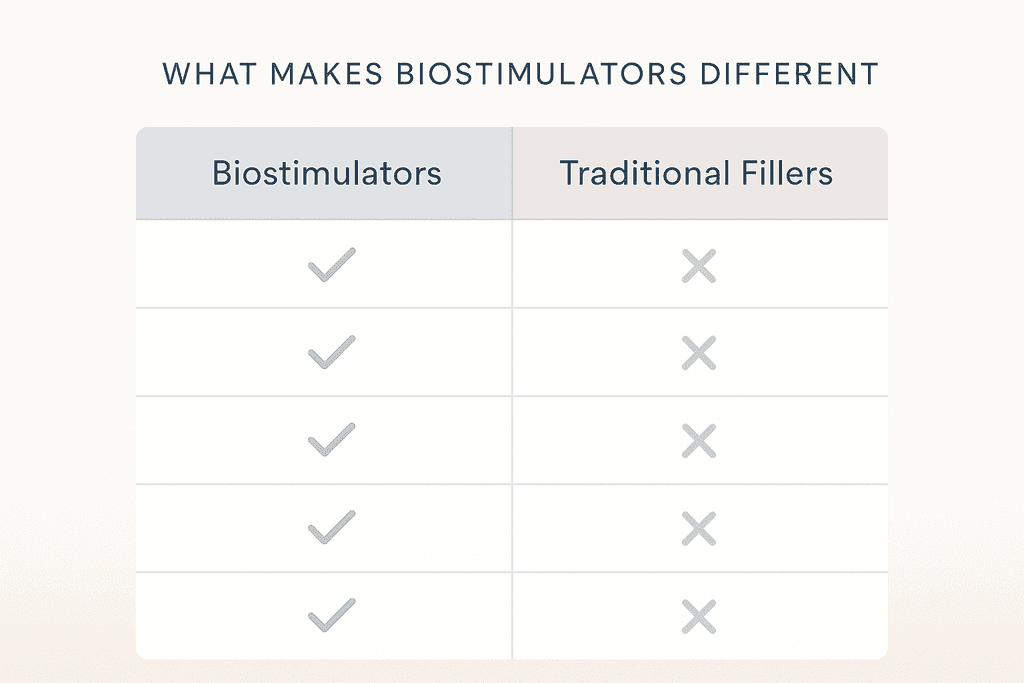
The difference matters more than you might think. Fillers give you instant results that you can see right after your appointment, but they eventually break down and disappear. Biostimulators take a few weeks or months to show their full effect, but the results stick around much longer because you’re actually rebuilding your skin’s structure from the inside out.
How the Two Approaches Compare
Here’s a simple breakdown of how these treatments stack up against each other:
| Feature | Traditional Fillers | Biostimulators |
|---|---|---|
| How They Work | Add volume directly with gel substance | Trigger your body to make new collagen |
| Results Timeline | Immediate (same day) | Gradual (2-3 months) |
| How Long They Last | 6-18 months typically | 2+ years in many cases |
| Type of Result | Direct volume replacement | Natural tissue regeneration |
| Best For | Specific lines and hollow areas | Overall skin quality and volume loss |
FDA Approved Options Available
The FDA has approved several types of biostimulators for use in the United States. Each one works a bit differently but shares the same basic goal of helping your body rebuild its own collagen. At Beauty & Fly, Catherine Curtin uses these biostimulators as part of custom treatment plans designed around what each person actually needs.
The main FDA-approved biostimulators include:
- Sculptra (poly-L-lactic acid) – works gradually over several months
- Radiesse (calcium hydroxylapatite) – provides some immediate lift plus long-term collagen growth
- Bellafill (polymethyl methacrylate microspheres) – combines instant volume with lasting collagen support
Each type has its own timeline and works better for different areas of the face. That’s why working with someone experienced matters so much—the wrong choice or placement can mean disappointing results.
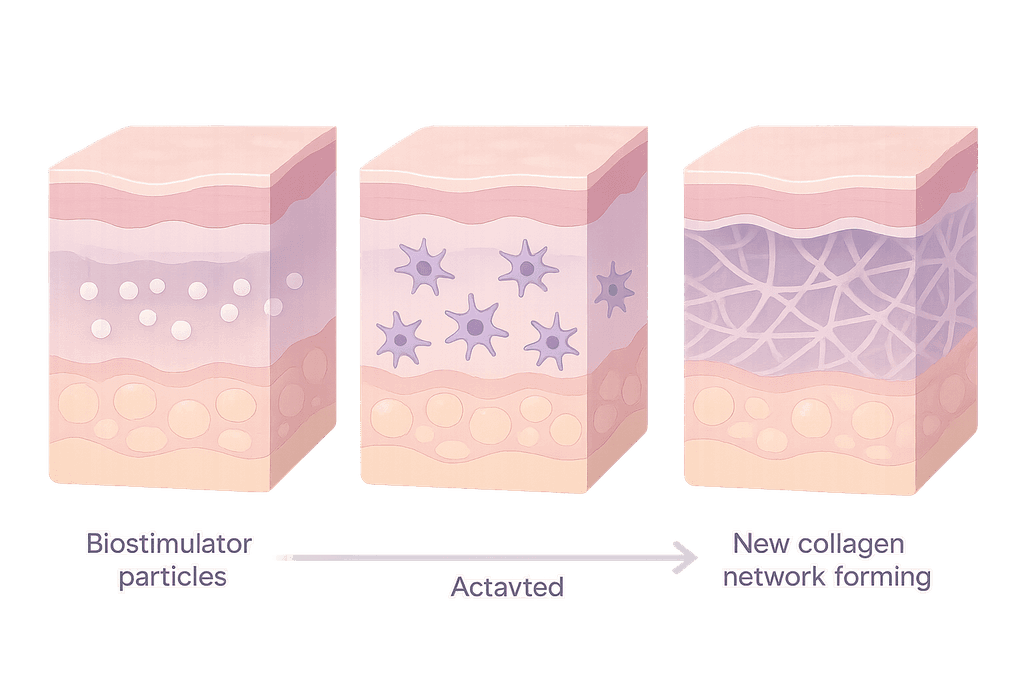
How Biostimulators Trigger Your Natural Collagen
Your skin loses about 1% of its collagen every year after age 30, which explains why faces start looking a bit deflated over time. Biostimulators work differently than traditional fillers because they don’t just add volume right away. Instead, they wake up your skin’s own collagen-making abilities. Think of them as a gentle nudge to your body, reminding it to do what it used to do naturally when you were younger.
How Biostimulators Trigger Your Natural Collagen
When biostimulators are injected into the skin, they create tiny areas where your body thinks it needs to heal. This isn’t damage in a bad way. It’s more like sending a signal to the cells that make collagen, called fibroblasts, telling them to get back to work.
What happens after injection:
- The product sits in the deeper layers of your skin
- Your fibroblast cells recognize it and start producing new collagen
- Over weeks and months, fresh collagen builds up gradually
- The biostimulator material eventually breaks down and leaves naturally
The timeline matters here because results appear slowly over 6 to 12 weeks. You won’t walk out looking dramatically different, which is actually the point. Your face fills out in a way that looks like you just got really good sleep for a few months straight. Nobody can pinpoint what changed, but you look refreshed.
The best part is that results typically last two years or longer because you’re building real collagen, not just filling space with gel. At Beauty & Fly, Catherine Curtin uses biostimulators as part of custom facial rejuvenation plans that work with your body’s natural processes rather than against them.
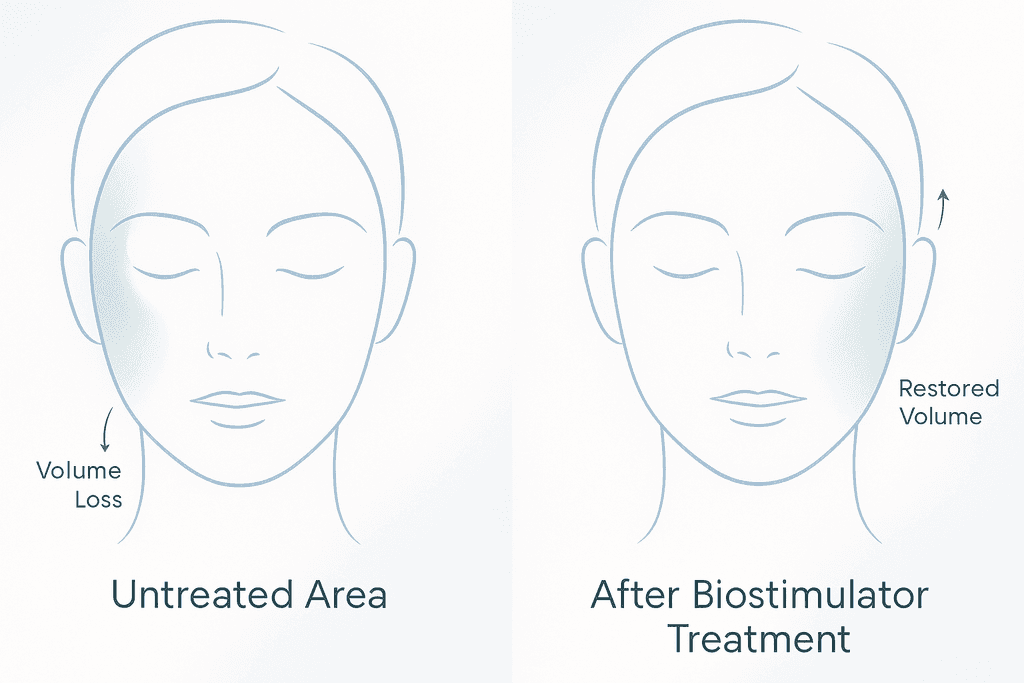
Areas Where Biostimulators Work Best
Not every part of your face responds the same way to different treatments. Biostimulators shine in areas where you’ve lost volume gradually over time, especially places where you want a natural lift rather than obvious fullness. These treatments work particularly well in spots where the skin has good thickness and where subtle changes make a big visual impact.
Areas Where Biostimulators Work Best
The temples and upper face are perfect candidates because volume loss here creates a hollow, tired look. When biostimulators restore fullness to the temples, it creates a gentle lifting effect that opens up the whole eye area.
Best treatment areas include:
- Temples for lifting and reducing hollowness
- Cheeks and midface to restore youthful contours
- Jawline and lower face for better definition
- Hands to address age-related volume loss and crepey skin
- Nasolabial folds for softening deep lines
The gradual nature of biostimulators makes them ideal for these areas because sudden volume changes can look unnatural. When your cheeks fill out slowly over a few months, people just think you look healthier. The same amount of volume added all at once with traditional fillers might look puffy or overdone.
Catherine takes a customized approach at Beauty & Fly, mapping out which areas will benefit most from biostimulators versus other treatments. Sometimes the best plan combines different techniques to address various concerns at once.
What to Expect During and After Treatment
The process starts with a consultation where you’ll discuss what bothers you most about your appearance and what you hope to achieve. This isn’t a quick in-and-out appointment. Catherine spends time understanding your goals and explaining how biostimulators can help, along with what they can’t do. She’ll look at your facial structure, skin quality, and areas of volume loss to create a treatment plan that makes sense for your specific situation.
During the actual treatment, most people describe mild discomfort rather than pain. The appointment typically takes 30 to 45 minutes depending on how many areas you’re treating. Numbing cream can be applied beforehand if you’re worried about sensitivity.
Treatment day checklist:
- Arrive with clean skin, no makeup
- Avoid blood thinners like aspirin for a week before (if medically safe)
- Plan for some mild swelling and possible bruising
- Don’t schedule important events for 3-5 days after
Right after treatment, you’ll likely see some swelling and small bumps where the product was injected. This is completely normal and usually settles within a few days. Some people get minor bruising, but it’s not guaranteed. You can go back to most normal activities right away, though you should avoid intense exercise for 24 hours.
The timeline of visible improvements goes something like this: weeks 1-4 show minimal change, weeks 4-8 bring subtle improvements, and weeks 8-12 reveal the full results. Some people continue seeing improvements even up to six months after treatment as collagen keeps building.
Post-treatment care:
- Keep the area clean and avoid touching it excessively
- Sleep elevated the first night to reduce swelling
- Avoid extreme heat like saunas for a few days
- Stay hydrated and maintain your regular skincare routine
Most people need a series of treatments spaced a few weeks apart to build optimal collagen. After that, maintenance treatments once every year or two keep results going. Catherine personalizes every treatment plan at Beauty & Fly based on how your skin responds and what your long-term goals look like, making adjustments as needed rather than following a one-size-fits-all approach.

Who Benefits Most from Biostimulators
The truth is, biostimulators work best for people who want to play the long game with their appearance. Unlike fillers that give you instant results, biostimulators gradually rebuild what time has taken away by encouraging your own body to produce collagen. This makes them perfect for anyone in their late thirties through their sixties who’s noticing volume loss but wants to avoid that “done” look. Your skin needs to have enough healthy tissue to respond to the treatment, which is why severely sun-damaged or extremely thin skin might need other approaches first.
Lifestyle plays a bigger role than most people realize when choosing between biostimulators and traditional fillers. If you’re someone who exercises regularly, travels frequently, or simply doesn’t want to schedule touch-ups every few months, biostimulators offer a practical advantage.
- Active individuals who want results that move naturally with their facial expressions
- Busy professionals seeking treatments with minimal downtime and longer-lasting outcomes
- Patients who prefer gradual changes that friends notice but can’t quite pinpoint
- Anyone looking to address overall skin quality alongside volume restoration
The decision between biostimulators and fillers often comes down to your specific goals. Fillers excel at precise contouring and immediate correction, while biostimulators shine when you need overall facial rejuvenation that improves skin thickness and texture simultaneously.
Combining Treatments for Better Results
At Beauty & Fly, Catherine Curtin often creates treatment plans that layer biostimulators with other services for comprehensive rejuvenation. The combination approach addresses multiple aging concerns at once.
- Biostimulators for foundational volume and collagen building
- Strategic filler placement for specific areas needing immediate definition
- Microneedling with PRP to enhance overall skin quality and texture
- Neuromodulators to soften dynamic wrinkles and prevent new ones
Different skin types respond to biostimulators in unique ways, which is exactly why personalized assessment matters so much. Thicker skin might need more product or additional sessions, while thinner skin requires a gentler approach. Someone with darker skin tones needs a provider experienced in avoiding post-inflammatory hyperpigmentation. These aren’t details you can figure out from a consultation form or a quick glance in the mirror.
Your Path to Natural Volume Restoration
Biostimulators work differently than traditional fillers because they take their time. Instead of adding instant volume, they wake up your body’s own collagen production over several months. The results look natural because they are natural, and they can last two years or more once your skin gets going.
The gradual approach means no one will notice you had work done. They’ll just think you look well-rested or maybe ask if you changed your skincare routine. That’s the whole point of this treatment, really.
At Beauty & Fly, Catherine Curtin has been working with biostimulators and other aesthetic treatments for over 18 years. She takes the time to understand what you actually want, not what she thinks you should want. Every treatment plan gets customized because your face isn’t the same as anyone else’s.
The question isn’t whether biostimulators work. The question is whether they’re right for your specific goals and timeline. Some people need faster results, while others prefer the slow and steady approach that doesn’t raise eyebrows at family dinners.
If you’re curious about whether this treatment makes sense for you, a consultation can help you figure out what to expect. You might have questions about how it compares to other options or what the actual process feels like, and those answers matter before making any decisions.
Common Questions About Biostimulators
If you’re thinking about biostimulators, you probably have some questions about how they work and what to expect. These treatments work differently than traditional fillers, so it makes sense to want more details before booking. Here are the answers to the most common questions we hear at Beauty & Fly about biostimulator treatments.
How long do biostimulator results last?
Results from biostimulators typically last around two years or longer because they work by stimulating your own collagen production rather than just filling space. The gradual improvement you see develops over several months and tends to look natural as your skin rebuilds its structure from within. Since everyone’s body responds differently, some people maintain their results even longer with proper skincare and sun protection.
Are biostimulator treatments painful?
Most people describe the treatment as tolerable with minimal discomfort. We use topical numbing cream before your session, and many biostimulator products contain lidocaine to keep you comfortable during the injection process. You might feel some pressure or slight pinching, but the experience is generally much easier than people expect.
How many treatments will I need?
Most patients need between two to three treatment sessions spaced about four to six weeks apart for optimal results. The exact number depends on your age, skin condition, and aesthetic goals, which Catherine evaluates during your consultation. Some people see enough improvement after two sessions, while others benefit from a third to achieve their desired outcome.
Can biostimulators be combined with other treatments?
Yes, biostimulators work well alongside other aesthetic treatments like neuromodulators, traditional fillers, and skin resurfacing procedures. Many patients at Beauty & Fly combine biostimulators with treatments like microneedling or the NOUVAderm laser for comprehensive facial rejuvenation. Catherine can create a customized treatment plan that addresses multiple concerns at once while ensuring everything works together safely.
What’s the difference between biostimulators and Sculptra?
Sculptra is actually a type of biostimulator, so they’re in the same family of treatments. The term biostimulators refers to the broader category of injectables that stimulate collagen production, while Sculptra is one specific brand name product within that category. Other biostimulators may use different formulations but work on the same principle of encouraging your body to produce its own collagen.
Who shouldn’t get biostimulator treatments?
Biostimulators aren’t recommended if you’re pregnant, breastfeeding, or have active skin infections in the treatment area. People with certain autoimmune conditions or allergies to the product ingredients should also avoid these treatments. During your consultation, Catherine reviews your complete medical history to make sure biostimulators are safe and appropriate for your specific situation.