
Your skin loses about one percent of its collagen every year after you turn 25, which explains why fine lines and sagging start showing up even when you still feel young. This gradual breakdown makes your skin thinner and less bouncy over time. Collagen stimulation treatments work by waking up your body’s natural ability to rebuild what’s been lost, offering a longer-lasting approach than quick fixes that just sit on the surface.
Table of Contents
What Collagen Actually Does in Your Skin
Think of collagen as the scaffolding that holds up a building. Without it, everything starts to sag and collapse. Collagen is a structural protein that makes up about 75% of your skin’s dry weight, and it’s what keeps your face looking firm and smooth. When you’re young, your body makes plenty of it, which is why kids have that bouncy, plump skin. But as you get older, your body slows down production, and the collagen you already have starts breaking down faster than it can be replaced.
Where Collagen Lives in Your Skin
Your skin has three main layers, and collagen lives in the middle one called the dermis. The top layer (epidermis) is what you see and touch every day. The bottom layer (hypodermis) is mostly fat that cushions everything. But the dermis is where all the action happens for keeping skin firm.
The dermis is packed with collagen fibers that work like tiny springs. They give your skin the ability to bounce back when you smile or frown. This layer also contains elastin, which works alongside collagen to keep everything tight and flexible.
What Happens When Collagen Breaks Down
Starting around age 20, your body produces about 1% less collagen each year. That might not sound like much, but it adds up fast. By the time you hit 40, you’ve lost a significant amount of the collagen you had in your twenties. The breakdown happens because of several things working against you at once.
- Sun exposure damages collagen fibers through UV radiation
- Natural aging slows down your body’s ability to make new collagen
- Lifestyle factors like smoking and sugar speed up breakdown
- Stress hormones can interfere with collagen production
When collagen breaks down, your skin loses its support structure. Fine lines start showing up first, usually around your eyes and mouth where skin moves the most. Then deeper wrinkles form, and your face starts losing volume in areas like your cheeks.
The Numbers Behind Collagen Loss
The rate of collagen loss isn’t the same for everyone, but there are clear patterns based on age. Women tend to lose collagen faster than men, especially after menopause when hormone changes speed things up even more.
| Age Range | Collagen Loss | Visible Effects |
|---|---|---|
| 20-30 years | 1% per year | Minimal changes, skin still bounces back quickly |
| 30-40 years | 1-2% per year | Fine lines appear, slight loss of firmness |
| 40-50 years | Up to 30% total loss | Deeper wrinkles, noticeable sagging, thinner skin |
| 50+ years | 2% per year (accelerated) | Significant volume loss, pronounced wrinkles, loose skin |
The good news is that collagen stimulation treatments can help reverse some of this damage. At Beauty & Fly, treatments like Microneedling with PRP and Vivace Fractional work by triggering your body’s natural healing response, which tells your skin to make fresh collagen. Instead of just adding something to the surface, these approaches wake up your skin’s own collagen production system.
How Your Body Makes New Collagen
Your skin loses about 1% of its collagen every year after you turn 20. That might not sound like much, but by the time you hit 50, you’ve lost nearly a third of what you started with. The good news is that your body never completely stops making collagen. It just needs the right signal to kick production into high gear again.
How Your Body Makes New Collagen
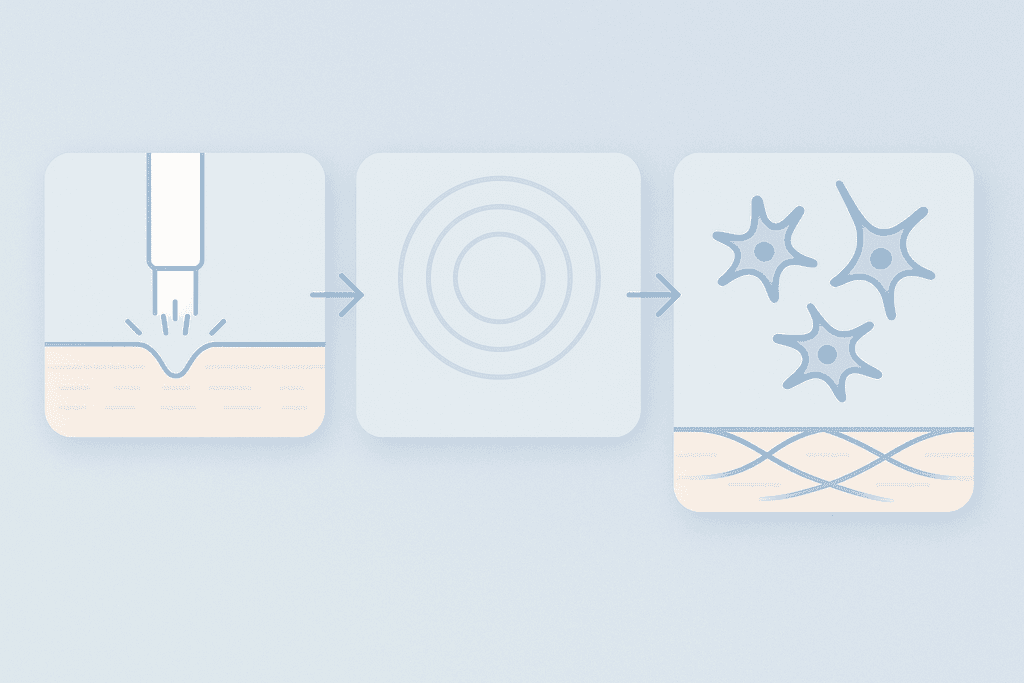
Think of fibroblast cells as tiny factories scattered throughout your skin. These cells are responsible for churning out fresh collagen, but as we age, they get lazy. They’re still there, still capable of working, but they need a wake-up call to start producing at the levels they did when you were younger.
The secret lies in something called the wound healing response:
- When your skin experiences controlled injury, fibroblasts spring into action
- They release growth factors that signal nearby cells to start repair mode
- New collagen fibers begin forming to “heal” the treated area
- The result is thicker, stronger skin tissue where it was applied
This is why certain treatments work so well for skin rejuvenation. When we create very small, controlled injuries to the skin, we’re essentially tricking your body into thinking it needs to repair itself. The growth factors released during this process don’t just patch things up. They actually stimulate your fibroblasts to produce fresh, organized collagen that makes skin look plumper and smoother.
The whole process is more sophisticated than just poking holes in your skin and hoping for the best. Different depths of injury, different types of energy, and different growth factor concentrations all influence how much collagen your body produces and where it goes.
Treatments That Actually Trigger Collagen Growth
Not all collagen treatments are created equal. Some work on the surface level, while others reach deeper layers where aging really shows up. At Beauty & Fly, we focus on methods that have solid science behind them and deliver results you can actually see. The key is matching the right treatment to what your skin needs, which is where Catherine Curtin’s 18 years of experience comes into play.
Microneedling with PRP combines two powerful approaches in one treatment. The microneedling creates thousands of tiny channels in your skin, which triggers that healing response we talked about earlier. Then we apply platelet-rich plasma from your own blood, which is loaded with growth factors that supercharge collagen production.
Here’s how different treatments work their magic:
- Vivace Fractional RF takes microneedling up a notch by adding radiofrequency energy through the needles, heating deeper skin layers to stimulate even more collagen
- Biostimulators like Sculptra work completely differently by being injected under the skin where they gradually break down, causing your body to build new collagen over several months
- NOUVAderm laser uses light energy to create controlled heat damage in deeper skin layers, triggering collagen remodeling without breaking the surface
- VI Peel removes damaged outer layers, prompting fresh collagen formation as new skin develops
What makes these treatments effective isn’t just the technology. It’s understanding which one (or which combination) will give you the best results based on your skin type, your concerns, and how much downtime you can handle. Some people need the deeper remodeling that comes from laser treatments, while others get amazing results from a series of microneedling sessions.
Catherine customizes treatment plans by looking at the whole picture. Maybe you need biostimulators to rebuild volume in your cheeks, combined with microneedling to improve texture around your mouth. Or perhaps NOUVAderm laser treatments would address both your pigmentation issues and stimulate the collagen your skin desperately needs.
What to Expect During Collagen Rebuilding
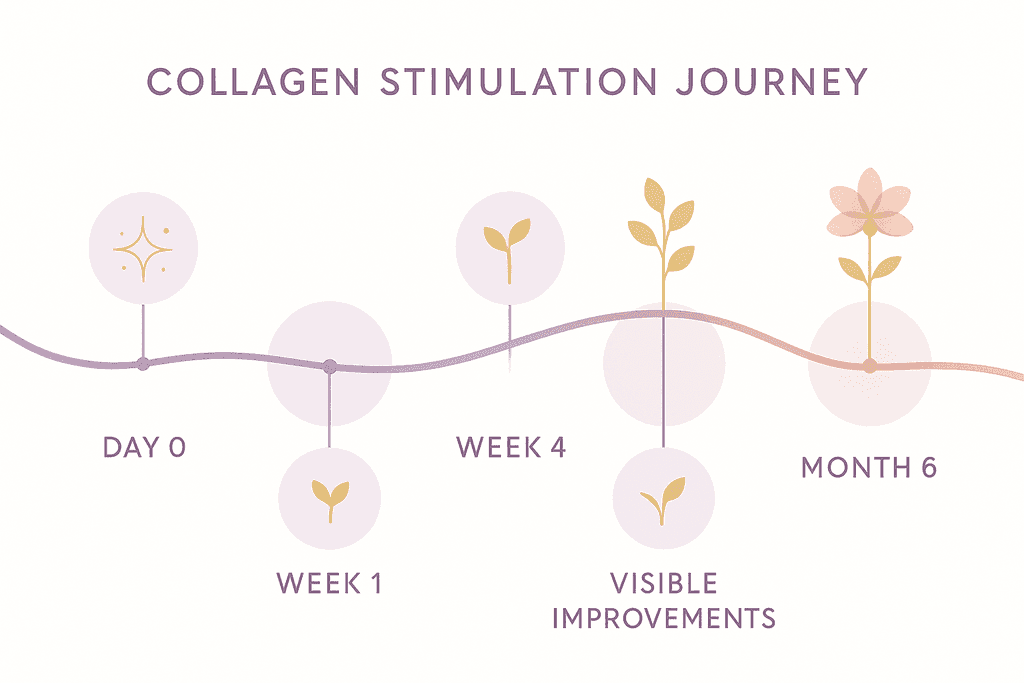
Here’s something that surprises a lot of people about collagen treatments. You won’t walk out looking completely different like you might with fillers. That’s actually a good thing, even though it requires patience. Real collagen takes time to build, which means your results develop gradually and look completely natural. Most people start noticing changes around the 4-week mark, with continued improvement for up to 12 weeks or even longer.
What to Expect During Collagen Rebuilding
The waiting period exists because your body needs time to manufacture new collagen. Remember those fibroblast factories we mentioned? They don’t work overnight. After a treatment, they slowly ramp up production, laying down new collagen fibers bit by bit.
Timeline breakdown for collagen treatments:
- Week 1-2: Initial healing, some redness or mild swelling depending on treatment
- Week 3-4: Early improvements in skin texture and glow
- Week 6-8: Noticeable changes in firmness and fine lines
- Week 10-12: Peak results as collagen continues maturing
- Months 3-6: With biostimulators, results keep improving even longer
During the actual treatment, most people describe feeling some pressure or mild discomfort, but nothing unbearable. We use numbing cream for procedures like microneedling, so you’re comfortable throughout. Recovery varies by treatment, but generally involves some redness for a day or two, similar to a mild sunburn.
The best results usually come from a series of treatments rather than just one session. Think of it like going to the gym. One workout helps, but consistent sessions over time create real change. Most collagen stimulation protocols involve 3-4 treatments spaced several weeks apart, giving your skin time to respond between sessions.
What you’re building with these treatments isn’t temporary. Unlike fillers that eventually dissolve, the collagen your body produces is yours to keep. It will age naturally over time, but many people find that annual maintenance treatments keep their results going strong for years.
Why Natural Collagen Beats Quick Fixes
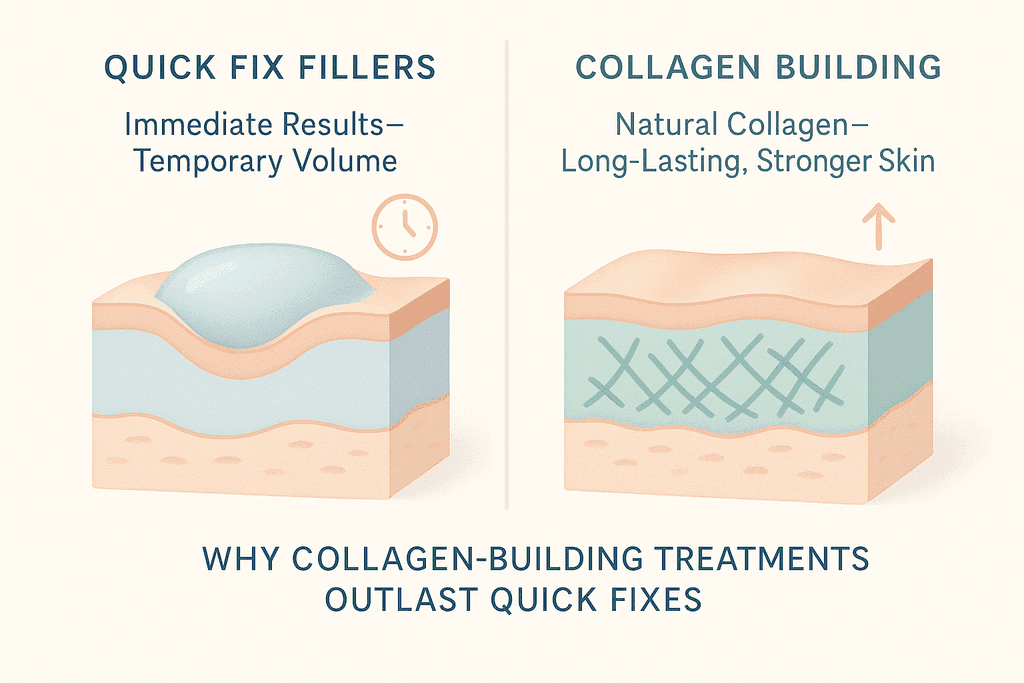
When you walk into a med spa, you’re usually offered two paths to younger-looking skin. One involves injecting fillers to plump up areas that have lost volume, which works immediately but needs to be repeated every few months. The other focuses on collagen stimulation, which takes a bit longer to show results but actually rebuilds your skin’s foundation from within. Think of fillers as renting furniture for your house, while collagen building is like renovating the structure itself. Both have their place, but understanding the difference changes how you approach aging skin.
The math behind collagen stimulation gets interesting when you look at the long-term picture. A single filler treatment might cost less upfront, but those repeated appointments every 6-12 months add up fast over the years. Collagen-building treatments like Microneedling with PRP or NOUVAderm laser work by triggering your body’s natural repair process, creating results that can last much longer because you’re actually improving your skin quality.
Comparing the Two Approaches
| Collagen Stimulation | Temporary Volumizers |
|---|---|
| Results develop gradually over weeks | Immediate visible results |
| Improves overall skin quality and texture | Adds volume to specific areas |
| Effects can last 1-2+ years | Typically lasts 6-12 months |
| More cost-effective long-term | Lower initial investment |
| Natural, subtle enhancement | Can look overdone if not done carefully |
Here’s what most people don’t realize about natural collagen production. When treatments like Vivace Fractional or PRP therapy stimulate your own collagen, the results look like you just age better than everyone else. There’s no telltale puffiness or that “done” look that screams cosmetic work.
The Smart Combination Strategy
Catherine Curtin’s approach at Beauty & Fly doesn’t force you to choose one or the other. The most comprehensive rejuvenation often comes from combining both methods strategically. You might use fillers for immediate correction of deep volume loss while simultaneously building collagen for long-term improvement.
- Fillers can address severe volume loss that collagen stimulation alone can’t fix quickly enough
- Collagen building improves skin quality, making filler results look more natural and last longer
- Starting with collagen stimulation early means you may need fewer fillers down the road
- Combining treatments creates results that look refreshed rather than artificially enhanced
The philosophy behind this balanced approach focuses on what your face actually needs rather than following trends. Some areas respond better to structure rebuilding, while others benefit from strategic volume replacement. Working with someone who understands both options means getting a personalized plan instead of a one-size-fits-all solution.
Your Skin’s Natural Renewal System
The beauty of collagen stimulation is that it works with what your body already knows how to do. Instead of just sitting on the surface, these treatments trigger your skin’s own repair process to create new collagen from the inside out. The results develop gradually over weeks and months, which means they look natural instead of sudden or overdone.
What makes this approach different is how long the benefits last. Because you’re building actual new collagen, not just filling space temporarily, the improvements can stick around for months or even years depending on the treatment. Your skin gets firmer, smoother, and more even-toned because it’s genuinely healthier.
Of course, not every treatment works the same for everyone. That’s where having someone who really understands your skin makes all the difference. Catherine Curtin creates customized treatment plans at Beauty & Fly based on what your skin actually needs, whether that’s microneedling with PRP, Vivace fractional treatments, or a combination approach.
The right collagen stimulation plan depends on your specific concerns, skin type, and what kind of downtime fits your schedule. Some people need more aggressive treatments while others do better with gentler options done more frequently.
If you’re curious about which approach might work best for your skin, a consultation at either our Bronxville or Bridgehampton location can help you figure out where to start. Sometimes the hardest part is just knowing what’s actually possible for your particular situation.
Common Questions About Collagen Stimulation
If you’re thinking about collagen stimulation treatments, you probably have some questions about how they work and what to expect. These treatments have become popular because they help your skin create its own collagen naturally, which means results that look like you and not like you had work done. Here are the answers to the most common questions we hear from patients considering these treatments at Beauty & Fly.
How long do collagen stimulation results last?
Results from collagen stimulation treatments typically last anywhere from six months to two years, depending on which treatment you choose and how your body responds. Treatments like Vivace Fractional and Microneedling with PRP work by triggering your body to produce new collagen over time, so you’ll see gradual improvements for several months after your session. The best part is that because you’re building real collagen, the results look natural and can be maintained with periodic touch-up treatments.
Is collagen stimulation painful?
Most collagen stimulation treatments involve minimal discomfort, and we use topical numbing cream to keep you comfortable during the procedure. You might feel some pressure or a slight prickling sensation, but most patients say it’s totally manageable. After treatment, your skin might feel a bit tender or tight, similar to a mild sunburn, but this usually goes away within a day or two.
How many treatments do I need?
The number of treatments depends on your skin concerns and goals, but most people see the best results with a series of three to four sessions spaced about four to six weeks apart. Some patients notice improvements after just one treatment, but building collagen takes time. During your consultation, Catherine will create a personalized treatment plan based on what you want to achieve and how your skin responds.
Can I combine collagen treatments with other procedures?
Yes, collagen stimulation treatments often work really well when combined with other services like neuromodulators or dermal fillers. For example, you might use Microneedling with PRP to improve overall skin texture and tone, while adding BOTOX to smooth specific wrinkles. Catherine specializes in creating comprehensive treatment plans that address multiple concerns at once, so you get the most natural and complete results possible.
What age should I start collagen stimulation treatments?
There’s no perfect age to start, but many people begin collagen stimulation treatments in their late twenties or early thirties as a preventive measure. Your body’s natural collagen production starts declining around age 25, so starting earlier can help maintain your skin’s firmness and elasticity. That said, these treatments work beautifully at any age when you want to address existing concerns like fine lines, texture issues, or loss of volume.
Are there any side effects or downtime?
Side effects are usually mild and temporary, including redness, slight swelling, and some tenderness that typically resolves within a few days. The NOUVAderm laser we use at Beauty & Fly is designed specifically for minimal downtime, so most patients return to their normal activities right away. You might need to avoid makeup and intense exercise for a day or two, but serious complications are rare when treatments are performed by an experienced provider like Catherine.