
You might think BOTOX creates dramatic overnight changes, but the real magic happens through tiny adjustments that most people won’t even notice. BOTOX works by making small, precise changes to specific facial muscles, which is exactly why results look so natural instead of frozen or overdone. Understanding how these subtle shifts smooth wrinkles helps you know what to expect when Catherine Curtin at Beauty & Fly creates your personalized treatment plan.
Table of Contents
What Actually Happens When You Get BOTOX
BOTOX works in a pretty straightforward way once you understand the basics. When you make facial expressions like frowning or squinting, your brain sends signals through nerves to tell specific muscles to contract. Over time, these repeated movements create lines and wrinkles in your skin. BOTOX is a purified protein that steps in and temporarily blocks those signals between your nerves and muscles. Think of it like putting a pause button on certain facial movements that cause wrinkles to form and deepen.
The treatment itself takes just a few minutes. Catherine Curtin at Beauty & Fly uses precise injection techniques to target only the muscles that need relaxing, leaving surrounding areas completely natural. Most people describe the feeling as a tiny pinch, and then you’re done.
How the Changes Unfold
Here’s what makes BOTOX different from other treatments: the results don’t show up right away. Your body needs time to respond to the treatment. The blocked nerve signals mean those muscles gradually stop contracting as forcefully, and the skin above them starts to smooth out.
The timeline looks something like this:
| Time After Treatment | What’s Happening | What You’ll Notice |
|---|---|---|
| Day 1-3 | BOTOX begins binding to nerve endings | No visible changes yet, maybe slight redness at injection sites |
| Day 3-7 | Nerve signals start getting blocked | Subtle softening begins, muscles feel slightly different |
| Day 7-14 | Full muscle relaxation takes effect | Wrinkles visibly smoothed, natural expressions maintained |
| Month 1-3 | Results at their peak | Smooth, refreshed appearance without frozen look |
| Month 3-4 | Nerve signals gradually reconnect | Muscle movement slowly returns, lines may reappear |
Why the Effects Are Temporary
Your body is pretty smart. Even though BOTOX blocks those nerve signals, your nerves don’t give up. They start creating new pathways to reconnect with the muscles. This process takes about three to four months for most people, which is why the effects gradually wear off.
Some key things to know about how long results last:
- Most people see results for 3-4 months on average
- Areas with stronger muscles (like between the eyebrows) might need retreatment sooner
- Regular treatments can sometimes extend how long results last
- Everyone’s metabolism processes BOTOX differently
The temporary nature is actually a benefit because it gives you flexibility. If you love your results, you can maintain them with regular appointments. If you want to adjust anything, you’re not locked into permanent changes.
The Muscle Relaxation That Smooths Your Skin
Your face has over 40 different muscles working every time you smile, frown, or squint at your phone. When you get BOTOX, you’re not freezing your entire face like some people worry about. Instead, the treatment works by targeting specific muscles responsible for dynamic wrinkles, the ones that create lines when you make expressions. Think of it like turning down the volume on certain muscles rather than hitting the mute button completely.

The Muscle Relaxation That Smooths Your Skin
The most common areas people treat include forehead lines, crow’s feet around the eyes, and those vertical frown lines between your eyebrows. These spots get the most action throughout your day, which is exactly why wrinkles show up there first.
- Forehead lines from raising your eyebrows
- Crow’s feet from smiling and squinting
- Frown lines from concentrating or worrying
- Bunny lines on the nose bridge
Here’s what makes the treatment work so well. When BOTOX relaxes these specific muscles, it prevents the repetitive movements that deepen wrinkles over time. But the surrounding muscles keep working normally, which means you still look like yourself. You can still smile, laugh, and show emotion.
The real skill comes down to injection placement. At Beauty & Fly, Catherine Curtin uses her 18 years of experience to determine exactly where and how much to inject for natural-looking results that enhance rather than change your appearance. Too much in the wrong spot and you might look frozen. Too little and you won’t see the smoothing effect you’re after.
Why Less Movement Means Smoother Skin
Every time you make a facial expression, your skin folds in the same places. Do this thousands of times over years and those temporary folds become permanent creases. Dynamic wrinkles form from this repeated folding, kind of like how a piece of paper develops a crease when you fold it over and over. The difference is that your skin can actually bounce back if you give it a chance.

Why Less Movement Means Smoother Skin
When BOTOX reduces muscle contraction in treated areas, your skin gets time to smooth out instead of constantly creasing. The wrinkles that were there start to soften because they’re not being reinforced every few seconds.
But there’s a balance to strike. Nobody wants to look like they can’t move their face. Strategic treatment preserves natural facial expressions while softening the lines that bother you most. The goal isn’t to eliminate all movement or make you look like a different person.
| Untreated Muscles | Treated Muscles |
|---|---|
| Full contraction with every expression | Reduced contraction, gentler movement |
| Wrinkles deepen with repeated use | Existing wrinkles soften over time |
| Lines visible at rest | Smoother appearance even when relaxed |
Think about it this way. If you had a shirt that kept getting wrinkled in the same spot, you’d need to stop folding it there to let the wrinkle relax. Your skin works similarly. Proper dosing and placement maintain your unique facial character while giving your skin the break it needs to smooth out.
The Gradual Changes You’ll Notice
BOTOX doesn’t work instantly like flipping a light switch. The changes happen gradually, which actually makes the results look more natural to people around you. Most people start noticing first changes within 3-5 days as the treated muscles begin relaxing. You might catch yourself in the mirror and think your forehead looks a bit smoother than usual.

The Gradual Changes You’ll Notice
The full effect takes about 10-14 days to develop. During this time, your skin appears progressively smoother as the muscles fully relax and stop creating those repetitive creases.
- Days 1-3: No visible changes yet, treatment is starting to work at the muscle level
- Days 3-5: First subtle smoothing becomes noticeable
- Days 7-10: Significant improvement in wrinkle depth
- Days 10-14: Full results appear, maximum smoothing effect
- Months 3-4: Results remain stable, maintenance treatment recommended
Results peak around week two and stay stable for several months. Most people find their BOTOX lasts about three to four months before they notice muscle movement gradually returning. But here’s something interesting that not everyone knows.
Regular treatments can actually prevent new wrinkles from forming because you’re consistently reducing the muscle movements that create them. Some people even find they need less product over time because their muscles get trained to move less forcefully. At Beauty & Fly, Catherine Curtin works with each patient to customize treatment timing based on how their individual muscles respond, ensuring you maintain smooth results without overdoing it.
The key is finding a provider who understands that subtle, gradual improvements look better than dramatic overnight changes. When done right, people just think you look well-rested and refreshed.
Why Small Changes Create Better Results
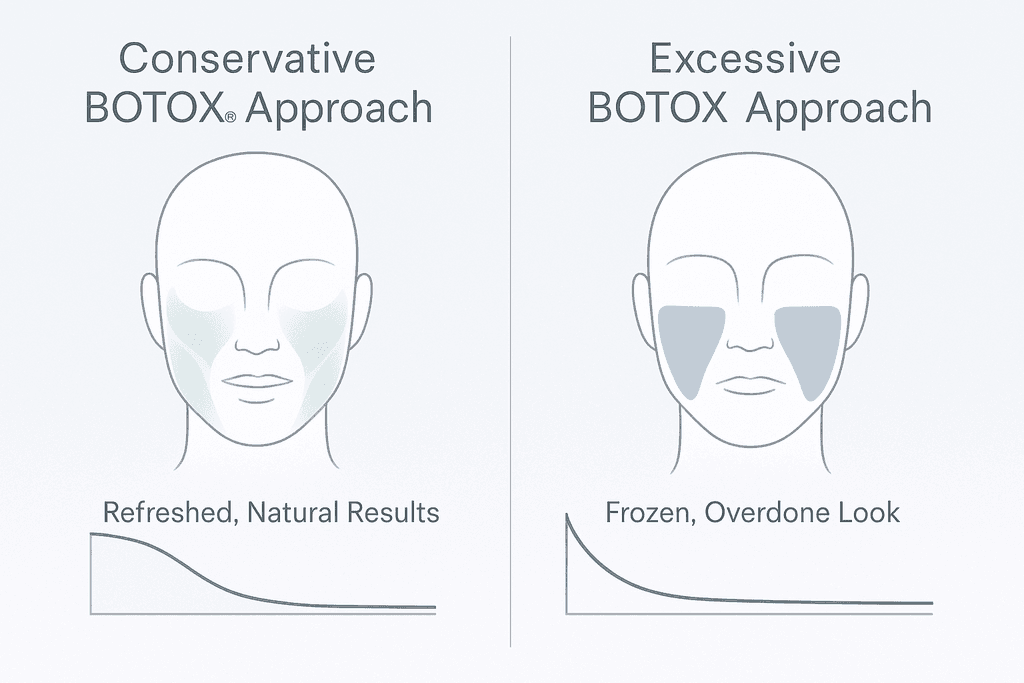
The difference between looking refreshed and looking frozen often comes down to just a few units of BOTOX. When you think about it, your face has over 40 different muscles working together to create expressions, and each person uses them differently based on years of habits and unique anatomy. Conservative dosing allows your injector to work with your natural facial movements rather than against them, which is why experienced providers like Catherine Curtin at Beauty & Fly focus on subtle enhancements that preserve your ability to express yourself. This approach takes more skill and understanding than simply injecting the same amount in the same spots for every patient. The goal isn’t to erase every line but to soften the ones that bother you while keeping you looking like yourself.
Conservative Versus Aggressive Approaches
The philosophy behind BOTOX treatment makes all the difference in your final results. Here’s how the two main approaches compare in real-world outcomes.
| Conservative BOTOX Approach | Aggressive BOTOX Approach |
|---|---|
| Maintains natural facial expressions | Can create a frozen or mask-like appearance |
| Allows for adjustments at follow-up visits | Difficult to reverse if too much is used |
| Respects individual muscle strength and patterns | Uses standardized dosing regardless of anatomy |
| Results look like a well-rested version of you | Results can look obviously “done” |
| Lower risk of unwanted side effects | Higher chance of drooping or asymmetry |
The Role of Expertise in Customization
Not all faces age the same way, and cookie-cutter treatments rarely deliver the best outcomes. An experienced injector evaluates how your specific facial muscles interact before deciding where to place BOTOX and how much to use.
- Facial anatomy varies significantly from person to person, affecting how muscles pull and create wrinkles
- Some people have stronger muscles that need slightly more product, while others respond well to minimal amounts
- The depth of existing lines, skin thickness, and previous treatments all influence the treatment plan
- Understanding these nuances comes from years of experience and ongoing training in facial aesthetics
This is where working with someone like Catherine, who has over 18 years in aesthetic medicine and teaches other practitioners, makes a real difference. She can spot the subtle details that determine whether your results will look natural or overdone.
Building Results Over Time
Starting with less product gives you room to add more if needed, but you can’t take it back once it’s injected. This is why many skilled providers prefer a gradual approach.
- Initial treatment uses conservative dosing to assess your response
- Follow-up appointment two weeks later allows for small adjustments
- Future treatments can be fine-tuned based on how your muscles responded
- Over time, you may actually need less BOTOX as muscles become trained to relax
This method might seem slower, but it consistently produces results that people actually want to keep. Nobody regrets looking natural.
Your Path to Natural Wrinkle Smoothing
The beauty of BOTOX lies in how it works through small, targeted changes rather than dramatic transformations. When you understand that it’s simply relaxing specific muscles that cause wrinkles, the whole process makes more sense. The results develop gradually over about two weeks, which means you won’t walk out looking completely different from when you walked in.
The real difference between natural-looking results and that frozen appearance comes down to who’s holding the syringe. Expert injection technique matters more than most people realize because placing BOTOX in exactly the right spots at exactly the right doses requires both medical knowledge and artistic judgment.
At Beauty & Fly, Catherine Curtin brings 18 years of aesthetic medicine experience to every treatment, which means she’s seen thousands of faces and knows how to create results that enhance rather than change who you are. She works solo at both the Bronxville and Bridgehampton locations, so you’re always getting that same level of expertise and personalized attention.
The goal isn’t to erase every line or create a completely smooth face. It’s about softening the wrinkles that bother you while keeping your natural expressions intact, so you still look like yourself on your best day.
If you’re curious about what BOTOX could do for your specific concerns, there are probably a few questions on your mind about how it all works in practice.
Common Questions About BOTOX Changes
If you’re thinking about BOTOX for the first time, you probably have some questions about what actually happens after treatment. Most people wonder about timing, how natural the results will look, and whether they’ll still be able to move their face normally. These are all smart things to consider before booking your appointment. Here are the answers to the most common questions we hear from patients at Beauty & Fly.
How quickly will I see changes after BOTOX?
You won’t see results right away, but they start showing up within three to five days after your treatment. The full effect usually takes about two weeks to settle in. Some people notice small changes sooner, but it’s best to wait the full two weeks before deciding if you need any adjustments.
Will BOTOX make my face look frozen?
Only if too much is used or it’s placed incorrectly. When done right by an experienced provider like Catherine Curtin at Beauty & Fly, BOTOX softens wrinkles while keeping your natural expressions intact. The goal is always to look like yourself, just more rested and refreshed. A frozen look happens when someone goes overboard, which is why choosing a skilled injector matters so much.
How long do the wrinkle-smoothing effects last?
Most people see results that last three to four months. Some areas might last a bit longer, especially after you’ve had a few treatments. Your body gradually breaks down the BOTOX over time, so the muscle movement slowly returns and wrinkles start to reappear.
Can I still make facial expressions after treatment?
Yes, absolutely. BOTOX relaxes the specific muscles that cause wrinkles when you make repetitive expressions, but it doesn’t paralyze your entire face. You’ll still smile, laugh, and show emotion naturally. The difference is that those deep lines won’t crease as much when you do.
What makes BOTOX results look natural vs overdone?
The difference comes down to dosage and placement. Natural results happen when your provider uses just enough BOTOX to smooth wrinkles without completely stopping muscle movement. It also matters which areas get treated and how the product is distributed. An experienced injector knows how to balance smoothing lines with maintaining your ability to express yourself.
How often should I get BOTOX to maintain results?
Most people come back every three to four months to keep their results consistent. Some patients find they can stretch it to five or six months after regular treatments because the muscles stay more relaxed over time. Catherine works with each patient to create a schedule that fits their goals and budget, so you’re never locked into anything rigid.