
Your skin has an incredible ability to heal itself, and PRP therapy taps into that power by using your own blood’s natural growth factors to refresh tired, aging skin. At Beauty & Fly, we offer both standalone PRP therapy and microneedling with PRP, two treatments that sound similar but work in different ways to give you that coveted glow. Understanding how each one delivers results will help you pick the right path for your unique skin goals.
Table of Contents
What Makes PRP Treatments Special
Your blood contains tiny cells called platelets that rush to any injury and start the healing process. When doctors concentrate these platelets into a small amount of plasma, they create something called platelet-rich plasma, or PRP. This concentrated mixture has about 5 to 10 times more platelets than your regular blood, which means it’s packed with powerful growth factors that tell your skin to repair and rebuild itself. PRP therapy uses your own blood, so there’s nothing artificial or foreign going into your skin.
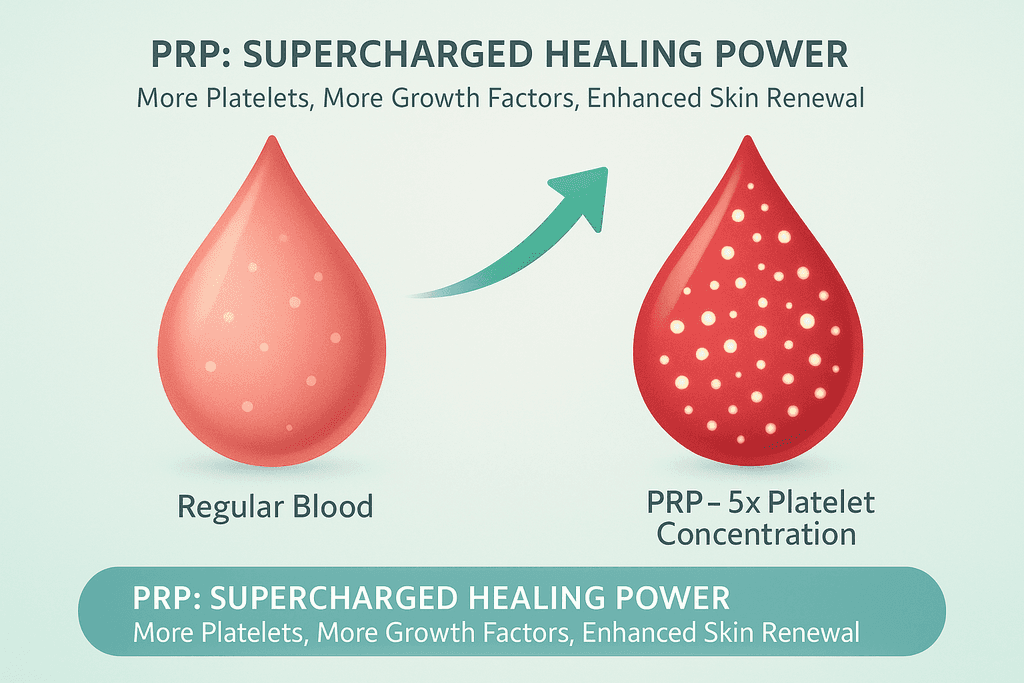
The growth factors in PRP work like tiny messengers that wake up your skin cells. They trigger your body to make fresh collagen, which is the protein that keeps skin firm and smooth. At Beauty & Fly, Catherine Curtin uses PRP in different ways to help clients achieve natural-looking results, whether it’s for facial rejuvenation or hair restoration.
How Your Body Creates PRP
The process of making PRP is pretty straightforward. A small amount of blood gets drawn from your arm, just like a regular blood test. Then it goes into a special machine called a centrifuge that spins really fast to separate the different parts of your blood.
Here’s what happens during the separation:
- Red blood cells sink to the bottom because they’re heavier
- Platelet-rich plasma rises to the middle layer with a golden color
- Regular plasma without many platelets floats on top
- The middle layer gets collected and used for your treatment
Why PRP Works for Skin Rejuvenation
The magic of PRP comes from what’s inside those concentrated platelets. They release growth factors that do several important jobs in your skin. These natural proteins signal your skin to start repairing itself, just like it would after a small cut or scrape, but in a controlled way that improves your appearance.
| What PRP Contains | What It Does |
|---|---|
| Growth Factors | Tells cells to multiply and repair |
| Proteins | Builds new collagen and elastin |
| Cytokines | Reduces inflammation and redness |
| Stem Cell Activators | Wakes up dormant skin cells |
Because PRP comes from your own body, the risk of allergic reactions is extremely low. Your skin recognizes these growth factors as natural, which is why many people prefer PRP treatments over synthetic options. The question isn’t whether PRP works, but rather how it should be delivered to your skin for the best results.
How PRP Therapy Works on Its Own
Your own blood contains powerful healing properties that can actually improve your skin from the inside out. PRP therapy involves drawing a small amount of your blood, spinning it in a centrifuge to concentrate the platelets, and then injecting that platelet-rich plasma directly into targeted areas of your face. The platelets release growth factors that tell your skin cells to start producing fresh collagen and elastin. It’s basically like giving your skin a wake-up call to act younger again. The process takes about 30 to 45 minutes from start to finish, and most people find it surprisingly comfortable.
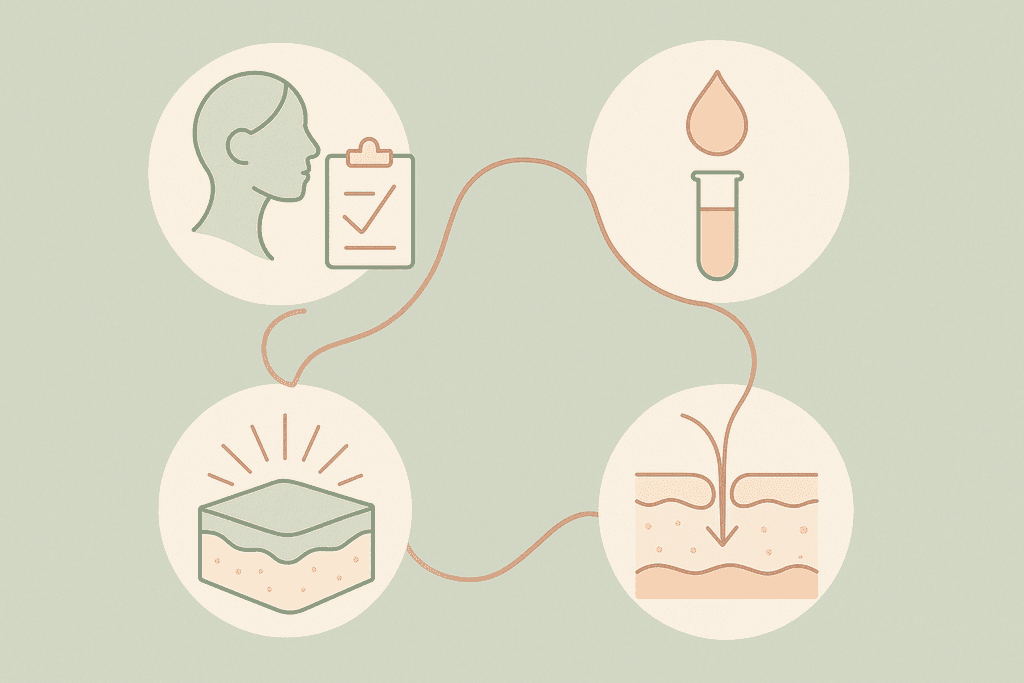
How PRP Therapy Works on Its Own
The beauty of standalone PRP therapy is how natural the results look as they develop over time. You won’t walk out looking dramatically different, which is actually a good thing.
- Fine lines and wrinkles gradually soften as new collagen fills in from beneath
- Skin texture becomes smoother and more refined
- Overall radiance improves as cell turnover increases
- Skin tone evens out with reduced dullness
At Beauty & Fly, Catherine customizes the injection depth and placement based on what your skin actually needs. Some areas might need deeper injections while others benefit from more superficial placement. Most clients notice their skin looking fresher within a few weeks, with full results appearing around the three-month mark. The downtime is minimal, usually just some redness and maybe slight swelling for a day or two.
| What PRP Therapy Treats Well | What It Doesn’t Treat Effectively |
|---|---|
| Fine lines and early wrinkles | Deep, established wrinkles |
| Dull, tired-looking skin | Severe acne scarring |
| Mild texture irregularities | Large pores |
| Overall skin quality improvement | Significant volume loss |
| Preventative aging care | Active acne breakouts |
How Microneedling with PRP Amplifies Results
When you combine microneedling with PRP, something interesting happens that makes the treatment more powerful than either approach alone. Microneedling uses tiny needles to create thousands of controlled micro-injuries in your skin, which sounds intense but actually triggers your body’s natural healing response. These microscopic channels serve a dual purpose. First, they allow the PRP to penetrate much deeper into your skin layers than it could through injection alone. Second, the microneedling process itself stimulates collagen production as your skin rushes to repair those tiny channels.
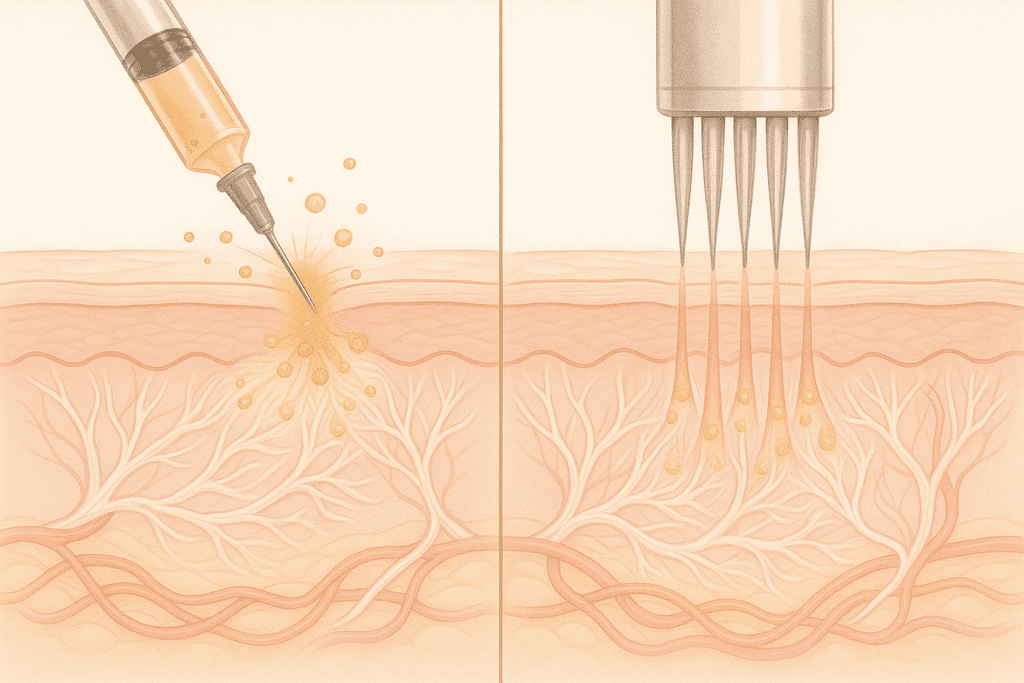
How Microneedling with PRP Amplifies Results
Think of it like this: standalone PRP works from specific injection points outward, while microneedling with PRP covers the entire treatment area with both mechanical stimulation and growth factor delivery.
The combination treatment addresses surface concerns and deeper structural issues at the same time. This dual-action approach means you get faster and more noticeable improvements compared to either treatment by itself. The Microneedling with PRP service at Beauty & Fly is particularly effective for people dealing with textural problems that standalone PRP might not fully address.
- Acne scars respond well because the needling breaks up scar tissue while PRP promotes healing
- Large pores shrink as collagen production tightens the skin
- Uneven texture smooths out more dramatically
- Deeper wrinkles see better improvement than with PRP alone
- Hyperpigmentation fades as skin cell turnover accelerates
The downtime is slightly more than standalone PRP therapy, but still pretty manageable. Most people experience redness and some swelling for about two to three days, similar to a moderate sunburn. Your skin might feel a bit rough or flaky as it heals, but that’s actually a sign the treatment is working.
| Benefits of Combining Treatments | Considerations to Keep in Mind |
|---|---|
| Deeper PRP penetration into skin layers | Slightly longer recovery time |
| Dual collagen stimulation mechanisms | More intensive treatment sensation |
| Better results for textural issues | May require numbing cream |
| Faster visible improvements | Higher investment than PRP alone |
| More comprehensive skin renewal | Not ideal right before big events |
Choosing the Right Treatment for Your Skin Goals
The question isn’t really which treatment is better, but rather which one matches what you’re trying to achieve with your skin. Standalone PRP therapy works beautifully if you’re in your 30s or early 40s and want to maintain your skin quality before major aging signs appear. It’s also great if you have sensitive skin that might not tolerate the more intensive microneedling process. People who want subtle, gradual improvements without any real downtime often prefer this approach. The results are natural-looking and develop slowly, which means nobody will ask if you “had work done.”
Microneedling with PRP makes more sense when you’re dealing with specific problems that need a stronger intervention.
- Acne scarring that affects your confidence
- Noticeable texture issues that makeup can’t hide
- Enlarged pores that bother you
- More advanced aging signs that need comprehensive treatment
- Stubborn hyperpigmentation that hasn’t responded to other treatments
Your skin type and how sensitive you are definitely play a role in which treatment Catherine might recommend. Some people have skin that reacts strongly to any kind of trauma, even controlled trauma like microneedling. Others heal quickly and can handle more aggressive treatments without issues.
The timeline you’re working with matters too. If you have a wedding or important event coming up in six weeks, standalone PRP therapy might be the safer choice since the downtime is so minimal. But if you’re planning ahead and have a few months before you need to look your best, microneedling with PRP can deliver more dramatic results.
| Best Candidates for PRP Therapy | Best Candidates for Microneedling with PRP |
|---|---|
| Early signs of aging | Moderate to advanced aging signs |
| Preventative care focus | Corrective treatment needs |
| Sensitive skin types | Resilient skin that heals well |
| Minimal downtime required | Can accommodate 2-3 days recovery |
| Subtle, gradual improvements desired | More dramatic results wanted |
| General skin quality enhancement | Specific textural concerns |
Some clients actually benefit from alternating between both treatments throughout the year. You might do microneedling with PRP twice a year for deeper renewal, then maintain results with standalone PRP therapy sessions in between. During your consultation at Beauty & Fly, Catherine evaluates your skin in person and discusses your goals to recommend the approach that makes the most sense. Budget and how much time you can take for recovery are practical factors worth considering too, and there’s no judgment about those realities.
What to Expect from Each Treatment Experience
When you’re choosing between PRP therapy and microneedling with PRP, understanding the practical side of each treatment makes a real difference in your decision. Both options take about the same amount of time in the treatment chair, usually between 45 and 60 minutes from start to finish. The real differences show up in how your skin looks and feels in the days after your appointment. Your schedule and comfort level with visible recovery time might be the deciding factor here.
Recovery Differences You Should Know
The downtime between these two treatments varies quite a bit. PRP therapy alone typically causes just slight redness that fades within hours, making it easy to fit into a busy lifestyle without anyone noticing you had work done.
- PRP therapy creates minimal visible changes, mostly light redness
- Microneedling with PRP involves 2-3 days of more noticeable redness
- Some flaking and peeling happens with microneedling as skin renews
- Most people can return to normal activities quickly with both options
At Beauty & Fly, Catherine Curtin walks you through exactly what to expect based on your skin type and goals. She helps you plan your treatment timing around important events or work commitments.
Timeline for Seeing Your Glow
Neither treatment gives instant results, but that’s actually a good thing. Your skin builds new collagen over 4-6 weeks, creating natural-looking improvements that develop gradually instead of appearing overnight.
- Initial treatment session addresses your specific concerns
- Follow-up sessions spaced 4-6 weeks apart build on previous results
- Most people see optimal results after 3-4 treatment sessions
- Maintenance treatments every few months keep your skin glowing long-term
The best part is that both PRP therapy and microneedling with PRP work beautifully alongside other services. Many patients combine these treatments with neuromodulators or dermal fillers for a complete approach to facial rejuvenation.
Finding Your Path to Radiant Skin
Both PRP therapy and microneedling with PRP offer natural ways to improve your skin using your body’s own healing abilities. The main difference comes down to what your skin actually needs right now. If you’re dealing with deeper concerns like wrinkles, volume loss, or stubborn scars, microneedling with PRP creates those tiny channels that help the platelets work deeper in your skin. For overall texture, tone, and that healthy glow, PRP therapy alone might be exactly what you need.
The truth is, there’s no one-size-fits-all answer here. Your skin is unique, and what works amazingly for your friend might not be the best choice for you.
At Beauty & Fly, Catherine takes time during consultations to really look at your skin and listen to what bothers you most. She’s been doing this for over 18 years, so she knows how to match the right treatment to your specific goals. Some people benefit most from microneedling with PRP for targeted concerns, while others get better results with PRP therapy on its own.
The best part about both options is that they use your own platelets, so you’re not putting anything foreign into your skin. You’re just giving your body the extra boost it needs to repair and refresh itself from within.
Still wondering which approach makes sense for your skin? The answers might surprise you once you understand how each treatment addresses different layers and concerns.
Common Questions About PRP Treatments
When you’re thinking about trying PRP therapy or microneedling with PRP, you probably have some questions bouncing around in your head. These treatments are becoming more popular, but they’re still pretty new to a lot of people. Here are the answers to the most common questions we hear at Beauty & Fly, so you can feel confident about what to expect.
Does PRP therapy hurt compared to microneedling with PRP?
Microneedling with PRP typically causes more discomfort than PRP therapy alone because tiny needles are creating controlled micro-injuries in your skin. Most people describe it as a scratchy or prickly sensation, but we apply numbing cream beforehand to keep you comfortable. Standalone PRP therapy involves injections similar to fillers, which most patients tolerate well with minimal discomfort.
How many treatments do I need to see results?
For microneedling with PRP, most people see the best results after three to four sessions spaced about four to six weeks apart. PRP therapy for specific concerns like hair loss usually requires three to six treatments initially, then maintenance sessions every few months. Catherine Curtin creates a personalized treatment plan during your consultation based on your skin goals and how your body responds.
Can I combine PRP treatments with Botox or fillers?
Yes, you can absolutely combine PRP treatments with other cosmetic injections like BOTOX or dermal fillers. Many patients at Beauty & Fly do exactly this to address multiple concerns at once. The timing matters though, so Catherine will help you figure out the best schedule to get the most out of each treatment without interfering with results.
How long do results from PRP treatments last?
Results from both PRP therapy and microneedling with PRP can last anywhere from six months to over a year, depending on your age, skin condition, and lifestyle factors. Because these treatments work by stimulating your body’s natural healing and collagen production, the improvements develop gradually and tend to look natural. Most people schedule maintenance treatments once or twice a year to keep their glow going strong.
Is there anyone who shouldn’t get PRP treatments?
PRP treatments aren’t recommended if you’re pregnant, have active skin infections, certain blood disorders, or are on blood thinners. People with autoimmune conditions or a history of keloid scarring should discuss their medical history carefully with their provider. Catherine reviews your complete health background during consultation to make sure PRP is safe and effective for you.
What’s the difference in cost between the two treatments?
Microneedling with PRP generally costs more than standalone PRP therapy because it combines two procedures in one session. The exact pricing varies based on the treatment area and how many sessions you need. Beauty & Fly offers patient memberships and financing options to make these treatments more accessible, and Catherine can discuss all your options during your consultation.