
More people chose non-surgical aesthetics last year than ever before, with millions opting for treatments like dermal fillers and laser therapy over traditional facelifts. The appeal is clear: facial rejuvenation without weeks of recovery or surgical risks sounds ideal. But before booking your first appointment at a practice like Beauty & Fly in Bronxville or Bridgehampton, understanding both the advantages and limitations of minimal downtime treatments helps you make the right choice for your goals.
Table of Contents
- Understanding Minimally Invasive Treatments
- The Major Benefits of Minimally Invasive Facial Rejuvenation
- The Drawbacks and Limitations to Consider
- Choosing the Right Treatments for Your Goals
- Making an Informed Decision About Your Facial Rejuvenation
- Finding Your Path to Natural Facial Rejuvenation
- Common Questions About Minimally Invasive Facial Rejuvenation
Understanding Minimally Invasive Treatments
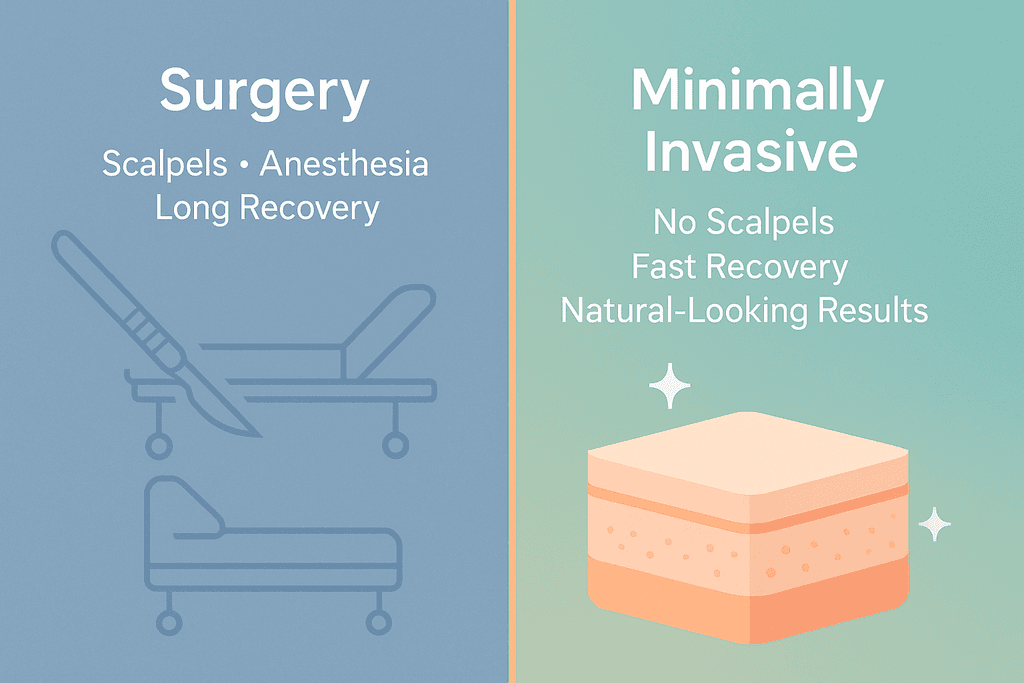
More than 13 million minimally invasive cosmetic procedures were performed in the United States last year, making them far more popular than traditional plastic surgery. Minimally invasive facial rejuvenation refers to treatments that improve your appearance without requiring scalpels, general anesthesia, or lengthy recovery periods. These procedures work beneath or on the surface of your skin to address aging signs, but they don’t involve cutting into tissue the way surgery does. The results look natural, the risks are lower, and most people return to their normal activities within days or even hours.
What Makes a Treatment Minimally Invasive
The term “minimally invasive” means the treatment enters or affects your skin in some way, but doesn’t require surgical incisions. Think of it like the difference between getting a shot and having an operation. These treatments might use needles, lasers, or energy devices that penetrate the skin’s surface to create change from within.
Here’s what sets minimally invasive apart from other options:
- They involve some level of skin penetration, unlike truly non-invasive treatments that only work on the surface
- Recovery time is measured in days, not weeks or months
- Most procedures can be done during a lunch break with minimal downtime
- Results appear gradually and look natural rather than dramatically different overnight
Main Treatment Categories
Minimally invasive facial rejuvenation falls into three main groups, each working differently to refresh your appearance. Injectables like BOTOX® and dermal fillers are the most common, using precise needle placement to smooth wrinkles or restore volume. Energy-based devices such as the NOUVAderm laser use controlled heat or light to trigger your skin’s natural healing response. Regenerative treatments like PRP therapy and microneedling harness your body’s own healing abilities to rebuild collagen and improve texture.
At Beauty & Fly, Catherine Curtin combines these approaches based on each person’s unique needs. The goal isn’t to change how you look, but to help you look like the best version of yourself.
| Treatment Category | Examples | What They Address |
|---|---|---|
| Injectables | BOTOX®, dermal fillers, biostimulators | Wrinkles, volume loss, facial contours |
| Energy-Based Devices | NOUVAderm laser, Vivace Fractional | Skin texture, pores, pigmentation, collagen production |
| Regenerative Treatments | Microneedling with PRP, PRP therapy | Overall skin quality, scars, hair loss, natural rejuvenation |
| Chemical Peels | VI Peel | Acne, sun damage, hyperpigmentation, fine lines |
How These Treatments Actually Work
Most minimally invasive treatments work by triggering your body’s natural repair systems. When you get microneedling, for example, tiny needles create controlled micro-injuries that signal your skin to produce fresh collagen. Lasers use heat to achieve a similar effect, while PRP therapy delivers concentrated growth factors directly where your skin needs them most.
The beauty of non-surgical aesthetics is that results develop over time as your body does the work:
- Collagen production increases gradually over several weeks
- New skin cells replace damaged ones naturally
- Blood flow improves to nourish treated areas
- Your own healing mechanisms create lasting improvements
Minimal downtime treatments have become the preferred choice for people who want real results without the commitment and risks of surgery. The question isn’t whether they work, but which combination is right for your specific concerns.
The Major Benefits of Minimally Invasive Facial Rejuvenation
Most people who get facial surgery need at least two weeks off work to recover, but that’s not the case with non-surgical aesthetics. The biggest advantage of minimally invasive facial rejuvenation is that you can walk in during your lunch break and return to your normal day almost immediately. There’s no general anesthesia, no surgical incisions, and no lengthy healing period that keeps you hiding at home. For people with busy lives and careers, this minimal downtime makes all the difference between actually getting treatment and just thinking about it for years.

The Major Benefits of Minimally Invasive Facial Rejuvenation
The risk profile is also much lower compared to going under the knife. You’re not dealing with surgical complications, infections, or scarring that can happen with invasive procedures.
- Natural-looking results that enhance your features instead of changing who you are
- More affordable options with treatments ranging from a few hundred to a few thousand dollars instead of tens of thousands
- Gradual improvements that let you ease into your new look without shocking everyone you know
- Customizable treatments that can be adjusted over time as your face changes
- Minimal discomfort during procedures, often just a slight pinch or tingling sensation
The ability to start small and build on results is something surgery just can’t offer. If you get a facelift and don’t like the outcome, you’re pretty much stuck with it. With treatments like BOTOX or dermal fillers, you can try something conservative first and add more later if you want. At Beauty & Fly, Catherine Curtin works with each patient to create a plan that fits their comfort level and goals, never pushing for more than what feels right.
Another often overlooked benefit is that no one has to know you had anything done. The changes happen gradually enough that people just think you look well-rested or like you’ve been taking better care of yourself.
The Drawbacks and Limitations to Consider
Here’s the part that catches some people off guard. These treatments don’t last forever, and that’s probably the biggest downside to consider. BOTOX typically lasts three to four months, fillers might give you six months to two years depending on the type, and even advanced treatments like microneedling with PRP require multiple sessions and periodic maintenance. You’re essentially committing to an ongoing relationship with your provider, not a one-and-done situation. This means scheduling regular appointments and budgeting for treatments as part of your routine.

The Drawbacks and Limitations to Consider
There are also real limitations to what non-surgical options can achieve. If you have significant skin laxity or major volume loss, injectables and lasers can only do so much.
| Aspect | Minimally Invasive | Surgical |
|---|---|---|
| Duration of Results | 3 months to 2 years | 10+ years |
| Maintenance | Regular treatments needed | One-time procedure |
| Recovery Time | Hours to days | Weeks to months |
The costs can add up over time too. While a single treatment might seem affordable compared to surgery, when you calculate years of maintenance, the numbers start looking different. Some people find that minor side effects like bruising, swelling, or redness can be annoying, even if they’re temporary and mild.
You also need patience with certain treatments. The NOUVAderm laser or PRP therapy don’t give you instant results like fillers do. Your skin needs time to produce new collagen and heal itself, which means waiting weeks or even months to see the full effect. And honestly, not everyone is a good candidate for minimal downtime treatments, which is why having realistic expectations matters more than anything else.
Choosing the Right Treatments for Your Goals
The key to getting good results is matching the right treatment to your specific concern, and that’s where experience really matters. If you’re bothered by crow’s feet or forehead lines that appear when you make expressions, neuromodulators like BOTOX work by relaxing those muscles. But if you have deep lines that are visible even when your face is at rest, you’re looking at static wrinkles that need dermal fillers to plump up the skin. These are two completely different problems that require different solutions, and using the wrong approach just wastes your time and money.
For issues like uneven skin texture, large pores, or pigmentation, laser treatments become the better option. The NOUVAderm laser targets these concerns at a deeper level than topical products ever could.
- Fine lines and wrinkles around eyes and forehead: Neuromodulators
- Lost volume in cheeks or under eyes: Dermal fillers or biostimulators
- Rough texture and enlarged pores: NOUVAderm laser or Vivace Fractional
- Acne scars and hyperpigmentation: VI Peel or microneedling with PRP
- Overall skin quality and glow: PRP therapy or Microinfusion Facial
- Thinning hair: PRP therapy for hair loss
Most people actually benefit from a combination approach rather than just one treatment. Someone might use BOTOX for expression lines, add a bit of filler for volume loss, and do quarterly laser sessions for texture. This layered strategy addresses facial rejuvenation from multiple angles and tends to give more natural, comprehensive results than focusing on just one area.
There are times when surgery really is the better answer though. If you have significant jowling, a very loose neck, or extreme volume loss throughout your face, you might be disappointed with what non-surgical options can do. An experienced provider like Catherine Curtin can help you understand whether your goals are realistic with minimal downtime treatments or if you should consider consulting with a plastic surgeon instead. That honest conversation saves you from spending money on treatments that won’t give you what you’re hoping for.
Making an Informed Decision About Your Facial Rejuvenation
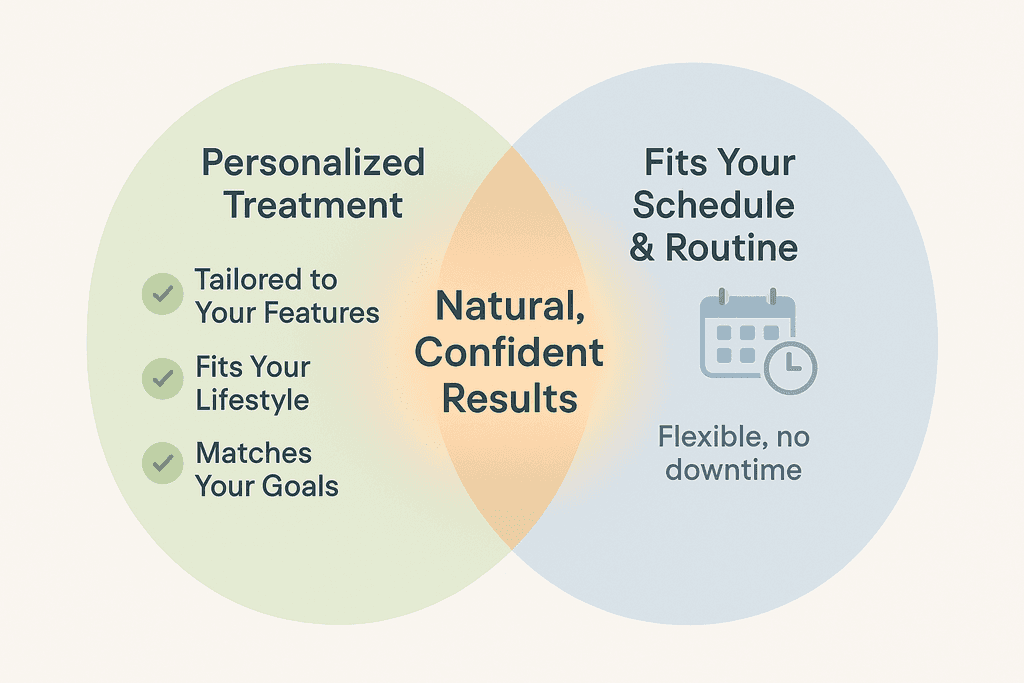
Choosing the right facial rejuvenation path isn’t about following trends or copying someone else’s results. It’s about understanding what works for your unique face, lifestyle, and goals. The truth is that minimally invasive treatments work best when they’re tailored to you, not applied like a cookie-cutter solution. Before you book any procedure, you need to think through how these treatments fit into your daily life and what you’re actually hoping to achieve.
Your lifestyle plays a bigger role than you might think. If you can’t take even a few days for mild redness or swelling, certain treatments might not align with your schedule right now.
Questions to Ask Yourself First
- Can I realistically follow post-treatment care instructions for the best results?
- Am I looking for subtle enhancement or dramatic change?
- Do I have the patience for gradual improvements over several sessions?
- What’s my actual budget for both initial treatments and maintenance?
- Am I comfortable with the idea of ongoing treatments to maintain results?
The provider you choose matters just as much as the treatment itself. Someone with years of experience in non-surgical aesthetics will see things a beginner might miss. At Beauty & Fly, Catherine Curtin brings over 18 years of aesthetic medicine expertise to every consultation, which means you’re getting someone who’s seen thousands of faces and knows how to create natural results.
Why Personalized Plans Beat Standard Protocols
Your face ages differently than everyone else’s. Maybe you have more volume loss in your cheeks, or maybe fine lines around your eyes are your main concern. A one-size-fits-all approach simply doesn’t work for facial rejuvenation because no two faces are identical.
- Custom treatment plans address your specific concerns, not generic aging signs
- Combining treatments often produces better results than single procedures alone
- Starting conservatively lets you build results gradually without overdoing it
- Adjustments can be made along the way based on how your skin responds
The best approach is usually starting small and building from there. This gives you control over your results and prevents that overdone look that screams “I had work done.” It also lets you see how your skin responds before committing to more intensive treatments.
Self-Assessment Checklist
Use this checklist to determine if minimal downtime treatments align with your needs:
- I want to improve my appearance without surgery or long recovery times
- I’m willing to commit to multiple sessions for optimal results
- I have realistic expectations about what non-surgical treatments can achieve
- I can afford ongoing maintenance treatments to preserve my results
- I value natural-looking enhancements over dramatic transformations
- I’m comfortable discussing my concerns openly with a provider
If you checked most of these boxes, minimally invasive facial rejuvenation might be exactly what you’re looking for. The key is finding a provider who listens to your goals and creates a plan that makes sense for your face and your life.
Finding Your Path to Natural Facial Rejuvenation
Minimally invasive facial rejuvenation comes with some pretty clear advantages. You get minimal downtime, lower risks compared to surgery, and results that look natural instead of overdone. Most people can get treatments during lunch and go right back to their day. The trade-off is that these results don’t last forever, so you’ll need maintenance appointments to keep things looking fresh.
The real question is whether these treatments match what you’re trying to achieve. If you’re looking to soften fine lines, restore some lost volume, or improve your skin texture without going under the knife, non-surgical aesthetics might be exactly what you need. But if you’re hoping for dramatic changes that last decades, you might need to adjust your expectations.
Working with someone who actually knows what they’re doing makes all the difference. At Beauty & Fly, Catherine Curtin brings over 18 years of experience to every treatment, from neuromodulators like BOTOX to advanced options like Microneedling with PRP and the NOUVAderm laser. She’s the only provider you’ll see, which means your treatment plan gets shaped around your specific concerns, not a one-size-fits-all approach.
The best part about these treatments is that they give you control over how you age. You’re not locked into anything permanent, and you can adjust your plan as your needs change over time.
Still have questions about which treatments might work for your situation? The answers below cover some of the most common concerns people have when they’re considering their options.
Common Questions About Minimally Invasive Facial Rejuvenation
Thinking about trying non-surgical aesthetics but not sure what to expect? Most people have similar questions before their first treatment, especially when it comes to comfort, timing, and whether these options actually work. Here are the answers to what clients ask most often when considering facial rejuvenation without going under the knife.
How much do minimally invasive treatments hurt?
Most treatments involve minimal discomfort rather than actual pain. Neuromodulators like BOTOX® feel like tiny pinches that last just seconds, while dermal fillers often include numbing agents mixed right into the product. Treatments like microneedling or the NOUVAderm laser might cause some tingling or warmth, but topical numbing cream is usually applied first to keep you comfortable throughout the session.
How long do results typically last?
It depends on what treatment you choose. Neuromodulators typically last three to four months, while dermal fillers can last anywhere from six months to two years depending on the type and area treated. Biostimulators and treatments like PRP therapy work by triggering your body’s natural collagen production, so results develop gradually and can last a year or longer with proper maintenance.
What’s the recovery time for most treatments?
This is where minimal downtime treatments really shine compared to surgery. Injectable treatments usually require no downtime at all, though you might have minor swelling or bruising for a day or two. Laser treatments and chemical peels like the VI Peel might cause some redness and peeling for about a week, but most people return to normal activities right away. At Beauty & Fly, Catherine designs treatment plans that fit into your schedule without requiring extended time off work or social events.
Are these treatments safe for all skin types?
Yes, most minimally invasive treatments can be safely customized for different skin types and tones. Some treatments require adjustments in technique or settings based on your specific skin characteristics, which is why working with an experienced provider matters. Catherine evaluates each patient individually to determine the safest and most effective approach for their unique skin.
When will I see results from my treatment?
Timing varies by treatment type. Neuromodulators take about three to seven days to show full results, while fillers provide immediate volume that settles into its final look within two weeks. Collagen-building treatments like microneedling with PRP or biostimulators work more gradually, with improvements appearing over several weeks to months as your skin naturally regenerates.
How do costs compare to surgical options?
Non-surgical treatments cost significantly less upfront than surgery, often ranging from a few hundred to a few thousand dollars depending on what you’re treating. While surgical facelifts can cost tens of thousands of dollars plus recovery time and risks, facial rejuvenation through injectables and other treatments lets you invest gradually and adjust your approach as you go. Many practices, including Beauty & Fly, offer membership programs and financing to make treatments more accessible.