
You’ve probably bought a skin care product your friend swore by, only to find it did absolutely nothing for you or made things worse. That’s because personalized skin care recognizes what dermatologists have known for years—your skin’s needs are completely different from anyone else’s, shaped by your genetics, environment, and lifestyle. At Beauty & Fly, we see this every day when clients come in frustrated after spending hundreds on generic products that promised miracles but delivered disappointment.
Table of Contents
The Problem with Generic Skin Care
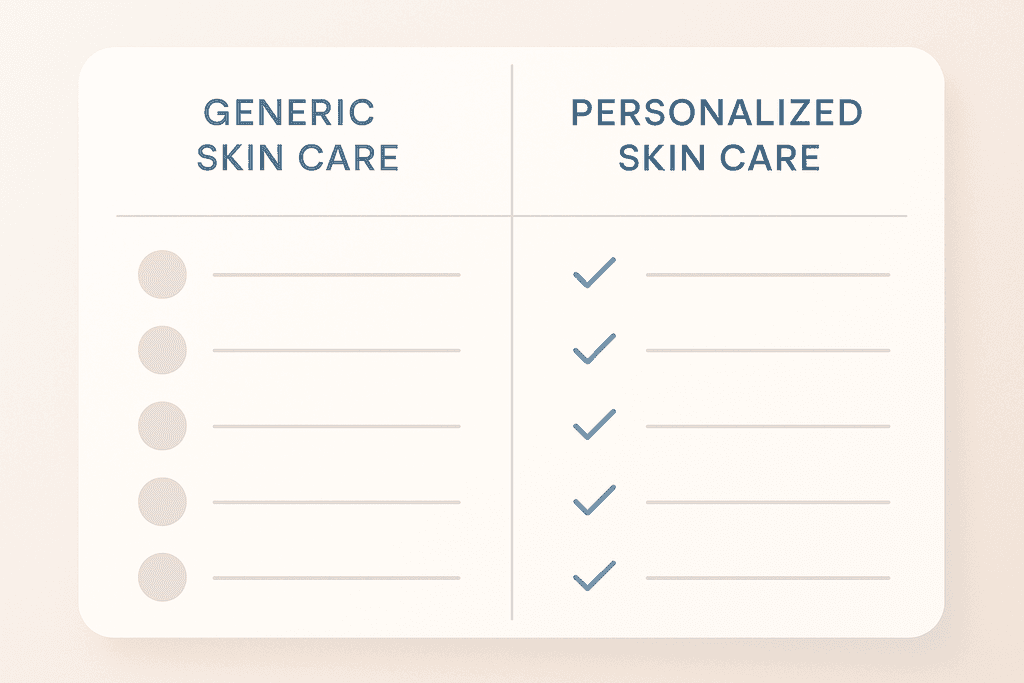
Walk into any drugstore and you’ll see hundreds of skin care products promising to work for “all skin types.” These mass-market products became popular in the 1950s when companies figured out they could make more money selling one product to millions of people instead of creating different formulas for different needs. The approach made business sense back then, but it ignored a simple truth: no two people have the same skin. What works perfectly for your best friend might cause breakouts or irritation for you, and that’s not your fault.
Why Generic Products Became the Norm
The beauty industry built itself on convenience and mass production. Making one formula and selling it everywhere was cheaper and easier than creating personalized options.
- Manufacturing costs dropped when companies made just one or two versions of each product
- Marketing became simpler with universal messages like “works for everyone”
- Stores could stock fewer products and reach more customers
- Consumers liked the idea of a simple, easy routine they could grab quickly
But convenience doesn’t equal effectiveness. Your skin changes with age, weather, stress levels, and even what you eat.
What Gets Ignored in One Size Fits All Routines
Generic skin care routines miss the details that actually matter. At Beauty & Fly, we see clients every day who’ve spent years using products that weren’t right for their specific needs.
- Your age and how your skin produces collagen
- Where you live and the climate you’re exposed to daily
- Existing conditions like rosacea, acne, or sensitivity
- Your skin’s unique texture, oil production, and healing patterns
- Previous sun damage or scarring that needs targeted treatment
What Science Now Tells Us
Recent research in dermatology has changed everything we thought we knew about skin care. Scientists can now measure how different ingredients work on different skin types, and the results are clear.
| Generic Approach | Personalized Skin Care |
|---|---|
| Same formula for everyone | Custom treatments based on your specific skin |
| Ignores age and environment | Adjusts for your lifestyle and location |
| One-size concentration levels | Ingredient strength matched to your needs |
| Generic timing and application | Schedules built around your skin’s response |
| No adjustment over time | Evolves as your skin changes |
The data shows that personalized skin care produces better results in less time. Your skin responds to what it actually needs, not what works for the average person.
What Makes Your Skin Unique
Your skin is as individual as your fingerprint, which is why that miracle cream your friend swears by might do absolutely nothing for you. The truth is, dozens of factors shape how your skin behaves, looks, and responds to treatments. Understanding these differences is the first step toward finding what actually works for your face, not just what works for someone else’s Instagram feed.

What Makes Your Skin Unique
Skin type is just the beginning of the story. Whether you’re dealing with oily, dry, combination, or sensitive skin sets a baseline, but it doesn’t tell the whole picture.
- Environmental factors like where you live matter more than most people realize. Someone in humid Florida has completely different needs than someone in dry Colorado.
- Age and hormones constantly shift what your skin needs. What worked at 25 probably won’t cut it at 45.
- Genetic factors and ethnic skin differences affect everything from how you age to how you respond to certain treatments.
- Lifestyle choices including your diet, stress levels, and sleep quality show up on your face whether you like it or not.
- Existing conditions like acne, rosacea, or hyperpigmentation require specific approaches that generic products can’t address.
The problem with one-size-fits-all regimens is they ignore all of this. They’re designed for an average person who doesn’t actually exist.
How Personalized Skin Care Actually Works
Professional skin analysis goes way beyond looking in a mirror and deciding you have dry skin. A trained practitioner examines your skin’s texture, tone, elasticity, and underlying concerns using both visual assessment and sometimes specialized tools. They ask about your goals, your history, and what hasn’t worked in the past. This isn’t a quick glance, it’s a detailed evaluation that forms the foundation of your treatment plan.

How Personalized Skin Care Actually Works
The difference between medical-grade products and what you find at the drugstore comes down to concentration and quality. Professional lines like SkinBetter science and Alumier MD contain higher percentages of active ingredients that actually penetrate your skin.
At Beauty & Fly, custom facial rejuvenation starts with understanding your specific concerns. Maybe you’re dealing with sun damage from years of beach weekends, or perhaps hormonal changes have triggered new skin issues. The approach combines different treatments based on what your skin needs right now.
- Some clients benefit from combining Microneedling with PRP to address texture and tone
- Others need the NOUVAderm laser for pigment issues and pore tightening
- Many find that pairing professional treatments with the right home care products creates the best results
The key is that nothing stays static. Your skin changes with seasons, stress, and age, so ongoing adjustments keep your routine working. What you need in winter differs from summer, and your practitioner should be monitoring and tweaking your plan accordingly.
Real Results from Custom Approaches
Here’s what actually happens when you switch from generic products to a personalized plan. First, you stop wasting money on things that don’t work for your skin type. Second, you see results faster because every product and treatment is chosen specifically for your concerns. Third, you avoid the trial-and-error phase that leaves many people frustrated and their bathroom cabinets full of half-used bottles.
Reduced risk of adverse reactions is a big deal that doesn’t get talked about enough. When someone with sensitive skin uses products designed for oily skin, they often end up with irritation, redness, or breakouts that make everything worse.
Take Microneedling with PRP as an example. The depth of needling, the number of passes, and whether PRP is added all depend on what you’re trying to achieve. Someone treating acne scars needs a different approach than someone working on fine lines. The NOUVAderm laser can be customized for different skin types and concerns, with settings adjusted based on your skin’s tolerance and the specific issues being addressed.
- Clients dealing with melasma need different laser settings than those treating general sun damage
- Someone with darker skin requires careful calibration to avoid pigmentation issues
- Post-treatment care gets tailored to your healing patterns and lifestyle
The selection of home care products matters just as much. SkinBetter science and Alumier MD products aren’t randomly assigned. Your practitioner chooses specific formulations based on your skin’s needs, sensitivities, and goals. Someone with rosacea gets completely different products than someone fighting acne, even if they’re the same age.
Long-term skin health improves when your routine actually matches your skin. You’re not fighting against products that work against your skin type. Instead, everything in your regimen supports your specific goals, whether that’s maintaining results from treatments like the VI Peel or preparing your skin for upcoming procedures. The difference shows up not just in how your skin looks today, but in how it ages over time.
Why Professional Guidance Makes the Difference
Most people who try to personalize their skin care routine start with an online quiz or a quick Google search about their skin concerns. They answer a few questions about whether their skin feels oily or dry, click submit, and get a list of recommended products. The problem is that skin analysis requires way more than a questionnaire can capture. What looks like simple dryness to you might actually be dehydration, barrier damage, or even a reaction to products you’re already using. Without proper training and diagnostic tools, you’re basically guessing.
What DIY Personalization Misses
When you try to customize your own routine, you’re working with limited information. You can see surface issues, but trained practitioners can identify underlying causes that affect how your skin responds to treatment.
- Online quizzes can’t examine your skin texture, elasticity, or deeper concerns
- Self-diagnosis often confuses symptoms (like redness) with root causes (like inflammation or sensitivity)
- Retail products have concentration limits that medical-grade treatments don’t face
- You can’t adjust your routine based on how your skin changes with seasons, stress, or aging
The Professional Advantage
Catherine Curtin’s 18 years in aesthetic medicine means she’s seen thousands of skin types and conditions. That experience helps her spot patterns and predict how your skin will respond to specific treatments. At Beauty & Fly, every visit is with Catherine herself, so she knows your complete skin history and can adjust your personalized skin care plan as your needs change.
Having one dedicated provider makes a huge difference. She remembers what worked, what didn’t, and why. This ongoing relationship means your treatment plan evolves with you instead of starting from scratch each time.
DIY vs Professional Customization
| DIY Personalization Attempts | Professional Customization |
|---|---|
| Based on online quizzes and self-assessment | Based on clinical examination and diagnostic tools |
| Limited to retail-strength products | Access to medical-grade treatments and products |
| Trial and error with no expert guidance | Strategic treatment plans backed by years of experience |
| No adjustment for changing skin needs | Ongoing monitoring and plan modifications |
| Risk of product interactions or damage | Safe, coordinated approach to skin health |
The truth is that real personalized skin care requires professional assessment and ongoing adjustments. Your skin changes constantly, and what works today might not work in six months. That’s why building a relationship with an experienced practitioner matters more than any product recommendation you’ll find online.
Finding Your Perfect Skin Care Match
Here’s what it comes down to. Your skin is different from everyone else’s, so treating it the same way as a stranger’s skin doesn’t make much sense. Personalized skin care works better because it addresses what your skin actually needs, not what some marketing team thinks the average person needs. You end up spending less money on products that don’t work and more time seeing actual results.
The best way to start is with a professional consultation. Someone who knows skin can look at yours and figure out what’s really going on beneath the surface. At Beauty & Fly, Catherine Curtin takes time during each visit to understand your specific concerns and create a treatment plan that makes sense for your goals, whether that’s addressing fine lines, texture issues, or pigmentation.
A personalized skin care journey isn’t about buying a bunch of fancy products all at once. It’s more like building a relationship with your skin over time. You start with a clear assessment, try treatments that target your actual problems, and adjust as your skin changes. Most people notice improvements within a few weeks, but the real magic happens when you stick with a plan designed specifically for you.
The difference between guessing what might work and knowing what will work is pretty significant. One approach wastes your time and money, while the other gets you where you want to be.
Common Questions About Personalized Skin Care
Switching to personalized skin care brings up a lot of practical questions. Most people wonder about the investment, the timeline for results, and whether their current products can fit into a custom routine. Here are the answers to the most common concerns we hear from clients considering a more tailored approach to their skin health.
How much does personalized skin care cost compared to drugstore products?
Professional personalized skin care typically costs more upfront than drugstore products, but you’re paying for formulations that actually work for your specific skin type and concerns. At Beauty & Fly, we offer professional lines like SkinBetter science and Alumier MD that are designed to deliver measurable results, plus we provide membership options and financing to make treatments more accessible. The real value comes from not wasting money on products that don’t work for you.
How long before I see results from a custom routine?
Most people notice improvements within four to six weeks, though some changes like better hydration can show up within days. Deeper concerns like pigmentation, fine lines, and texture typically take two to three months because your skin needs time to complete its natural renewal cycle. Patience pays off when you’re using products matched to your actual needs.
Can I still use some of my current products?
Yes, but it depends on what you’re using and how it fits with your new routine. During a consultation, Catherine reviews your current products to identify what’s helping, what’s hurting, and what’s just taking up space on your bathroom counter. Some products work well together while others can cancel each other out or cause irritation.
How often do I need to adjust my personalized routine?
Your routine should be evaluated every three to six months, or whenever your skin changes due to seasons, hormones, stress, or aging. Personalized skin care isn’t a one-time prescription but an ongoing relationship with someone who understands your skin’s evolving needs. Minor tweaks keep your routine effective as your skin responds and adapts.
What’s the difference between a dermatologist and an aesthetic nurse practitioner?
Dermatologists are medical doctors who diagnose and treat skin diseases, while aesthetic nurse practitioners like Catherine Curtin specialize in cosmetic treatments and skin wellness. Both are valuable, but an aesthetic nurse practitioner focuses specifically on helping you look and feel your best through non-surgical treatments, personalized product recommendations, and preventive care.
Is personalized skin care only for people with problem skin?
Not at all. Personalized skin care benefits anyone who wants to maintain healthy skin, prevent future damage, or enhance their natural appearance without guessing what might work. Even people with relatively clear skin see better results when they use products formulated for their specific skin type, lifestyle, and goals rather than generic solutions.