
You’ve tried every brightening cream and chemical peel available, but those dark spots on your face just won’t fade. Some pigmentation lies so deep in the skin that surface treatments can’t reach it, and that’s where the NOUVAderm laser offers an alternative. This advanced laser technology targets multiple skin depths to break up stubborn pigment that doesn’t respond to traditional methods.
Table of Contents
- Understanding Stubborn Pigmentation
- How NOUVAderm Laser Works on Deep Pigmentation
- What to Expect During and After Treatment
- Best Candidates and Treatment Combinations
- Why NOUVAderm Outperforms Traditional Pigment Treatments
- Your Path to Clearer, More Even Skin
- Common Questions About NOUVAderm for Pigmentation
Understanding Stubborn Pigmentation
About 90% of people over 50 have some level of unwanted pigmentation on their skin, but not all dark spots are equal. Some fade easily with basic treatments, while others persist regardless of what you try. It depends on the type of pigmentation, how deep it sits in your skin, and what triggers it to return. Understanding these differences is key to finding a treatment that really works.
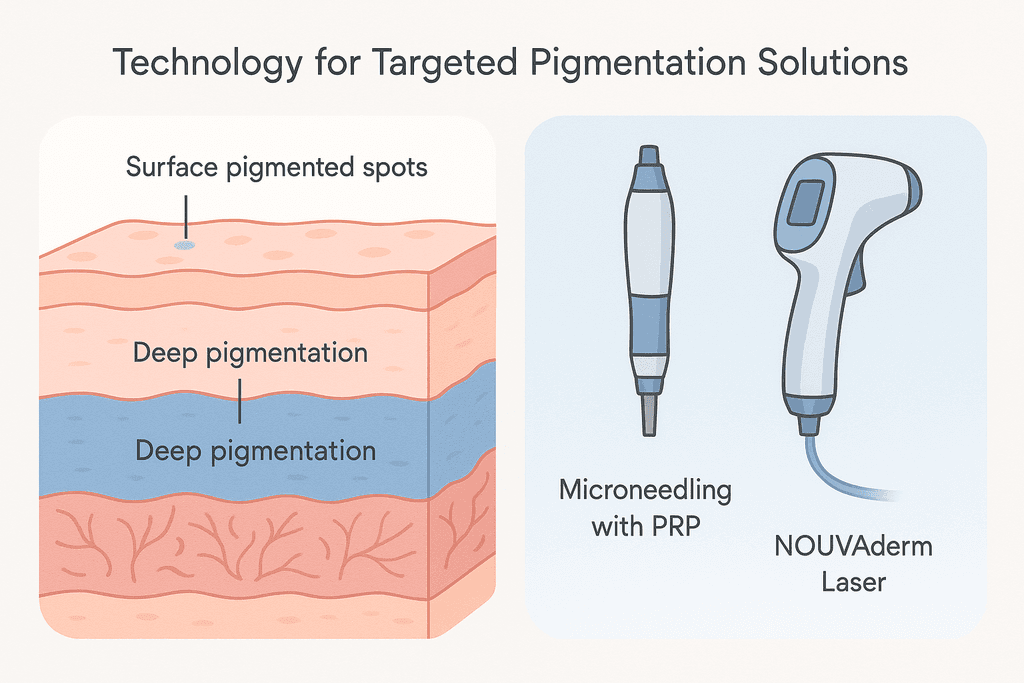
Common Types of Skin Pigmentation
Pigmentation issues appear in various forms, and each has unique characteristics. Melasma shows up as brown or gray patches on the face, often triggered by sun exposure or hormonal changes. Sun spots, also known as age spots or liver spots, are flat brown marks from years of UV damage. Post-inflammatory hyperpigmentation occurs after skin injury or irritation, leaving dark marks even after healing.
The tricky part is these types occur at different levels in your skin. Surface pigment responds well to topical creams and light peels, mid-level pigment requires stronger treatments, deep pigment needs advanced technology, and mixed-depth pigment is the most stubborn, needing treatments at all levels.
Why Some Pigmentation Refuses to Fade
Several factors make pigmentation challenging to treat. Hormonal triggers like pregnancy or birth control keep melasma active, ready to darken anytime. Sun exposure is another major factor, as UV rays prompt your skin to produce more pigment as protection. Even heat from hot yoga or cooking over a stove can wake up stubborn pigment.
Traditional treatments often miss the mark because they work at one depth. A cream might lighten surface spots but can’t reach deeper pigment. A basic laser might help sun damage but worsen melasma. The NOUVAderm laser works at multiple depths to target pigment wherever it hides.
| Pigmentation Type | Common Causes | Skin Depth | Treatment Difficulty |
|---|---|---|---|
| Sun Spots | UV exposure over time | Surface to mid-level | Moderate |
| Melasma | Hormones, sun, heat | Mid to deep level | Very difficult |
| Post-Inflammatory Hyperpigmentation | Acne, injury, inflammation | Surface to mid-level | Moderate to difficult |
| Age Spots | Years of sun damage | Surface level | Easy to moderate |
What Makes Pigmentation Come Back
Even after successful treatment, pigmentation can return if triggers aren’t managed. Your skin has memory cells that remember how to make extra pigment in certain spots. That’s why people with melasma see it come back every summer, and why old acne marks can darken again after stress.
- Skipping sunscreen lets UV rays reactivate pigment creation
- Hormonal changes from medication, pregnancy, or stress trigger melanin production
- Inflammation from harsh products can create new dark spots
The goal isn’t just fading existing pigment but calming down the cells responsible. That’s why treatments must be gentle enough to avoid extra inflammation while breaking up stubborn pigments.
How NOUVAderm Laser Works on Deep Pigmentation
Some pigmentation is so deep regular treatments barely affect it. You might have tried creams, peels, or other lasers, but those dark spots come right back. The NOUVAderm laser takes a different approach, working at multiple skin depths simultaneously. This technology uses controlled thermal energy to break apart melanin clusters without harming healthy tissue. This triggers your skin’s healing response to build fresh collagen, thus improving overall skin quality.

How NOUVAderm Laser Works on Deep Pigmentation
The laser energy penetrates different skin layers, reaching pigmentation deeper than surface treatments can. Think of it like this: surface treatments work on the top floor, but NOUVAderm reaches basement levels where stubborn pigmentation hides.
- Breaks up melanin clusters using precise laser wavelengths
- Stimulates collagen production for better texture and tone
- Targets multiple skin depths in one session
- Preserves surrounding tissue with controlled energy delivery
Beauty & Fly offers this treatment because it addresses the pigmentation issues that frustrate people most. The technology heats areas where pigment has accumulated, causing those deposits to break up, and your body naturally sheds these pigment particles over the following weeks.
What to Expect During and After Treatment
Your first step is a consultation where Catherine Curtin examines your skin and discusses specific concerns about pigmentation. She’ll evaluate your pigmentation type, depth, and causes for persistent spots. Not all dark spots are the same, and the treatment plan should match your situation. During the procedure, most describe a warm, prickling sensation as the laser goes over treated areas. Cooling devices enhance comfort, and sessions typically last 30-45 minutes depending on the area.

What to Expect During and After Treatment
Post-treatment, your skin looks pink or red, similar to a mild sunburn. You might notice the pigmentation looks darker at first, a positive sign that the laser targeted the melanin, with spots starting to flake off within a week.
Recovery Timeline:
- Days 1-3: Redness, possible swelling, skin feels warm
- Days 4-7: Pigmented areas may darken and begin to flake
- Weeks 2-4: Noticeable fading of treated pigmentation
- Weeks 6-12: Continued improvement as collagen rebuilds
Stubborn pigmentation typically needs three to five sessions spaced four to six weeks apart. Catherine tailors the timeline based on your skin’s response after each session. Some pigmentation fades fast, and she’ll adjust the approach accordingly instead of following a fixed routine.
Best Candidates and Treatment Combinations
NOUVAderm is effective for those dealing with melasma, sun damage, age spots, and post-inflammatory hyperpigmentation not responding to other treatments. It’s safe for most skin types, but those with very dark tones require an assessment due to potential risks. Ideal candidates have persistent pigmentation lasting months or years, not fresh discoloration that may fade naturally. If topical treatments or lighter peels fail, NOUVAderm is the likely next step.
Sometimes combining treatments yields better results than any single method. A VI Peel can prep your skin prior to laser sessions or help maintain results by addressing surface-level pigmentation and promoting cell turnover.
Ideal Candidate Checklist:
- Pigmentation not responding to creams or lighter treatments
- Understanding of gradual improvement over multiple sessions
- Willingness to avoid sun during the treatment period
- No active skin infections or recent sun damage
- Commitment to aftercare and sun protection
Medical-grade skincare lines like SkinBetter science or Alumier MD offer support too. These products contain ingredients that prevent new pigmentation while treated spots fade. Catherine recommends specific products based on skin type and the kind of pigmentation. A combination of professional treatments and quality home care often provides longer-lasting results than either approach alone.
Stubborn pigmentation rarely has one solution. Success depends on factors like pigment depth, skin type, lifestyle, and hormonal influences. Personalized treatment planning is vital for spots that resist previous efforts.
Why NOUVAderm Outperforms Traditional Pigment Treatments
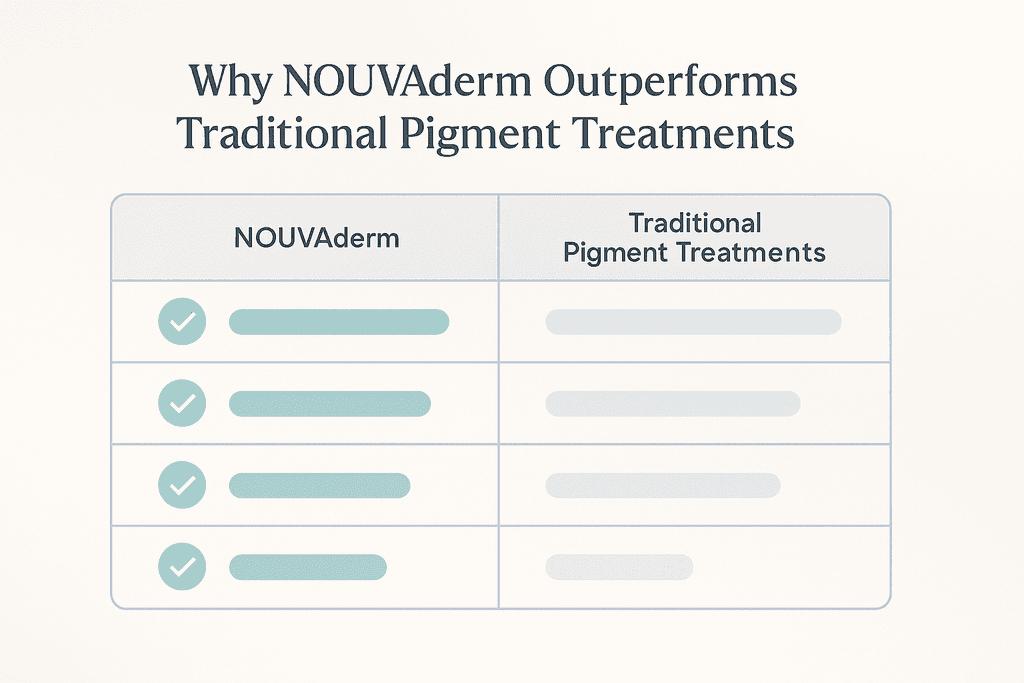
Most people try multiple treatments before finding success with stubborn pigmentation. You might start with brightening creams, then try prescription hydroquinone or a chemical peel. The problem is many strategies only scratch the surface. Topical treatments can’t reach deep pigment spots located in the lower layers, where stubborn discoloration lies.
Chemical peels are better than creams for surface layers. But even intense peels have limits with pigment in the dermis.
How NOUVAderm Reaches Deeper Pigmentation
The NOUVAderm laser at Beauty & Fly differs from surface treatments, using targeted light to reach multiple skin layers and break up pigment clusters other treatments miss.
- Older lasers often required downtime with lasting peeling and redness
- NOUVAderm delivers similar results with shorter recovery time
- The treatment covers surface and deep pigment in one session
- Pigment removal lasts longer because it’s removed better than lightened
| Treatment Type | Penetration Depth | Downtime | Recurrence Rate |
|---|---|---|---|
| Topical Creams | Surface only | None | High |
| Chemical Peels | Epidermis | 3-7 days | Moderate |
| Older Lasers | Deep dermis | 7-14 days | Low |
| NOUVAderm Laser | Multiple layers | 1-3 days | Very Low |
Why Provider Experience Matters
The laser itself is only part of the solution. Proper settings depend on your skin type, pigmentation depth, and responses to past treatments. With 18 years of experience, Catherine Curtin customizes each NOUVAderm session for specific pigmentation.
- Inexperienced providers may use settings too high or low
- Proper technique prevents issues like post-inflammatory hyperpigmentation
- Expert practitioners can combine NOUVAderm with other treatments for optimal results
The difference between good and great results often hinges on the provider’s expertise. Many patients travel to Beauty & Fly’s Bronxville or Bridgehampton locations for Catherine’s skill with stubborn pigmentation cases.
Your Path to Clearer, More Even Skin
Stubborn pigmentation doesn’t fade with basic skincare or surface-level treatments. Advanced technology like the NOUVAderm laser makes a big difference for those who’ve tried everything else. The laser works below the surface to target pigment right at the source, something topical creams can’t achieve, and personalized treatment brings results that last.
Along with fading unwanted pigment, the NOUVAderm laser improves the overall skin tone and texture with minimal healing time. Most people return to their daily routines quickly, important for those with busy schedules.
The real difference comes from working with someone who knows how to customize the treatment for your skin and need. At Beauty & Fly, Catherine Curtin offers tailored plans suited to your goals, not a generic approach. All consultations are private and thorough, so you know exactly what to expect before, during, and after the session.
If dark spots, sun damage, or uneven skin tone trouble you, consider exploring laser treatments. Visit the Bronxville or Bridgehampton location to see if the NOUVAderm laser suits your skin.
Have questions about the treatment process or what results you might see? Let’s tackle some of the common questions.
Common Questions About NOUVAderm for Pigmentation
If stubborn spots or uneven skin tone are concerns, you probably wonder if the NOUVAderm laser will help. Understanding what to expect before committing to treatment—especially facial—is crucial. Here are frequent questions about using NOUVAderm for pigmentation.
How many treatments are needed for stubborn pigmentation?
Most see results after three to five sessions spaced about four weeks apart. The exact count depends on pigmentation depth and type. Lighter spots may react faster, while deeper ones take more time.
Is NOUVAderm laser painful?
The process feels like tiny warm pinpricks, but most find it manageable without numbing cream. It’s more comfortable than older lasers. The entire session typically takes less than 30 minutes, so discomfort doesn’t last long.
How long before I see results?
Pigmentation usually begins fading within two to three weeks after the initial session. Full results emerge gradually over the next few months as your skin renews. Some see changes sooner, but time is needed for deep work.
Can NOUVAderm treat melasma?
Yes, NOUVAderm can help with melasma, though recurrence is a risk. The laser reduces melasma patches, yet serious sun protection is crucial afterward. Catherine typically combines NOUVAderm with other treatments and good skincare for lasting results.
What’s the downtime after treatment?
One major advantage of the NOUVAderm laser is the short recovery compared to older lasers. Expect some pinkness for a day or two, similar to a mild sunburn, so most people go back to work the next day. Make-up can cover redness.
Will my pigmentation come back after treatment?
The pigment removed by NOUVAderm is gone, but your skin could form new dark spots. Sun exposure often prompts this; using sunscreen daily and following treatments like SkinBetter science helps keep results around.