
Nearly 90 percent of people say they’re bothered by enlarged pores or acne scars, yet most topical creams barely scratch the surface of these stubborn skin concerns. Microneedling with PRP combines tiny needles that trigger your skin’s natural healing with platelet-rich plasma from your own blood to smooth texture and fade scars from the inside out. At Beauty & Fly, this treatment pairs precision technique with your body’s own growth factors to help you achieve clearer, more refined skin without surgery or harsh chemicals.
Table of Contents
What Microneedling with PRP Actually Does
Your skin has an amazing ability to heal itself when it gets injured. Microneedling with PRP takes advantage of this natural healing process to make your skin look smoother and reduce the appearance of scars. The treatment works by creating tiny, controlled injuries in your skin while feeding it powerful healing ingredients from your own blood. It sounds a bit intense, but the process is actually pretty straightforward once you understand what’s happening.
How Microneedling Creates Controlled Healing
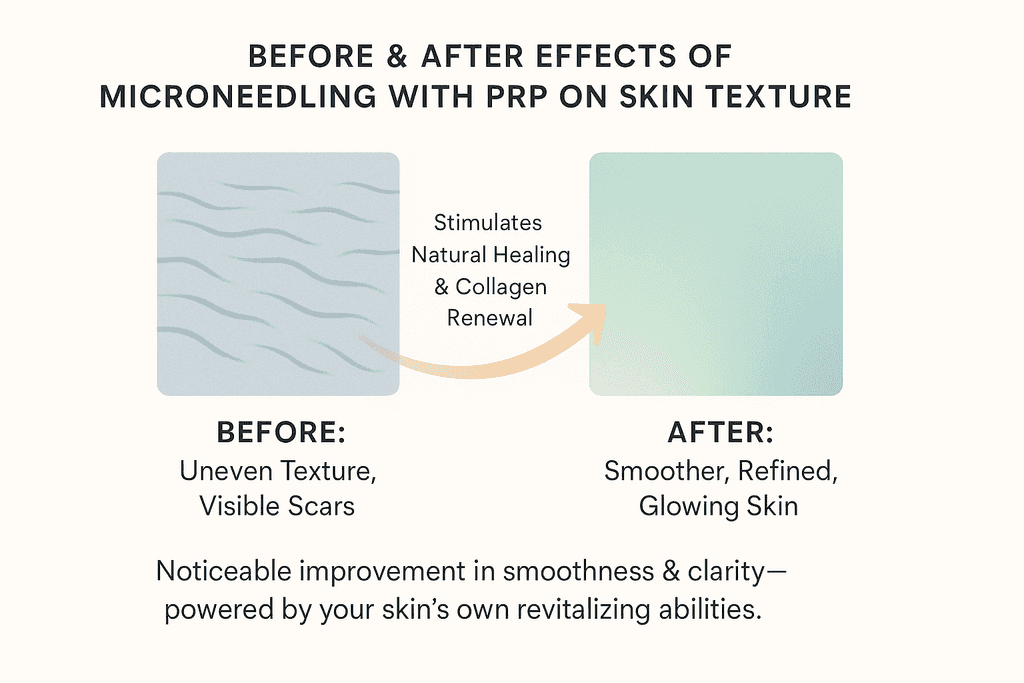
Microneedling uses a device with very small needles that poke tiny holes in the top layers of your skin. These micro-injuries are so small you can barely see them, but they’re enough to trigger your body’s repair mode.
When your skin detects these little injuries, it responds by making more collagen and elastin. These are the proteins that keep your skin firm and smooth. The controlled damage essentially tricks your skin into acting younger and repairing itself from the inside out.
Here’s what happens during the microneedling process:
- Tiny needles create channels in your skin about 0.5 to 2.5 millimeters deep
- Your body sends healing cells to these areas right away
- New collagen starts forming over the next few weeks
- Old scar tissue gradually gets replaced with fresh, healthy skin
What PRP Adds to the Treatment
PRP stands for platelet-rich plasma, and it comes from your own blood. Before the microneedling starts, a small amount of blood gets drawn from your arm, just like at a regular doctor’s visit. That blood goes into a machine called a centrifuge that spins it really fast to separate the different parts.
The platelets contain growth factors that help wounds heal faster. When these platelets get concentrated into plasma, you end up with a powerful healing serum made from your own body.
What makes PRP special:
- It contains 3 to 5 times more platelets than normal blood
- Growth factors in platelets signal your skin cells to multiply and repair
- Since it’s from your own body, there’s almost no risk of allergic reactions
Why Combining Them Works Better
When you do microneedling alone, your skin heals using whatever resources it has available. But when you add PRP, you’re giving your skin extra healing power right when it needs it most. The tiny channels created by microneedling let the PRP soak deep into your skin instead of just sitting on the surface.
At Beauty & Fly, Catherine Curtin combines microneedling with PRP to help clients see better results for acne scars, wrinkles, and overall skin texture. The treatment takes advantage of both the mechanical stimulation from the needles and the biological boost from your own platelets.
| Treatment Component | What It Does | Timeline for Results |
|---|---|---|
| Microneedling | Creates micro-injuries to trigger collagen production | 2-4 weeks for initial changes |
| PRP Application | Delivers concentrated growth factors deep into skin | 4-6 weeks for visible improvement |
| Combined Effect | Amplifies healing response and skin renewal | 3-6 months for full results |
The combination doesn’t just add benefits together. It multiplies them by creating the perfect environment for your skin to rebuild itself. Most people need a series of treatments spaced a few weeks apart to see the best results, but many notice their skin looking fresher after just one session.
How This Treatment Shrinks Your Pores
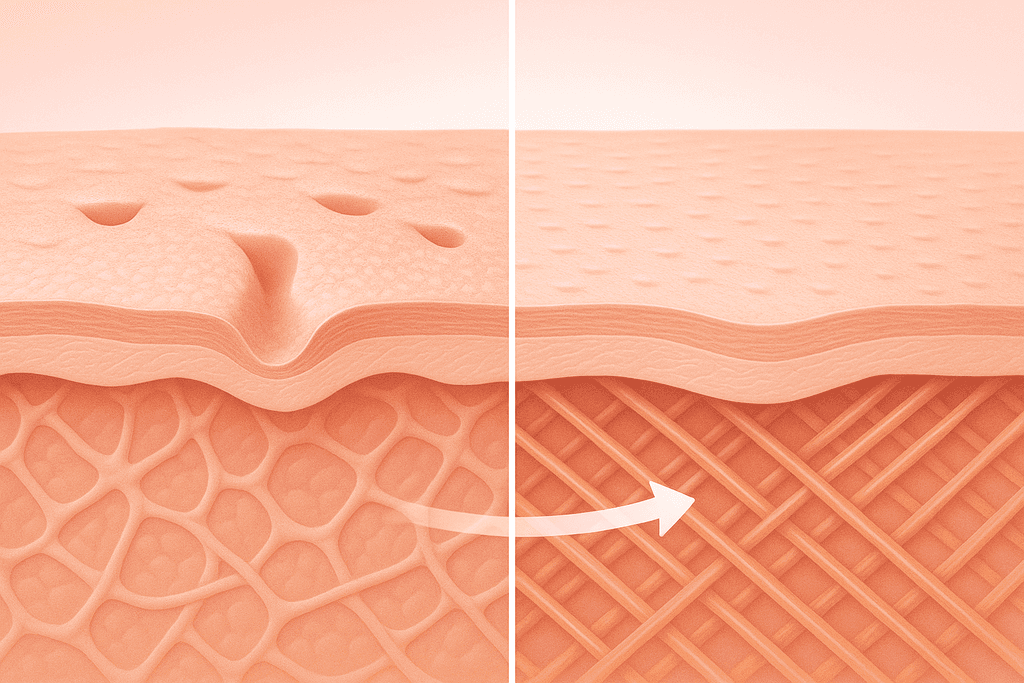
Your pores don’t actually open and close like tiny doors, even though it feels that way sometimes. What really happens is they stretch out over time because of collagen loss, excess oil production, and sun damage that weakens the skin around them. Think of it like a stretched-out sweater that’s lost its shape. When the supportive structure around your pores breaks down, they look bigger and more noticeable. This is where microneedling with PRP comes in, working from the inside out to rebuild what’s been lost.
How This Treatment Shrinks Your Pores
The microneedling process creates tiny controlled injuries in your skin that trigger your body’s natural healing response. Your skin thinks it needs to repair itself, so it starts producing fresh collagen and elastin around those enlarged pores.
- Collagen production increases around pore walls, creating a tightening effect
- PRP growth factors strengthen the overall skin structure
- The skin becomes firmer and more elastic over time
- Pores appear visibly smaller as surrounding tissue tightens
The PRP part is what makes this treatment especially effective. When we apply your own platelet-rich plasma to the micro-channels created by needling, those growth factors penetrate deeper and accelerate the rebuilding process. At Beauty & Fly, Catherine customizes the needle depth based on your specific skin concerns and pore size, which makes a real difference in results.
Most people start noticing their pores looking smaller around the four to six week mark. But the real magic happens over the next few months as collagen continues building. By three months, the improvement becomes much more obvious.
The Science Behind Scar Reduction
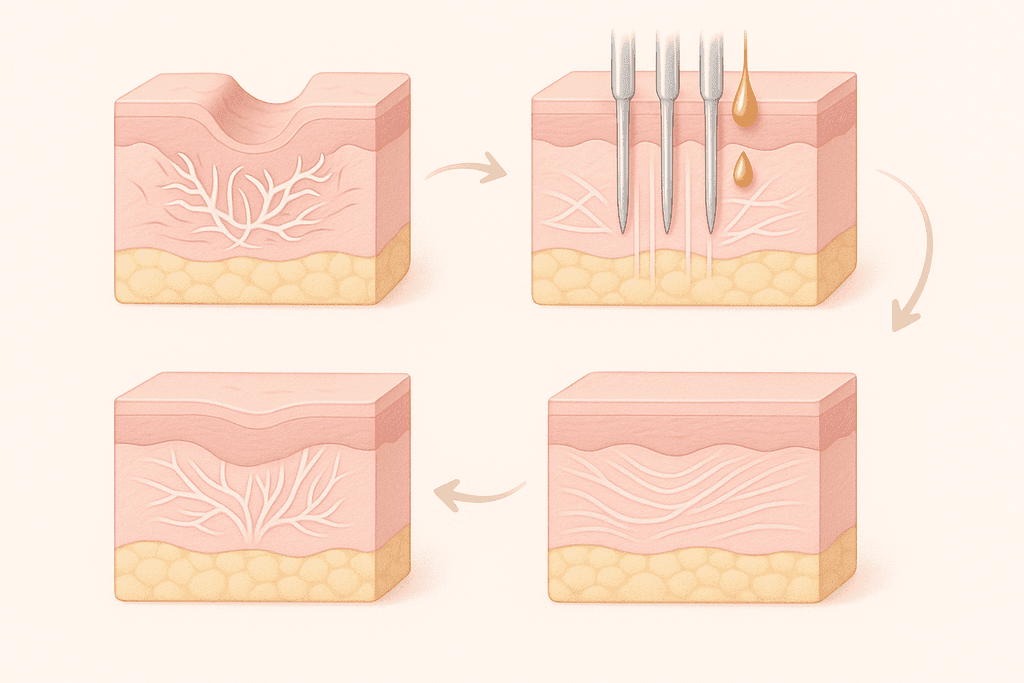
Not all scars are created equal, and that matters when you’re trying to treat them. Atrophic scars sit below the skin’s surface and include those frustrating acne scars that cast shadows on your face. Rolling scars have gentle slopes, boxcar scars look like tiny craters with defined edges, and ice pick scars are narrow and deep. Each type responds differently to treatment, but microneedling with PRP can address all of them to varying degrees.
The Science Behind Scar Reduction
The needling process does something pretty interesting to scar tissue. It breaks up the fibrous bands that keep scars tethered down while simultaneously triggering new collagen production in the depressed areas.
| Scar Type | Response to Treatment | Typical Improvement |
|---|---|---|
| Rolling Scars | Excellent response | 60-80% improvement |
| Boxcar Scars | Good response | 50-70% improvement |
| Ice Pick Scars | Moderate response | 30-50% improvement |
| Atrophic Scars | Very good response | 50-75% improvement |
The PRP component accelerates healing in a way that regular microneedling can’t match. Those growth factors and healing proteins in your plasma help prevent new scar tissue from forming during the healing process. Instead of your skin just patching itself up quickly, it actually remodels properly.
During the remodeling phase, which lasts several months, your body gradually fills in those depressed areas with new tissue. The scars don’t disappear completely in most cases, but they become much less noticeable. Catherine’s 18 years of experience means she can assess your specific scar type and adjust the treatment intensity accordingly, which is something you really want when dealing with facial scarring.
What to Expect During and After Treatment
Your first visit to Beauty & Fly starts with a consultation where Catherine examines your skin and discusses what you’re hoping to achieve. She’ll look at your pore size, scar depth, and overall skin condition to create a treatment plan that makes sense for you. This isn’t a one-size-fits-all situation. Some people need deeper needle penetration, others need a gentler approach, and Catherine figures out exactly what your skin needs before any treatment begins.
On treatment day, the process starts with a simple blood draw from your arm, just like getting routine lab work done. That blood goes into a centrifuge to separate out the platelet-rich plasma while your skin gets prepped.
- Numbing cream is applied and left on for about 20-30 minutes
- Your face is cleansed and the microneedling device is passed over treatment areas
- Fresh PRP is applied to your skin and worked into the micro-channels
- A calming serum or mask is applied to soothe the skin
The actual microneedling feels like light scratching or sandpaper moving across your skin. It’s not painful with the numbing cream, but you’ll definitely feel pressure and some mild discomfort in more sensitive areas like around the nose or forehead.
Right after treatment, your face will be red like a moderate sunburn. Some people also experience minor swelling, especially under the eyes. This is completely normal and actually shows the treatment is working. Your skin is in repair mode.
The recovery timeline is pretty straightforward. Day one and two bring the most redness and tightness. By day three or four, you might notice some light flaking or dryness as your skin starts turning over. Most people feel comfortable going back to work or social activities by day five, though everyone heals at their own pace.
Results don’t show up overnight, which can be frustrating but makes sense when you understand what’s happening beneath the surface. Your skin needs time to build new collagen and remodel tissue. The first signs of improvement usually appear around four weeks post-treatment, with continued improvement for up to six months as collagen production continues.
Most people benefit from a series of three to four treatments spaced about four to six weeks apart. Catherine might also recommend pairing microneedling with PRP with other treatments like the NOUVAderm laser or VI Peel to address multiple skin concerns at once and get better overall results.
Why PRP Makes Microneedling More Effective
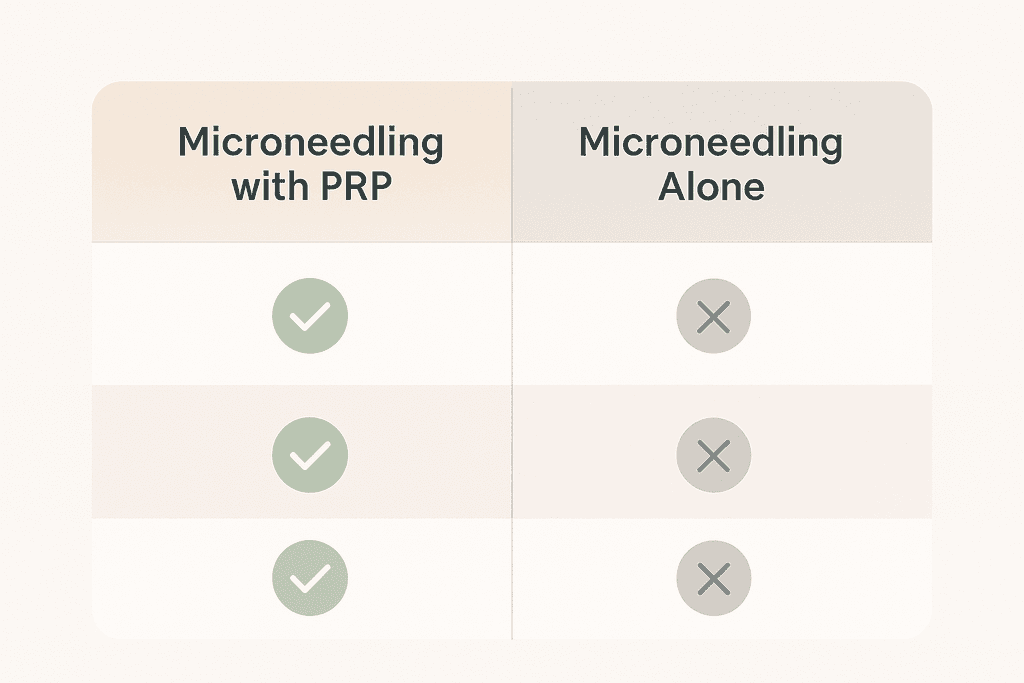
When you look at the research, microneedling alone produces decent results for scars and pores. But adding PRP to the treatment changes the game in a way that’s hard to ignore. The difference comes down to what happens after those tiny needles create channels in your skin. Without PRP, your body relies solely on its natural healing response. With PRP, you’re flooding those channels with concentrated growth factors that tell your skin to work harder and smarter. At Beauty & Fly, Catherine Curtin combines both techniques because she’s seen firsthand how much better patients respond when microneedling with PRP is used together.
How the Results Compare
The numbers tell an interesting story. Studies show that microneedling alone improves scar appearance by about 30-50%, while microneedling with PRP pushes that improvement to 60-80%. That’s not a small difference when you’re talking about your face.
| Treatment Aspect | Microneedling Alone | Microneedling with PRP |
|---|---|---|
| Scar Improvement | 30-50% reduction | 60-80% reduction |
| Pore Size Reduction | Moderate improvement | Significant improvement |
| Collagen Production | Standard healing response | Enhanced by growth factors |
| Results Timeline | 3-4 months for full results | 2-3 months for full results |
| Treatment Sessions Needed | 4-6 sessions typical | 3-4 sessions typical |
What Makes PRP So Powerful
PRP isn’t just one magic ingredient. It’s a cocktail of growth factors that each have specific jobs. Your plasma contains at least seven different growth factors that work together to rebuild skin from the inside out.
- Platelet-Derived Growth Factor (PDGF) tells your cells to multiply and create new tissue
- Transforming Growth Factor (TGF) builds collagen and elastin fibers that make skin firm
- Vascular Endothelial Growth Factor (VEGF) creates new blood vessels to feed healing skin
- Epidermal Growth Factor (EGF) speeds up skin cell turnover and renewal
- Fibroblast Growth Factor (FGF) repairs damaged tissue and reduces scar formation
Why Your Own Plasma Works Better
Using your own blood might sound strange at first, but it’s actually the safest approach. There’s zero risk of allergic reaction because your body recognizes its own cells. Synthetic growth factors exist, but they can’t match the complexity of what your body naturally produces.
The concentration matters too. PRP contains 5-10 times more platelets than normal blood, which means you’re getting a super-concentrated dose of healing power exactly where your skin needs it most.
Addressing the Concerns People Have
Most people worry about the blood draw part. Catherine makes this process comfortable and quick at both the Bronxville and Bridgehampton locations. The actual blood draw takes less than five minutes, and you only need about the same amount as a standard lab test.
- The PRP preparation is done in a sterile, controlled environment
- Your own plasma eliminates concerns about contamination or rejection
- The treatment adds minimal time to your microneedling session
- Results last longer than microneedling alone, making it more cost-effective over time
Why This Beats Other Scar Treatments
Laser treatments can help with scars, but they work from the outside in. Chemical peels remove surface layers but don’t address deeper scar tissue. Microneedling with PRP works at multiple depths simultaneously, which is why it handles both shallow pores and deeper acne scars better than single-approach treatments. Catherine’s expertise in both techniques means she can adjust needle depth and PRP application based on your specific scar type and skin condition, something that makes a real difference in your final results.
Your Path to Smoother, Clearer Skin
So here’s what you need to know about microneedling with PRP. It works on both enlarged pores and different types of scars because it triggers your skin’s natural healing process from the inside out. The tiny channels created by the needles let your own platelet-rich plasma sink deep into your skin, where it can actually make a difference. This isn’t about covering up problems with makeup or hoping a cream will work magic overnight.
The results show up gradually over a few weeks and months as your skin builds new collagen. That’s actually a good thing because nobody wants to look like they had “work done” over the weekend. Your skin just starts looking healthier and smoother in a way that feels natural.
At Beauty & Fly, Catherine Curtin takes time to look at your specific skin concerns during your consultation. Some people need help with acne scars, others want to shrink their pores, and many want both. The treatment plan gets customized based on what your skin actually needs, not a one-size-fits-all approach.
We have locations in both Bronxville and Bridgehampton, so you can pick whichever works better for your schedule. Since Catherine is the only provider, you’ll work with the same person every time, which means she gets to know your skin and what’s working as you go through your sessions.
If you’re tired of dealing with textured skin or scars that won’t fade, it might be worth scheduling a consultation to see if microneedling with PRP could help. Sometimes the best way to know if something will work for you is just to ask.
Common Questions About Microneedling with PRP
If you’re thinking about trying microneedling with PRP, you probably have some questions about what to expect. Most people want to know if it hurts, how long results last, and whether it’s right for their skin type. Here are the answers to the questions we hear most often at Beauty & Fly.
Does microneedling with PRP hurt?
Most people feel some pressure and mild discomfort during the treatment, but it’s not usually painful. We apply a numbing cream before starting, which makes the process much more comfortable. You might feel a slight scratching sensation, but most clients say it’s totally manageable.
How many treatments do I need to see results?
It depends on what you’re treating and your skin’s condition. For general skin texture and tone improvement, most people see good results after three to four sessions spaced about four to six weeks apart. Deeper scars or more significant concerns might need additional treatments, but Catherine will create a personalized plan during your consultation.
Can this treatment work on all skin types?
Yes, microneedling with PRP is safe for all skin types and tones. Unlike some laser treatments that can cause pigmentation issues on darker skin, this treatment uses your body’s own healing response. That makes it a great option for people who haven’t been good candidates for other procedures.
How long do results last?
Results can last several months to over a year, depending on your skin and how well you maintain it. Your body continues producing new collagen for weeks after treatment, so improvements actually build over time. Many clients come back once or twice a year for maintenance to keep their skin looking its best.
What’s the difference between this and other scar treatments?
Microneedling with PRP combines two powerful approaches in one treatment. The microneedling creates controlled micro-injuries that trigger healing, while the PRP from your own blood delivers concentrated growth factors directly into your skin. Other treatments like chemical peels or lasers work differently and might not penetrate as deeply or stimulate as much natural collagen production.
Am I a good candidate for this treatment?
Most adults looking to improve skin texture, reduce scarring, or minimize fine lines are good candidates. You might not be a fit if you’re pregnant, have active skin infections, or certain blood disorders. Catherine evaluates each person individually during a consultation to make sure microneedling with PRP is the right choice for your specific goals and skin condition.