
Choosing the wrong aesthetic provider can leave you with unnatural results that take months to fade, or worse, complications that require correction. New York has seen a surge in aesthetic treatments over the past decade, but not every aesthetic nurse practitioner brings the same level of training, artistry, or safety standards to your face. Understanding what separates an experienced professional like Catherine Curtin at Beauty & Fly from less qualified providers can mean the difference between subtle enhancement and obvious regret.
Table of Contents
- What Makes an Aesthetic Nurse Practitioner Different
- Essential Credentials and Experience to Look For
- Red Flags and Green Flags During Your Consultation
- Questions You Should Always Ask Before Treatment
- Why Experience and Artistry Matter More Than Price
- Your Next Steps to Beautiful Results
- Common Questions About Choosing an Aesthetic Provider
What Makes an Aesthetic Nurse Practitioner Different
Not everyone who works at a med spa has the same training or qualifications. When you’re looking for someone to inject your face or perform laser treatments, understanding who’s actually qualified to do what makes a big difference. An aesthetic nurse practitioner is a registered nurse who went back to school for advanced training, earned a master’s degree, and passed national board exams to become a nurse practitioner. After that, they get specialized training in cosmetic procedures like BOTOX, fillers, and skin treatments.

In New York state, nurse practitioners can diagnose conditions, order tests, and prescribe medications independently. They work under their own license, which means they have a lot of responsibility and accountability for patient care.
Education and Certification Requirements
Becoming an aesthetic nurse practitioner takes years of education and hands-on experience. The path is longer and more involved than many people realize.
- Must first become a registered nurse (RN) with a bachelor’s degree in nursing
- Complete a master’s or doctoral degree program in nursing (usually 2-4 additional years)
- Pass national board certification exams in their specialty area
- Obtain state licensure to practice as a nurse practitioner in New York
- Complete specialized training in aesthetic procedures and cosmetic medicine
Board certification shows that a provider has met strict standards and keeps up with ongoing education. At Beauty & Fly, Catherine Curtin is a board-certified family nurse practitioner with over 18 years focused specifically on aesthetic medicine, which means she’s been doing this work since before many current techniques even existed.
Scope of Practice in New York
New York gives nurse practitioners pretty broad authority compared to some other states. They can perform many of the same aesthetic procedures as doctors, but there are some differences worth knowing about.
- Can perform injectable treatments like neuromodulators and dermal fillers
- Authorized to use laser devices and energy-based treatments
- Can create comprehensive treatment plans and adjust them as needed
- Able to prescribe medications for skin conditions and post-treatment care
The key is finding someone who not only has the legal authority to perform treatments, but also the experience and artistic eye to get natural results.
Comparing Aesthetic Providers
When you’re shopping around for aesthetic treatments, you’ll encounter different types of providers. Each has different training backgrounds and qualifications, which affects what they can and can’t do.
| Provider Type | Education Required | Can Work Independently in NY | Typical Aesthetic Training |
|---|---|---|---|
| Aesthetic Nurse Practitioner | Master’s or Doctoral degree in nursing, board certification | Yes | Specialized courses, hands-on training, ongoing education |
| Physician Assistant | Master’s degree in physician assistant studies | No, requires physician collaboration | Specialized aesthetic training programs |
| Medical Doctor (MD/DO) | Medical school (4 years) plus residency (3-7 years) | Yes | Varies widely, may have no formal aesthetic training |
| Registered Nurse | Associate’s or Bachelor’s degree in nursing | No, must work under supervision | Certificate programs, limited scope |
Here’s something most people don’t know: just because someone is a doctor doesn’t automatically mean they’re trained in aesthetics. A family doctor or emergency room physician might have zero experience with fillers or lasers. Meanwhile, an aesthetic nurse practitioner like Catherine has spent nearly two decades focused exclusively on cosmetic treatments and even teaches other providers advanced techniques.
- Nurse practitioners often spend more time with each patient than doctors in busy practices
- Many aesthetic nurse practitioners focus solely on cosmetic medicine, building deep expertise
- The best providers combine technical skill with an artistic approach to facial anatomy
What matters most isn’t just the letters after someone’s name, but their specific experience in aesthetic medicine and their track record of natural-looking results.
Essential Credentials and Experience to Look For
Most people don’t realize that the title “aesthetic nurse practitioner” isn’t actually regulated the same way across all states. Anyone with a nursing license and some weekend training could technically start offering injectables in certain places. That’s why knowing what credentials actually matter can save you from ending up with results you didn’t want. The difference between someone who’s truly qualified and someone who just took a quick course is huge, and it shows up in your face.

Essential Credentials and Experience to Look For
Board certification is your first checkpoint. A qualified aesthetic nurse practitioner should be certified as a Family Nurse Practitioner (FNP-C) or similar advanced practice registered nurse. This means they completed graduate-level education and passed rigorous national exams.
- Look for credentials like MSN (Master of Science in Nursing) and FNP-C after their name
- Verify they’re licensed in New York state specifically
- Check if they’re working under proper medical supervision or collaboration
- Ask about their specific training in aesthetic procedures beyond basic nursing education
Years of experience matter more than you might think. Someone who’s been doing aesthetic medicine for 18 years has seen thousands of faces and knows how treatments age over time. They’ve handled complications, refined their technique, and developed an eye for what works. At Beauty & Fly, Catherine Curtin brings over 18 years of aesthetic medicine experience, which means she’s been perfecting her approach since before many current trends even existed.
But experience alone isn’t enough if someone stopped learning a decade ago. The field changes constantly with new products, techniques, and safety protocols.
Credentials Checklist
- Board certification as FNP-C or equivalent advanced practice nurse
- Master’s degree in nursing (MSN) or higher
- At least 5+ years specifically in aesthetic medicine
- Ongoing continuing education in aesthetic procedures
- Teaching credentials or training other practitioners (shows mastery level)
- Specialization certificates in injectables, lasers, or specific treatments
Teaching credentials are actually a hidden gem when evaluating providers. If someone trains other aesthetic professionals, they’re operating at a mastery level. They have to stay current, demonstrate best practices, and maintain the highest standards. Catherine’s role in training other practitioners signals that level of expertise you want working on your face.
Red Flags and Green Flags During Your Consultation
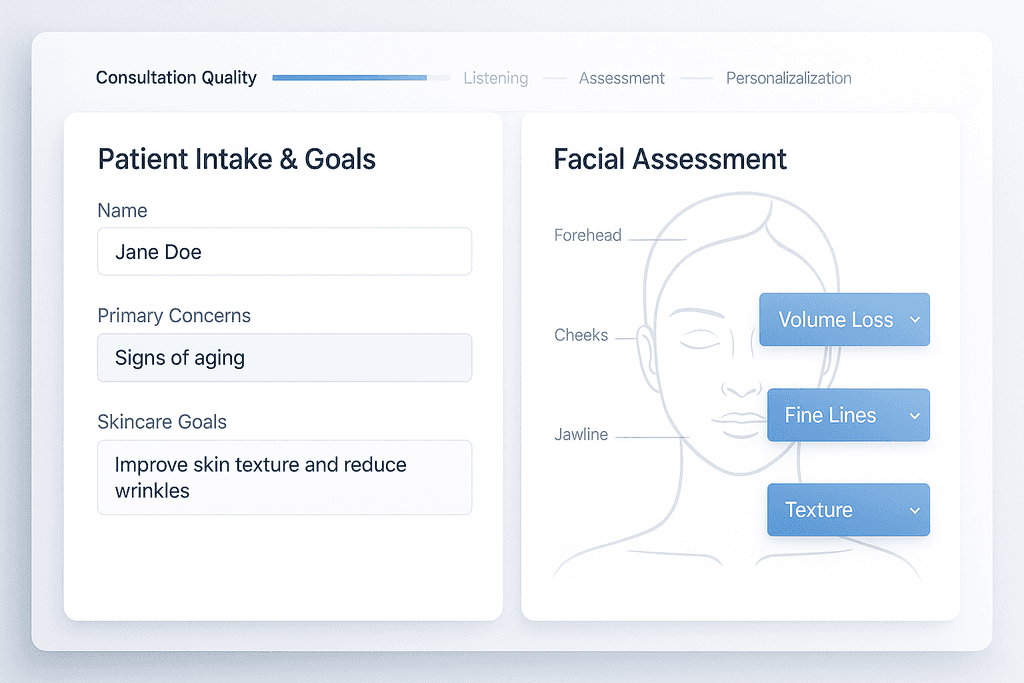
The consultation reveals everything if you know what to watch for. How a provider interacts with you in those first 15 minutes tells you more than any website or credential list ever could. Some practitioners rush through consultations like they’re checking boxes, while others actually listen to what you’re saying and what you’re not saying. The way they assess your face, ask questions, and explain options shows whether they see you as a person or just another appointment slot.
Red Flags and Green Flags During Your Consultation
A good provider spends real time understanding your goals. They ask about your lifestyle, what bothers you most, and what results you’re hoping for. They look at your face from multiple angles and in different lighting.
| Green Flags | Red Flags |
|---|---|
| Listens more than they talk | Pushes specific treatments before assessing you |
| Recommends starting conservatively | Suggests aggressive treatments right away |
| Discusses risks and realistic outcomes | Makes promises that sound too good to be true |
| Shows you their actual patient results | Only shows stock photos or extreme transformations |
| Never rushes your appointment | Seems hurried or distracted |
The treatment philosophy matters more than most people realize. Someone who focuses on natural, subtle results will approach your face differently than someone chasing dramatic before-and-afters. At Beauty & Fly, the approach centers on enhancing natural beauty rather than creating an artificial look, which is exactly what you want in an aesthetic nurse practitioner.
Pay attention to whether they’re transparent about what can go wrong. No procedure is completely risk-free, and a provider who glosses over potential complications isn’t being honest with you.
- Do they explain what happens if you’re not satisfied with results
- Can they describe how they’ve handled complications in the past
- Are they clear about recovery time and realistic expectations
- Do they pressure you to book immediately or give you time to think
The facility itself tells you a lot too. Is it clean and professional, or does something feel off? Are products stored properly? Does the staff seem knowledgeable and organized? These details matter because they reflect the overall standards of care.
Questions You Should Always Ask Before Treatment
Walking into a consultation without prepared questions is like going to a job interview without researching the company. You might get lucky, but you’re leaving too much to chance. The right questions reveal not just what a provider knows, but how they think and whether their approach aligns with what you want. Some practitioners get defensive when asked detailed questions, which tells you everything you need to know. Others welcome the conversation because they’re confident in their expertise and want you to feel informed.
Start with their specific experience in the exact treatment you’re considering. If you want dermal fillers, ask how many filler procedures they’ve performed and how long they’ve been doing them. Generic aesthetic experience doesn’t equal expertise in every procedure.
Essential Questions to Ask
- How many years have you been performing this specific treatment?
- What brands of products do you use and why did you choose them?
- Can I see before and after photos of your actual patients with similar concerns?
- What’s your approach if I’m not happy with the results?
- How do you handle complications or side effects?
- What’s your aesthetic philosophy regarding natural versus dramatic results?
- Will I see you for follow-up appointments or someone else?
- What should I realistically expect for results and how long they’ll last?
Ask about the products they use and why. A knowledgeable provider can explain the differences between brands and why they chose specific ones for their practice. They should mention things like BOTOX for neuromodulators or specific dermal filler brands, and explain what makes each appropriate for different concerns.
The question about handling unsatisfactory results is crucial. No one wants to think about this scenario, but how they answer reveals their integrity and problem-solving approach.
- Do they offer adjustments or corrections if needed
- What’s their policy on touch-ups
- How accessible are they if you have concerns after treatment
- Do they have emergency protocols for complications
Their aesthetic philosophy should match yours. If you want subtle enhancements that let you age gracefully, you need someone who shares that vision. Ask them directly how they approach facial rejuvenation and what their goals are for patients. The solo provider model at Beauty & Fly means you’ll always see Catherine herself, which ensures consistency in approach and results rather than getting passed between different practitioners.
Finally, ask to see real before and after photos from their own patients. Stock photos don’t count. You want to see the actual results they’ve achieved with people who had similar concerns to yours.
Why Experience and Artistry Matter More Than Price
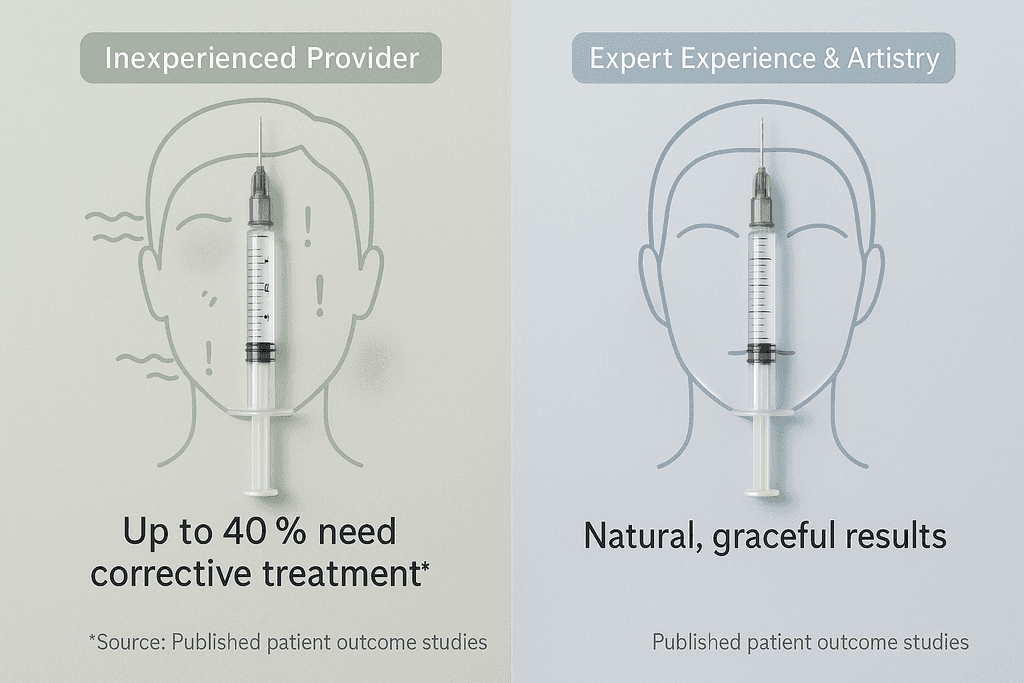
Studies show that nearly 40% of patients seeking corrective aesthetic treatments are dealing with complications from procedures performed by inexperienced providers. When you’re choosing an aesthetic nurse practitioner, the cheapest option often becomes the most expensive one in the long run. The difference between a skilled provider and someone just going through the motions shows up immediately in your results. Natural-looking outcomes require years of practice, an understanding of facial anatomy, and an artistic eye that can’t be taught in a weekend certification course.
Key Statistics: Patients who see the same experienced provider consistently report 73% higher satisfaction rates and require 30% fewer correction treatments compared to those who switch between providers or choose based solely on price.
The Hidden Costs of Inexperience
Correcting poorly done injectable treatments can cost three to five times more than the original procedure. Dissolving bad filler, waiting for results to fade, and then starting over with a qualified aesthetic nurse practitioner adds months to your timeline and significant stress to your life.
- Overfilled areas create an unnatural, frozen appearance that’s hard to reverse
- Incorrect injection depths can cause lumps, asymmetry, or vascular complications
- Poor technique with neuromodulators leads to drooping or uneven results
- Inexperienced providers often use cookie-cutter approaches instead of personalized plans
Why Consistency Builds Better Results
Seeing the same provider every time means they understand your face, your goals, and how your skin responds to treatments. At Beauty & Fly, Catherine Curtin is the sole provider, which means every visit builds on the last one. She knows exactly what was done before and can adjust your treatment plan as your needs change over time.
- Your provider tracks subtle changes in your facial structure and skin quality
- Treatment plans evolve based on actual results, not generic protocols
- You avoid the risk of conflicting approaches from multiple practitioners
Personalization Versus Assembly Line Treatments
High-volume clinics often rush through appointments to maximize profit. A personalized approach takes time because your face isn’t identical to anyone else’s. The aesthetic nurse practitioner needs to assess your bone structure, skin thickness, muscle movement patterns, and aesthetic goals before touching a syringe.
- Cookie-cutter treatments ignore individual facial proportions and aging patterns
- Rushed appointments leave no room for questions or treatment adjustments
- Volume-focused practices prioritize speed over precision and safety
Catherine’s 18 years of experience and role training other aesthetic professionals demonstrates the level of expertise that produces consistently natural results. When you’re trusting someone with your face, their track record matters more than their promotional pricing.
Your Next Steps to Beautiful Results
Choosing the right aesthetic nurse practitioner comes down to a few key things. You want someone with real experience, proper credentials, and a track record of natural-looking results. The consultation should feel comfortable, not rushed, and you should leave with clear answers to your questions. If something feels off during that first meeting, it probably is.
Your instincts matter more than you might think. A qualified provider will take time to understand what you actually want, not just push the most expensive treatments. They should explain risks honestly and show you realistic before-and-after photos of their own work.
Starting with an experienced practitioner makes all the difference in your results. At Beauty & Fly, Catherine Curtin brings over 18 years of aesthetic medicine experience to every appointment, and you’ll work directly with her at both the Bronxville and Bridgehampton locations. That consistency means someone who knows your face, your goals, and your history is handling every treatment.
The right aesthetic nurse practitioner becomes a partner in helping you age confidently. Take your time researching providers, book consultations with your top choices, and don’t settle until you find someone who checks all the boxes. The questions you ask now will shape the results you see in the mirror later.
Still have questions about what to look for or what to expect during your search? The answers below cover the most common concerns people have when choosing their provider.
Common Questions About Choosing an Aesthetic Provider
Finding the right aesthetic nurse practitioner can feel overwhelming when you’re not sure what questions to ask. These are the most common concerns people have when choosing someone to trust with their appearance. Here’s what you need to know before booking your first appointment.
How do I verify a nurse practitioner’s credentials in New York?
You can check any nurse practitioner’s license through the New York State Education Department’s online verification system. Look for board certification as a family nurse practitioner or aesthetic nurse practitioner, and ask about their specific training in cosmetic procedures. At Beauty & Fly, Catherine Curtin holds board certification as a family nurse practitioner with over 18 years focused specifically on aesthetic medicine, plus she actively teaches other practitioners in advanced techniques.
Can aesthetic nurse practitioners perform all injectable treatments?
In New York, aesthetic nurse practitioners can legally perform neuromodulators like BOTOX, dermal fillers, and biostimulators under their scope of practice. The key difference isn’t what they can do legally, but rather their experience level and artistic eye. Someone who’s been doing this for nearly two decades will have a much different skill set than someone fresh out of training.
What should I do if I’m unhappy with my results?
Contact your provider immediately if something doesn’t look right. Most issues with injectables can be adjusted or reversed, especially with fillers which can be dissolved if needed. This is why choosing a provider who sees you personally for every visit matters so much—they know exactly what was done and can address concerns quickly.
How often should I see my aesthetic provider?
It depends on your treatment plan, but most people visit every 3-6 months for maintenance. Neuromodulators typically last 3-4 months, while fillers can last 6-18 months depending on the product and area treated. Regular visits help your provider track changes in your face over time and adjust treatments as you age.
Is it better to see a doctor or nurse practitioner for aesthetic treatments?
The title matters less than the experience and specialization. Many aesthetic nurse practitioners focus exclusively on cosmetic treatments and perform thousands more injections than general doctors who offer aesthetics as a side service. Look for someone who dedicates their entire practice to aesthetics rather than someone who does it occasionally between other medical duties.
What makes someone a good candidate for aesthetic treatments?
Most adults in good general health can receive aesthetic treatments safely. You’re a good candidate if you have realistic expectations, want to enhance your natural features rather than completely change your appearance, and are willing to maintain results with follow-up treatments. The best providers will turn away clients who aren’t good candidates rather than perform treatments that won’t give satisfactory results.