
Dark spots and rough patches show up on nearly everyone’s skin at some point, but most creams and serums only work on the surface where they can’t reach the real problem. The NOUVAderm laser goes deeper into your skin layers to target the pigment cells and damaged tissue that cause these stubborn issues. Understanding how this technology works beneath the surface helps explain why it delivers results that topical products simply can’t match.
Table of Contents
- Understanding What Causes Pigment and Texture Problems
- How NOUVAderm Laser Technology Works on Your Skin
- What Skin Concerns NOUVAderm Treats Best
- What to Expect During and After Treatment
- Why NOUVAderm Stands Out from Other Laser Treatments
- Your Path to Clearer, Smoother Skin
- Common Questions About NOUVAderm Laser Treatment
Understanding What Causes Pigment and Texture Problems
Your skin cells produce melanin as a natural defense mechanism, but sometimes this process goes into overdrive. When that happens, you end up with dark spots, uneven patches, and discoloration that can make your complexion look older and tired. The truth is, pigment problems rarely happen overnight—they build up over months or years from sun exposure, hormonal changes, old acne scars, or just the natural aging process. What makes these issues tricky is that they often sit at different depths in your skin, which is why some treatments work better than others.

Texture problems are a whole different beast, though they often show up alongside pigment issues. When your skin loses collagen (which starts happening in your twenties), it can’t bounce back the way it used to. Dead skin cells pile up on the surface instead of shedding naturally, and your pores stretch out and look bigger. The result is rough, bumpy skin that doesn’t reflect light evenly.
What Triggers Hyperpigmentation
Dark spots and uneven tone come from several common culprits that most of us deal with at some point:
- Sun damage from UV rays that trigger excess melanin production in specific areas
- Hormonal shifts during pregnancy, menopause, or from birth control pills (often called melasma)
- Post-inflammatory marks left behind after acne, injuries, or skin irritation
- Natural aging that causes irregular melanin distribution across your face
Why Texture Gets Rough and Uneven
Texture issues develop when the skin’s natural renewal process slows down or gets disrupted. Your skin constantly makes new cells, but as you age, this process takes longer.
- Collagen breakdown from aging and sun exposure leaves skin less firm and smooth
- Dead skin cells accumulate on the surface instead of shedding every 28 days
- Enlarged pores from oil production, sun damage, and loss of elasticity
- Scarring from acne or injuries that creates permanent texture changes
How Skin Layers Hold Different Problems
Here’s where things get interesting—your skin concerns don’t all live in the same place. Some pigment sits right at the surface while other discoloration hides deeper down. This is exactly why laser treatments like the NOUVAderm laser work so well—they can target multiple layers at once.
| Skin Concern | Primary Cause | Skin Layer Affected |
|---|---|---|
| Surface Pigmentation | Sun damage, age spots | Epidermis (top layer) |
| Deep Pigmentation | Melasma, hormonal changes | Dermis (middle layer) |
| Rough Texture | Dead skin buildup | Epidermis (top layer) |
| Enlarged Pores | Collagen loss, oil production | Epidermis and upper dermis |
| Acne Scars | Tissue damage from breakouts | Dermis (middle layer) |
The beauty of modern laser technology is that it can reach these different depths without surgery or long recovery times. At Beauty & Fly, our NOUVAderm laser treatment addresses both pigment and texture by working at multiple skin levels, which is why clients see improvements in tone, smoothness, and pore size all at once.
How NOUVAderm Laser Technology Works on Your Skin
Your skin holds onto memories of sun exposure, hormonal changes, and aging in the form of dark spots and rough texture. The NOUVAderm laser works by sending specific wavelengths of light energy deep into your skin where these problems live. Think of it like a targeted cleanup crew that knows exactly which cells to address. The laser energy breaks apart clusters of melanin, which are the clumps of pigment that create those stubborn dark spots you see in the mirror. At the same time, the controlled heat from the laser tells your skin to start making fresh collagen, which is what gives skin that smooth, firm texture we all want.

How NOUVAderm Laser Technology Works on Your Skin
What makes this technology different from older lasers is how precise it can be. Research on laser therapies for hyperpigmentation shows that newer wavelengths can target melanin without damaging surrounding tissue. The body’s natural healing response kicks in after treatment and continues improving your skin for weeks and even months afterward.
- Wavelength precision: Targets melanin clusters while protecting healthy skin
- Heat stimulation: Triggers collagen production for smoother texture
- Minimal downtime: Most people return to normal activities within days
- Ongoing improvement: Results continue developing as your body heals
At Beauty & Fly, Catherine uses the NOUVAderm laser with a customized approach for each person. She adjusts the settings based on your specific skin type, concerns, and goals. This isn’t a one-size-fits-all treatment, which is why having an experienced provider matters so much.
What Skin Concerns NOUVAderm Treats Best
Not every skin concern responds the same way to laser treatment, but NOUVAderm has shown particularly good results for certain issues. Sun spots and age spots are among the easiest problems to address because they’re caused by concentrated melanin in specific areas. The laser breaks up these pigment clusters, and your body naturally removes them over the following weeks. Melasma, which is that stubborn brown discoloration often triggered by hormones, can be trickier but still responds well with the right treatment plan. Post-inflammatory hyperpigmentation, those dark marks left behind after acne or injury, also improves significantly with NOUVAderm treatments.
Beyond pigment issues, the texture benefits are just as impressive. The collagen stimulation from the laser helps smooth out rough, uneven skin and softens fine lines. Many people notice their pores look smaller and tighter after a series of treatments.
Skin concerns that respond well to NOUVAderm:
- Sun spots and age spots
- Melasma and hormonal pigmentation
- Post-acne dark marks
- Rough, uneven texture
- Fine lines and wrinkles
- Enlarged pores
- Overall dullness and uneven tone
During your consultation at Beauty & Fly, Catherine examines your skin closely to determine which concerns will respond best to treatment. Some pigment issues need a different approach or combination of treatments. Her 18 years of experience in aesthetic medicine means she can create a realistic plan that actually works for your specific situation.
What to Expect During and After Treatment
A typical NOUVAderm session takes about 30 to 45 minutes, depending on the treatment area. Most people describe the sensation as warm prickling or tiny snaps against the skin. Catherine applies a topical numbing cream beforehand to keep you comfortable, and cooling measures during treatment help manage any heat sensation. You’re awake the whole time and can ask questions or take breaks if needed. The experience is much gentler than what older laser technologies required, which is one reason why modern laser treatments for skin rejuvenation have become so popular.

What to Expect During and After Treatment
Right after treatment, your skin will look pink or red, similar to a moderate sunburn. Some people also notice tiny dark spots where pigment has been targeted. This is completely normal and actually a sign the treatment is working.
Recovery timeline for the first week:
- Days 1-2: Redness and warmth, similar to sunburn. Skin may feel tight or dry.
- Days 3-4: Redness fades. Treated pigment may darken before it flakes off.
- Days 5-7: Mild flaking or peeling as skin renews. Pigment begins lifting away.
- Week 2 and beyond: Continued improvement as collagen builds and pigment fades.
Most people need a series of three to five treatments spaced about four weeks apart for optimal results. You’ll start seeing improvements after the first session, but the full effect builds over time as your collagen remodels and pigment continues to fade. The minimal downtime fits into busy schedules much better than older laser treatments that required a week or more of recovery.
Catherine personalizes the treatment plan based on how your skin responds and what you’re trying to achieve. Some people come in for maintenance sessions once or twice a year after their initial series. Others combine NOUVAderm with other treatments like microneedling or PRP for enhanced results. The flexibility of the treatment makes it work for almost any lifestyle.
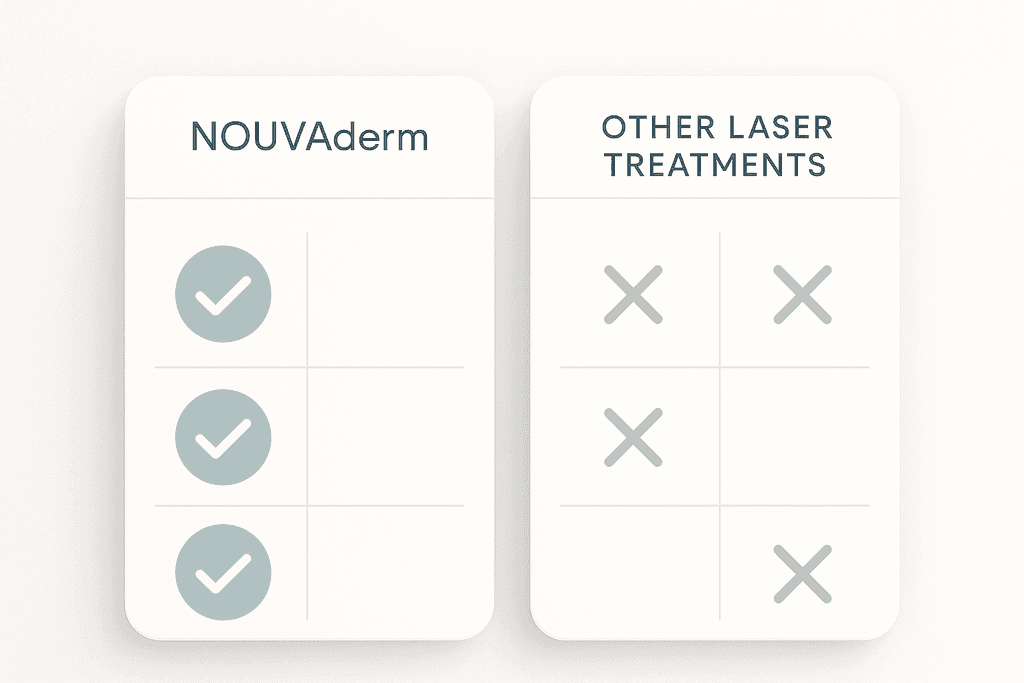
Why NOUVAderm Stands Out from Other Laser Treatments
Most people who’ve tried older laser treatments remember the experience for all the wrong reasons. Traditional ablative lasers like CO2 and older fractional devices often left patients red, swollen, and hiding at home for weeks while their skin healed. These aggressive treatments worked by essentially burning away layers of skin, which meant results came at a steep price. The NOUVAderm laser takes a completely different approach by using controlled thermal energy that stimulates your skin’s natural healing without destroying the surface layers.
The difference becomes obvious when you look at what happens after treatment. While older technologies required extensive downtime and carried higher risks of complications, NOUVAderm delivers comparable results with just a few days of mild redness. This matters especially for people who can’t take two weeks off work or hide from social events while their face heals.
| Treatment Type | Downtime | Skin Type Suitability | Pigment Risk |
|---|---|---|---|
| Traditional CO2 Laser | 10-14 days | Light to medium only | High risk for darker tones |
| Older Fractional Lasers | 7-10 days | Limited range | Moderate risk |
| NOUVAderm Laser | 2-4 days | Broader range of skin types | Lower risk with proper settings |
Precision That Protects Healthy Skin
What makes NOUVAderm particularly smart is how it targets problem areas while leaving surrounding tissue intact. The laser creates microscopic treatment zones that trigger collagen production and break up pigment clusters without affecting the healthy skin between these zones. This precision means faster healing and fewer complications compared to treatments that affect larger areas indiscriminately.
- Adjustable depth settings allow treatment customization for different concerns
- Controlled energy delivery minimizes heat damage to surrounding tissue
- Fractional approach preserves healthy skin that speeds recovery
- Lower risk of post-inflammatory hyperpigmentation in darker skin tones
Working With Your Other Treatments
The NOUVAderm laser doesn’t have to work alone. At Beauty & Fly, Catherine often combines it with treatments like PRP therapy or chemical peels to address multiple skin concerns at once. For example, pairing NOUVAderm with PRP can enhance collagen production while the laser handles texture and pigment issues. This layered approach often produces better results than any single treatment could achieve on its own.
- Complements microneedling for enhanced texture improvement
- Can be alternated with VI Peels for comprehensive pigment correction
- Works alongside PRP to boost healing and collagen stimulation
Catherine’s experience with the NOUVAderm laser means she can adjust settings based on your specific skin type, concerns, and goals. According to experts in laser skin resurfacing, this customization capability separates newer laser technologies from their predecessors. Not everyone needs the same intensity or depth of treatment, and having a provider who understands these nuances makes all the difference in your results.
Your Path to Clearer, Smoother Skin
The NOUVAderm laser works differently than surface-level treatments because it targets both pigment and texture problems at their source. Instead of just treating what you see on top, it reaches deeper layers where discoloration and uneven texture actually start. This means you get results that last longer and look more natural, without the extended recovery time that comes with more aggressive procedures.
What makes this approach work so well is the combination of effectiveness and minimal downtime. Most people can return to their normal routine within a day or two, which matters when you have a busy life. The laser handles multiple concerns in one treatment, from sun damage and age spots to rough texture and enlarged pores.
At Beauty & Fly in Bronxville and Bridgehampton, Catherine Curtin takes time to understand your specific skin concerns before recommending the NOUVAderm laser. Her 18 years of experience means she knows how to adjust treatment settings for different skin types and goals. You’re not getting a one-size-fits-all approach here.
If you’ve been dealing with stubborn pigmentation or texture issues that haven’t responded to other treatments, it might be worth scheduling a consultation. Catherine can assess your skin in person and explain exactly how the NOUVAderm laser would work for your particular concerns. Sometimes the best way to know if a treatment is right for you is to have an honest conversation about what’s realistic and what’s possible.
Common Questions About NOUVAderm Laser Treatment
If you’re thinking about trying the NOUVAderm laser for pigment or texture problems, you probably have some questions about what to expect. Most people want to know about comfort levels, how many visits they’ll need, and whether the treatment works for their specific skin type. Here are the answers to the questions we hear most often at Beauty & Fly.
Does NOUVAderm hurt during treatment?
Most patients describe the sensation as a warm, tingling feeling rather than actual pain. The NOUVAderm laser is designed with minimal downtime in mind, which means it’s gentler than older laser technologies. Some areas of the face may feel more sensitive than others, but the treatment is generally well-tolerated without numbing cream.
How many sessions will I need for my pigment issues?
The number of sessions depends on what you’re treating and how severe the pigmentation is. Most patients see noticeable improvement after three to five treatments spaced about four weeks apart. During your consultation, Catherine will assess your skin and create a personalized treatment plan based on your specific concerns and goals.
Can I wear makeup after treatment?
You can typically apply mineral makeup the day after your NOUVAderm session. Your skin might look slightly pink or feel a bit sensitive immediately following treatment, similar to a mild sunburn. This usually settles down within 24 hours, making it easy to return to your normal routine quickly.
Is NOUVAderm safe for darker skin tones?
Yes, the NOUVAderm laser can be safely used on a variety of skin tones when performed by an experienced provider. Catherine has over 18 years of experience in aesthetic medicine and adjusts treatment settings based on your individual skin type to minimize any risk. A thorough consultation helps determine if this treatment is the right fit for your specific skin.
How long do results last?
Results from NOUVAderm treatments can last for months to years, depending on how well you protect your skin from sun exposure and maintain a good skincare routine. Many patients schedule maintenance sessions once or twice a year to keep their skin looking its best. Using quality products like SkinBetter science or Alumier MD between treatments helps extend your results.
Can I combine NOUVAderm with other treatments?
Absolutely. Many patients combine NOUVAderm laser with other services like microneedling with PRP or dermal fillers for more comprehensive results. Catherine often creates customized treatment plans that layer different modalities to address multiple concerns at once. The key is proper timing and spacing between treatments, which is something we carefully plan during your consultation.