
Watching more hair collect in your brush each morning can feel like losing a battle you didn’t sign up for. The good news is that PRP for hair loss works by delivering concentrated growth factors directly to your hair follicles, but what many people don’t realize is that your daily scalp care routine can make or break those results. At Beauty & Fly, we combine PRP therapy with personalized scalp health guidance to create the ideal environment for hair regrowth.
Table of Contents
Understanding PRP Therapy for Hair Loss
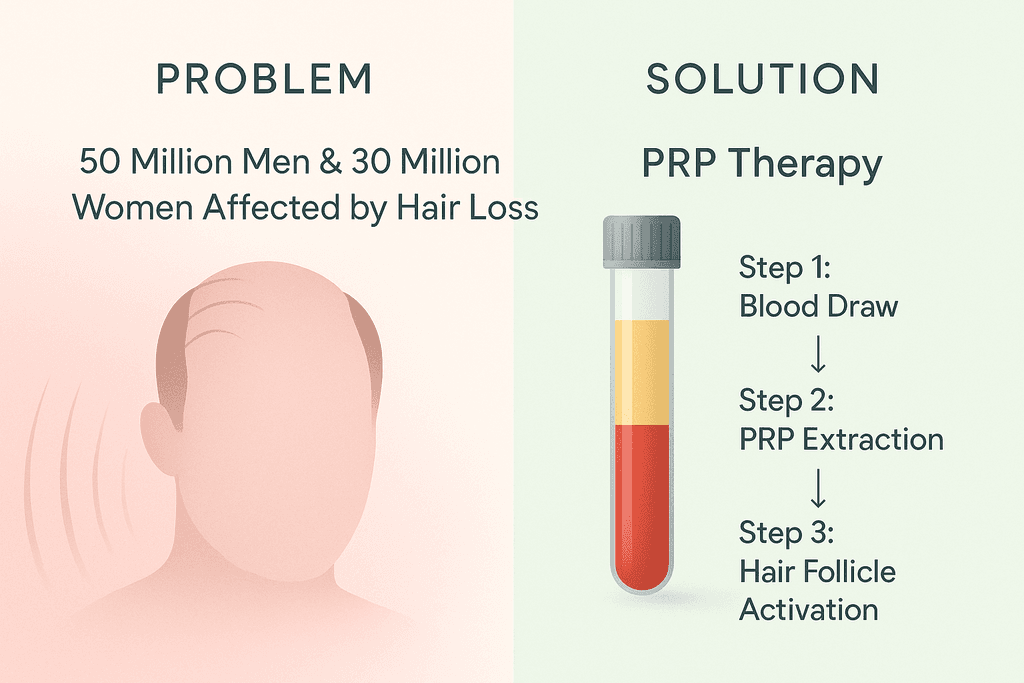
About 50 million men and 30 million women in the United States deal with some form of hair loss, and most of them are looking for solutions that don’t involve surgery or harsh chemicals. PRP therapy for hair loss has become one of the most talked-about options because it uses something you already have—your own blood—to help wake up sleeping hair follicles. The science behind it is pretty straightforward, even though it might sound a bit unusual at first. Your blood contains special cells called platelets that are packed with growth factors, and when these growth factors are concentrated and injected into your scalp, they can actually encourage your hair to start growing again.
What Makes PRP Different
Unlike hair transplants or medications that you have to take every single day, PRP therapy works with your body’s natural healing process. A small amount of blood is drawn from your arm, just like when you get regular lab work done. That blood then goes into a special machine that spins it around really fast to separate out the platelet-rich plasma from everything else.
The concentrated plasma gets injected back into areas of your scalp where hair is thinning. At Beauty & Fly, Catherine Curtin uses PRP Therapy for Hair Loss as part of a personalized approach to help clients address thinning hair naturally and safely.
How PRP Actually Works
The growth factors in your platelets do some pretty amazing things once they’re in your scalp. They don’t create new hair follicles from nothing, but they can restart follicles that have gone dormant or aren’t producing hair like they used to.
- Platelets release proteins that signal your body to repair and regenerate tissue
- Blood flow to the hair follicles increases, bringing more nutrients and oxygen
- The hair growth cycle gets extended, meaning hair stays in the growing phase longer
- Follicles that were producing thin, weak hair can start making thicker strands
Research on conditions like androgenetic alopecia treatment with PRP shows real results in patients who stick with the recommended treatment schedule.
What to Expect from Treatment
PRP isn’t a one-and-done kind of treatment. Most people need a series of sessions spaced about a month apart at first, then maintenance treatments every few months after that. The good news is that there’s basically no downtime—you might have some mild tenderness on your scalp for a day or two, but that’s about it.
| Timeline | What Happens | Sessions Needed |
|---|---|---|
| Month 1-3 | Initial treatment phase | 3-4 sessions |
| Month 3-6 | Results start showing | Maintenance begins |
| Month 6+ | Full results visible | Every 4-6 months |
Results typically show up gradually over three to six months as your hair follicles respond to the treatment. Some people notice less shedding first, then see new growth filling in thin areas. Because PRP uses your own blood, the risk of allergic reactions or rejection is extremely low, making it one of the safer options out there for hair restoration.
How Scalp Health Affects PRP Results
Your scalp is basically soil for your hair, and just like a garden, what happens beneath the surface matters more than most people realize. When you invest in PRP for hair loss, you’re introducing powerful growth factors directly into your scalp, but those growth factors can only work their magic if the environment is ready to receive them. Think of it this way: even the best seeds won’t grow in compacted, nutrient-poor soil. The same principle applies to your scalp and PRP treatments.

How Scalp Health Affects PRP Results
Clogged follicles and product buildup create a physical barrier that prevents PRP from reaching the areas where it needs to work. When dead skin cells, excess sebum, and styling products accumulate on your scalp, they block the absorption of those precious growth factors. This is one of the most overlooked factors in treatment success.
- Inflammation reduces the effectiveness of growth factors by creating a hostile environment where healing can’t happen properly
- Poor circulation limits nutrient delivery to follicles, which means even when PRP is present, it can’t distribute effectively
- Balanced pH and moisture levels support the healing process that PRP initiates
- A healthy scalp microbiome enhances treatment outcomes by maintaining the right bacterial balance
Research published in the National Institutes of Health shows that platelet-rich plasma works by releasing growth factors that stimulate dormant hair follicles, but this process requires a receptive scalp environment. When your scalp is inflamed or congested, those growth factors can’t penetrate deeply enough to trigger the cellular changes needed for hair regrowth.
| Scalp Condition | Impact on PRP | Result |
|---|---|---|
| Clean, balanced | Optimal absorption | Best outcomes |
| Product buildup | Blocked penetration | Reduced effectiveness |
| Inflamed | Poor response | Minimal improvement |
| Dry, flaky | Uneven distribution | Inconsistent results |
Building Your Scalp Care Routine Around PRP
Creating a scalp care routine that supports your PRP treatments doesn’t have to be complicated, but it does need to be intentional. The goal is to prepare your scalp before each session and maintain the results between treatments. Most people focus entirely on what happens during the PRP appointment and forget that what they do at home plays an equally important role in their overall results.

Building Your Scalp Care Routine Around PRP
Pre-treatment preparation starts about a week before your scheduled PRP session. You want your scalp clean but not stripped of its natural protective oils. This balance is harder to achieve than it sounds because many popular shampoos are too harsh.
Gentle cleansing without stripping natural oils means choosing sulfate-free formulas that remove buildup without disrupting your scalp’s pH balance. Your scalp produces sebum for a reason, and completely removing it creates more problems than it solves.
- Cleanse your scalp 2-3 times per week with a gentle, pH-balanced shampoo
- Use lukewarm water instead of hot water to prevent irritation
- Massage your scalp gently for 2-3 minutes to improve circulation
- Rinse thoroughly to remove all product residue
- Avoid heavy styling products for 48 hours before treatment
Exfoliation to remove buildup and dead skin should happen once a week, but not right before your PRP appointment. A scalp scrub or gentle exfoliating treatment helps clear the follicles and creates a clean canvas for the growth factors to work. At Beauty & Fly, Catherine Curtin often recommends specific professional-grade products from the SkinBetter science or Alumier MD lines that complement your PRP treatments without interfering with results.
Between sessions, hydration and nourishment become your main focus. Your scalp needs moisture to heal and support new hair growth, but you want to avoid heavy oils that can clog follicles. Light serums with ingredients that support scalp health work best during this phase.
Post-treatment care to protect PRP results is just as important as preparation. For the first 24-48 hours after your session, you’ll need to avoid washing your hair, sweating heavily, or applying any products to your scalp. This gives the growth factors time to settle into the follicles and begin their work.
- Skip harsh chemical treatments for at least two weeks after PRP
- Avoid direct sun exposure on your scalp
- Don’t use hot styling tools directly on the scalp area
- Stay away from chlorinated pools for one week
Professional Treatments That Enhance PRP
PRP for hair loss works well on its own, but combining it with other professional treatments can amplify your results in ways that surprise most patients. The key is understanding which treatments complement each other and how to time them properly. This is where working with an experienced provider makes all the difference, because not every combination works for every person.
Microneedling with PRP for deeper penetration is one of the most effective combination approaches. The microneedling creates tiny channels in the scalp that allow the PRP to penetrate more deeply into the tissue where hair follicles live. This dual approach addresses both surface-level concerns and deeper follicle stimulation.
According to recent research on platelet-rich plasma, combining delivery methods can improve outcomes significantly compared to PRP injections alone. The mechanical stimulation from microneedling also triggers additional healing responses in the scalp.
- Scalp treatments that improve circulation help deliver nutrients and oxygen to follicles between PRP sessions
- Professional-grade products from SkinBetter and Alumier MD provide medical-grade ingredients that support scalp health without interfering with treatment
- Catherine Curtin customizes combination protocols based on your specific hair loss pattern, scalp condition, and treatment goals
Treatment timing and spacing for optimal results typically involves PRP sessions every 4-6 weeks initially, with maintenance treatments every few months once you achieve your desired results. Other treatments like the NOUVAderm laser or specialized scalp facials can be scheduled between PRP appointments to maintain scalp health.
What makes the approach at Beauty & Fly different is the level of personalization. Because Catherine works with each patient individually, she can adjust your treatment plan based on how your scalp responds. Some patients need more frequent sessions initially, while others see great results with a more spaced-out approach. What to expect during integrated treatment plans includes regular check-ins to assess progress, adjustments to your home care routine, and modifications to the treatment schedule as needed.
The combination of professional expertise and high-quality products creates an environment where PRP can deliver its best possible results. Your scalp health isn’t just about one treatment or one product. It’s about creating a comprehensive approach that supports hair growth from every angle.
Why This Combination Approach Works Better
Think of PRP therapy like planting seeds in a garden. You wouldn’t just toss seeds onto hard, compacted soil and expect them to flourish. The same principle applies to your scalp. When you combine PRP for hair loss with a proper scalp care routine, you’re creating the ideal conditions for those powerful growth factors to actually do their job. The science behind this is pretty straightforward, but most people miss it completely.
Your scalp needs to be in good shape before PRP can work its magic. Dead skin cells, excess oil, and product buildup create a physical barrier that blocks the platelet-rich plasma from reaching the hair follicles where it needs to go.
The Receptive Environment Factor
Growth factors from PRP are incredibly potent, but they can’t penetrate through layers of debris and inflammation. A clean, healthy scalp allows these healing proteins to absorb properly and reach the dormant follicles that need stimulation.
- Proper cleansing removes sebum and dead cells that block absorption
- Gentle exfoliation opens pathways for PRP to penetrate deeper
- Reduced inflammation means follicles can respond better to growth signals
- Improved blood flow from scalp massage enhances nutrient delivery
At Beauty & Fly, Catherine Curtin’s PRP Therapy for Hair Loss works best when patients commit to the full picture. It’s not just about the injections themselves.
Addressing Multiple Causes Simultaneously
Hair loss rarely has just one cause. DHT sensitivity, inflammation, poor circulation, and nutrient deficiencies often work together to thin your hair. A holistic approach tackles all these factors instead of just one.
- PRP delivers growth factors directly to follicles
- Scalp care reduces inflammation that blocks regrowth
- Consistent routine maintains optimal conditions between treatments
- Combined effects create compound benefits over time
Research from clinical trials on PRP for hair growth shows that preparation and aftercare significantly impact outcomes. Patients who maintain their scalp health see results that last longer and look more natural.
The Compliance Advantage
Here’s something interesting about human behavior. When people start seeing visible improvements from their at-home scalp care routine, they’re way more likely to stick with their PRP treatment schedule. The daily routine keeps you engaged with your hair restoration journey instead of just showing up every few months for injections.
- Daily scalp care provides constant visual reminders of your commitment
- Small improvements between sessions build motivation
- Active participation increases treatment satisfaction
Your Path to Healthier Hair Growth
Getting PRP for hair loss is just one piece of the puzzle. The real results come when you pair those treatments with a solid scalp care routine that keeps your follicles healthy between sessions. Think of it like planting seeds in a garden—you need good soil and regular care for anything to actually grow.
Your scalp needs to be in the right condition before treatment, and maintaining that health afterward protects what you’ve invested in. Most people don’t realize that the weeks between PRP sessions matter just as much as the treatment itself.
Professional guidance makes a huge difference in timing everything right. At Beauty & Fly, we create personalized PRP and scalp care protocols that work with your specific hair loss pattern and lifestyle. Catherine Curtin takes the time to map out exactly when to treat and what to do at home, so nothing gets left to chance.
Natural hair restoration isn’t about quick fixes or miracle products. It’s about understanding what your scalp needs and giving it the right support over time. The combination of medical-grade PRP therapy with proper daily care creates an environment where your hair can actually start growing again.
If you’ve been dealing with thinning hair and wondering whether there’s a real solution, the answer might be simpler than you think. It just takes the right approach and someone who knows how to customize it for you.
Common Questions About PRP and Scalp Care
Starting a new hair restoration treatment brings up a lot of practical questions about daily routines and what to expect. When you’re investing time and money into PRP for hair loss, you want to make sure you’re doing everything right to get the best possible results. Here are the most common questions we hear from patients at Beauty & Fly about combining PRP therapy with their regular scalp care habits.
How soon before PRP should I start scalp care?
You can start improving your scalp care routine anytime, but ideally begin at least two weeks before your first PRP treatment. A healthy scalp creates a better environment for the growth factors in PRP to work effectively. Focus on gentle cleansing and keeping your scalp free from buildup or irritation.
Can I wash my hair after PRP treatment?
You should wait at least 24 hours after your PRP session before washing your hair. This gives the platelet-rich plasma time to settle into your scalp and start the healing process without being disturbed. When you do wash, use lukewarm water and a gentle, sulfate-free shampoo to avoid irritation.
What products should I avoid during PRP therapy?
Skip harsh chemical treatments, hair dyes, and strong styling products for at least 48 hours after each PRP session. Avoid products with alcohol, sulfates, or heavy fragrances that can irritate your scalp during the healing phase. Catherine Curtin can recommend specific professional-grade products that work well alongside your PRP treatments.
How long until I see results from combined treatment?
Most patients notice initial improvements around three to four months after starting PRP therapy, with continued progress over six to twelve months. Combining PRP with a solid scalp care routine may help optimize these results. Hair growth is a gradual process, so patience matters more than you might think.
Is PRP for hair loss permanent?
PRP stimulates your natural hair growth cycle, but it doesn’t stop the aging process or underlying causes of hair loss. Most patients benefit from maintenance treatments every six to twelve months to sustain their results. Think of it like going to the gym—you get great results, but you need to keep it up.
Who is a good candidate for PRP hair restoration?
PRP works best for people experiencing early to moderate hair thinning rather than complete baldness. If you still have active hair follicles that need a boost, you’re likely a good candidate. A consultation with Catherine at Beauty & Fly can help determine if PRP for hair loss is right for your specific situation and goals.