
Watching your hair thin can feel like losing a part of yourself, and that emotional weight often hits harder than the physical change. PRP for hair loss offers a way forward using your body’s natural healing abilities to encourage new growth without surgery or harsh chemicals. At Beauty & Fly, this treatment taps into the power of your own platelets to help restore not just your hair, but the confidence that comes with it.
Table of Contents
Understanding Hair Loss and Its Impact
Most people lose between 50 and 100 hairs every single day without even noticing it. But when that number starts climbing higher, or when new hair stops growing back as quickly, the changes become impossible to ignore. Hair loss affects roughly 50 million men and 30 million women in the United States alone, making it one of the most common concerns people face as they age. What starts as a few extra strands in the shower drain can quickly turn into a source of daily stress and worry.
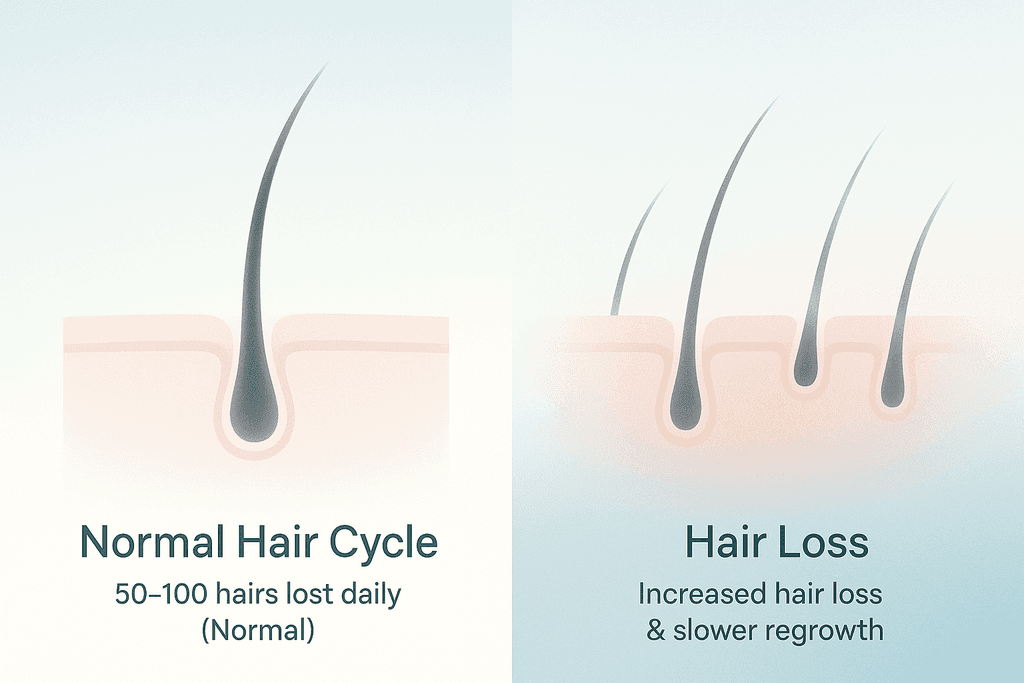
The truth is, hair loss doesn’t happen the same way for everyone. Your genes, hormones, stress levels, and even how you style your hair all play a role in whether you’ll experience thinning or balding.
Types of Hair Loss and Who They Affect
Different patterns of hair loss show up in different people, and understanding which type you’re dealing with matters when you’re looking for solutions. Here’s what you need to know about the most common forms:
| Type of Hair Loss | Who It Affects Most | Common Triggers |
|---|---|---|
| Androgenetic Alopecia | Men and women (pattern baldness) | Genetics, hormones (DHT), aging |
| Telogen Effluvium | Anyone experiencing stress or illness | Major stress, surgery, childbirth, medications |
| Alopecia Areata | All ages, both genders | Autoimmune response, family history |
| Traction Alopecia | People with tight hairstyles | Ponytails, braids, extensions, chemical treatments |
What Causes Hair to Thin and Fall Out
Your hair follicles are surprisingly sensitive to changes happening inside your body. Hormonal shifts are one of the biggest culprits, especially a hormone called DHT that shrinks hair follicles over time. This is why so many men see their hairlines recede and why women notice wider parts after menopause.
Beyond hormones, several other factors contribute to hair loss:
- Chronic stress that pushes hair follicles into a resting phase
- Nutritional deficiencies, particularly iron, vitamin D, and protein
- Thyroid problems that disrupt your body’s normal hair growth cycle
- Medications including blood thinners, antidepressants, and blood pressure drugs
Why Hair Loss Matters Beyond Appearance
Losing your hair isn’t just about how you look in the mirror. The emotional impact runs much deeper than most people realize, affecting how you show up in the world every day. Studies show that people experiencing hair loss often feel less confident in social situations and may even avoid activities they once enjoyed.
The effects show up in unexpected places:
- Job interviews and professional settings where first impressions matter
- Dating and romantic relationships where self-consciousness takes over
- Social gatherings where you worry others are noticing your thinning hair
- Daily routines that become focused on hiding or covering problem areas
Traditional treatments like oral medications often come with unwanted side effects, and surgical hair transplants require significant downtime and expense. That’s where newer dermatologic solutions for hair restoration have started changing the conversation. At Beauty & Fly, we offer PRP for hair loss as a natural alternative that uses your body’s own healing properties to stimulate new growth without surgery or harsh chemicals.
What PRP Therapy Does for Your Hair
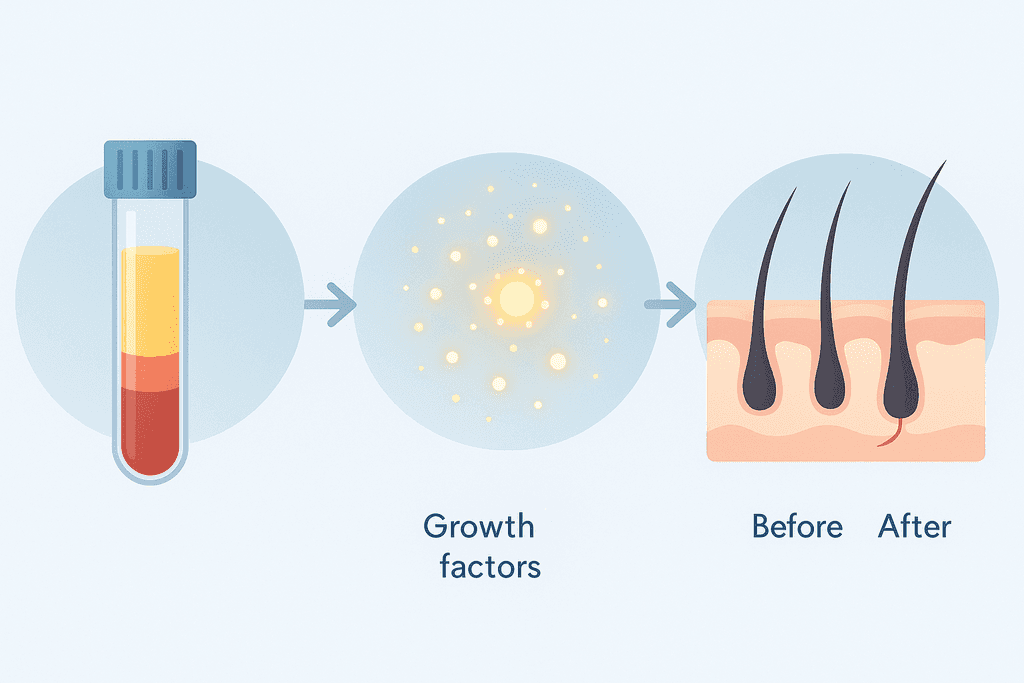
Your body already knows how to heal itself. When you get a cut, platelets rush to the area and start the repair process. PRP for hair loss takes that same natural healing power and directs it to your scalp. The treatment uses concentrated platelets from your own blood, packed with growth factors that can wake up hair follicles that have gone quiet over time. It’s not about adding foreign substances or harsh chemicals to your body.
What PRP Therapy Does for Your Hair
The science behind it is pretty straightforward. Growth factors in PRP signal dormant hair follicles to start producing again while strengthening the hairs you already have. According to research published by the National Institutes of Health, PRP therapy shows measurable improvements in hair count and thickness for many patients dealing with hair loss.
What makes PRP different from other hair loss treatments is that it works with your body instead of against it. There are no synthetic medications or surgical procedures involved. The treatment improves overall scalp health, which creates a better environment for hair growth. You’re essentially giving your follicles the resources they need to do what they’re supposed to do.
- Uses your own blood, so there’s minimal risk of allergic reactions
- Targets the root cause by stimulating follicle activity at the cellular level
- Improves hair thickness and density over time with consistent treatment
- Enhances scalp health, creating better conditions for sustained growth
At Beauty & Fly, Catherine Curtin looks at your specific hair loss pattern before creating a treatment plan. Not everyone loses hair the same way, so the approach needs to match what’s actually happening on your scalp. Her 18 years of experience in aesthetic medicine means she can adjust the treatment to target the areas that need it most.
The Treatment Experience and What to Expect
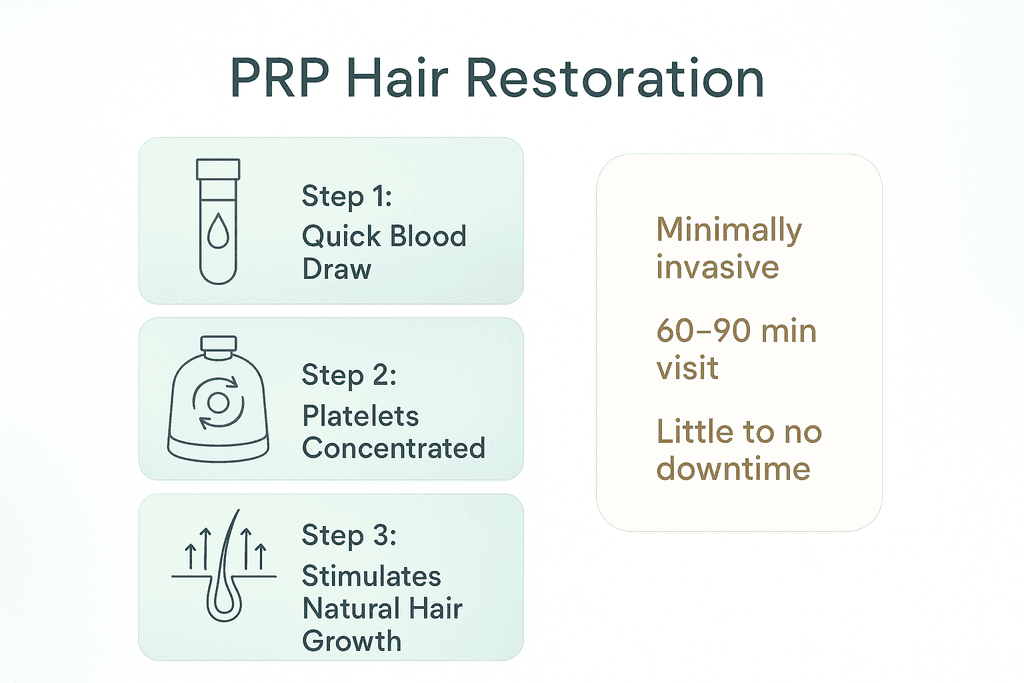
The actual PRP procedure is simpler than most people think. You come in for an appointment that takes about 60 to 90 minutes from start to finish. A small amount of blood gets drawn from your arm, similar to a routine blood test. That blood goes into a centrifuge machine that spins it to separate and concentrate the platelets. Then those concentrated platelets get injected into your scalp in the areas where you’re experiencing thinning or loss.
The Treatment Experience and What to Expect
Most patients describe the discomfort as minimal. The scalp might feel tender for a day or two afterward, but it’s not the kind of pain that stops you from going about your day. There’s no surgery, no incisions, and no general anesthesia. You walk in and walk out on your own.
The timeline for PRP hair restoration looks like this:
- Initial phase: 3-4 treatments spaced 4-6 weeks apart
- Waiting period: Hair growth cycles take time to respond to the treatment
- Visible results: Most people start seeing changes within 3-6 months
- Maintenance: Periodic treatments help keep the improvements going
Hair doesn’t grow overnight, even with PRP. Your follicles need time to respond to the growth factors and start producing thicker, healthier strands. Some patients notice small changes earlier, but the real difference becomes clear after a few months. This gradual process actually works in your favor because the results look natural rather than sudden.
The best part is that downtime is basically nonexistent. Most people go right back to work or their regular activities the same day. You might need to avoid washing your hair for 24 hours or skip intense workouts for a day, but that’s about it. No one will know you had anything done unless you tell them.
How PRP Rebuilds Your Confidence
Hair loss affects more than just your appearance. It changes how you feel when you look in the mirror each morning. Many people with thinning hair find themselves avoiding photos, wearing hats constantly, or feeling self-conscious in social situations. The psychological weight of watching your hair disappear can be heavier than people realize. When your hair starts coming back, something shifts inside.
Patients who’ve gone through PRP treatment often talk about feeling more comfortable in professional settings. Job interviews feel less stressful when you’re not worried about your hairline. Social events become enjoyable again instead of something to dread. According to experts in hair restoration, the confidence boost from successful treatment extends into multiple areas of life.
The emotional benefits include:
- Reduced anxiety about your appearance and aging process
- More willingness to be in photos and social situations
- Feeling like yourself again instead of a version you don’t recognize
- Natural-looking results that don’t scream “I had work done”
The gradual nature of PRP results actually helps with the confidence-building process. You’re not suddenly showing up with a completely different head of hair that makes everyone ask questions. Instead, you slowly start looking more like the version of yourself you remember. Friends might comment that you look well-rested or ask if you changed something, but they can’t quite put their finger on what.
That’s the goal with any aesthetic treatment at Beauty & Fly. Catherine’s approach focuses on enhancing what you already have rather than creating an artificial look. When your hair restoration looks natural, the confidence it brings feels natural too. You’re not pretending to be someone else or hiding behind a dramatic change. You’re just getting back to being you.
Why PRP Works When Other Treatments Fall Short
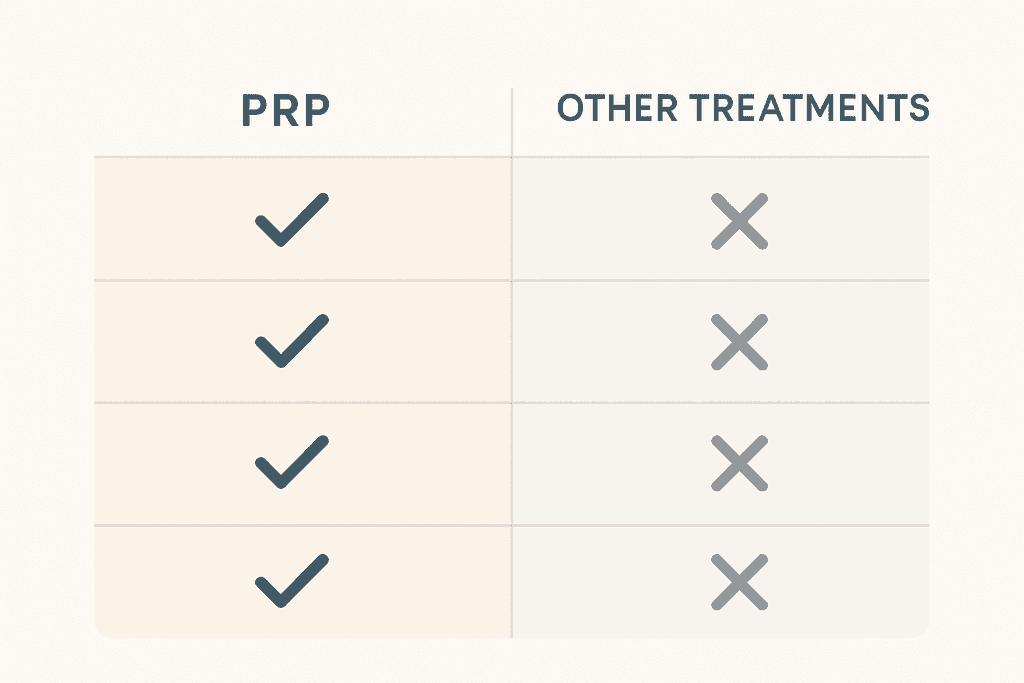
The biggest advantage of PRP for hair loss comes down to one simple fact: it uses your own body’s healing power instead of introducing foreign chemicals or medications. When you compare it to other popular hair loss treatments, the differences become pretty clear. Most topical solutions like minoxidil only work on the surface and require daily application forever, while oral medications can come with unwanted side effects that affect your whole body. PRP takes a different approach by delivering concentrated growth factors directly to your hair follicles, addressing the problem right where it starts.
What makes this treatment stand out is that it’s completely autologous, meaning everything used comes from your own blood. There’s no risk of allergic reactions or rejection because your body recognizes these healing platelets as its own.
How PRP Compares to Other Options
| Treatment Type | How It Works | Main Drawbacks |
|---|---|---|
| Topical Medications | Applied daily to scalp surface | Requires lifelong use, scalp irritation, only surface-level treatment |
| Oral Medications | Systemic hormonal changes | Sexual side effects, not suitable for women, affects entire body |
| Hair Transplant Surgery | Surgical relocation of follicles | Expensive ($4,000-$15,000), invasive, long recovery time |
| PRP Therapy | Concentrated growth factors injected at follicle level | Requires multiple sessions, results take time to appear |
At Beauty & Fly, our PRP therapy for hair loss works for both men and women dealing with various types of thinning. The treatment can be used alone or combined with other approaches for even better results, as research shows combining laser therapy with PRP can enhance hair regrowth outcomes.
Key Benefits That Matter
- No systemic side effects since nothing enters your bloodstream beyond what’s already there
- Treats the actual cause of thinning at the follicle level instead of masking symptoms
- Much more affordable than surgical options while still delivering real results
- Minimal downtime compared to invasive procedures
The versatility of PRP is another reason it’s becoming so popular. Unlike medications that only work for specific types of hair loss, PRP can address multiple causes including aging, hormonal changes, and even stress-related thinning. Catherine Curtin’s approach at Beauty & Fly focuses on creating personalized treatment plans that consider your unique situation, ensuring you get the most effective protocol for your specific needs.
Your Path to Fuller Hair Starts Here
Hair loss doesn’t have to be something you just accept and live with. PRP for hair loss offers a way to work with your body’s natural healing process instead of against it. There’s no surgery involved, no foreign substances being added to your scalp, just your own platelets doing what they do best. The results take time to show up, which actually works in your favor because the changes look natural and gradual.
The confidence that comes back with your hair is often the biggest benefit people talk about. When you stop worrying about your hairline or that thinning spot, you start showing up differently in your daily life.
At Beauty & Fly, Catherine Curtin brings over 18 years of experience to every PRP treatment, which means you’re getting someone who understands how to customize the approach for your specific hair loss pattern. She works with you one-on-one at both the Bronxville and Bridgehampton locations, so you’re never just another appointment on a busy schedule.
The thing about hair loss is that waiting usually makes it harder to treat. The follicles that are still active respond better to PRP therapy than ones that have been dormant for years. Starting treatment sooner gives you more options and better potential results.
If you’ve been thinking about doing something about your hair, it might be worth exploring what PRP can do for you. The questions people ask most often about the treatment are worth looking at if you’re still deciding.
Common Questions About PRP for Hair Loss
If you’re thinking about trying PRP therapy for thinning hair, you probably have some questions about what to expect. Most people want to know if it hurts, how long results stick around, and whether they’re even a good fit for the treatment. Here are the answers to the most common questions we hear at Beauty & Fly about PRP for hair loss.
Is PRP for hair loss painful?
Most patients describe the treatment as mildly uncomfortable rather than painful. We apply a numbing cream to your scalp before starting, which helps a lot. You might feel some pressure or slight pinching during the injections, but it’s usually very tolerable and the whole process takes less than an hour.
How long do PRP hair results last?
Results typically last about 12 to 18 months, though this varies from person to person. Many patients choose to do maintenance treatments every 6 to 12 months to keep their hair looking fuller. Since PRP uses your own platelets to stimulate natural hair growth, the effects build gradually and can continue improving for several months after your treatment series.
Who is a good candidate for PRP hair treatment?
PRP works best for people in the early stages of hair loss who still have active hair follicles. If you’re noticing thinning hair, a widening part, or less density than you used to have, you’re probably a good candidate. It’s less effective for completely bald areas where follicles are no longer active, but Catherine can evaluate your specific situation during a consultation to see if PRP for hair loss makes sense for you.
Can PRP be combined with other hair loss treatments?
Yes, PRP actually works really well alongside other treatments. Many patients combine it with topical medications or supplements for better results. Catherine can help you create a complete plan that addresses your hair loss from multiple angles.
When will I see results from PRP therapy?
Most people start noticing changes around the three to six month mark after their initial series of treatments. Hair growth is a slow process, so patience is important. You might see less shedding first, then gradual thickening and new growth over time.
Are there any side effects or risks?
Since PRP uses your own blood, the risk of allergic reaction or rejection is extremely low. Some patients experience mild swelling, redness, or tenderness at the injection sites for a day or two. These side effects are temporary and usually resolve quickly. Beauty & Fly’s PRP therapy for hair loss is performed under careful medical supervision to minimize any risks and ensure you’re comfortable throughout the process.