
You’ve probably heard someone say BOTOX makes you look frozen or fake, but that’s just one of many myths keeping people from trying one of the safest wrinkle treatments available. The truth is, BOTOX has been FDA-approved for over 20 years, yet outdated stories and celebrity mishaps still scare people away from natural-looking results. Understanding what’s real and what’s fiction can help you decide if this treatment fits your goals.
Table of Contents
- How BOTOX Actually Works in Your Skin
- Myth 1: BOTOX Freezes Your Face and Looks Fake
- Myth 2: BOTOX Is Dangerous and Full of Toxins
- Myth 3: Once You Start BOTOX You Can Never Stop
- Myth 4: BOTOX Is Only for Older People or Vanity
- Making Informed Choices About Your Appearance
- Your BOTOX Questions Answered
How BOTOX Actually Works in Your Skin
BOTOX started its journey in medicine long before anyone thought about using it for wrinkles. Doctors first used this purified protein to treat muscle spasms in the eyes back in the 1980s, and patients kept mentioning something interesting during their follow-up visits. The frown lines between their eyebrows were disappearing, which led researchers to wonder if this medical treatment could help people look younger too.
The science behind BOTOX is actually pretty straightforward. When you make facial expressions like frowning or squinting, your muscles contract and create creases in your skin. Over time, these creases turn into permanent wrinkles because your muscles are constantly pulling on the same spots. BOTOX works by blocking the signals between your nerves and muscles, which means those specific muscles can’t contract as much and your skin gets a break from all that folding.
From Medical Treatment to Beauty Solution
The journey from medical offices to aesthetic practices like Beauty & Fly took several decades of research and testing. Here’s how BOTOX evolved over the years:
| Year | Milestone | What It Meant |
|---|---|---|
| 1989 | FDA approved for eye muscle disorders | First official medical use in the United States |
| 2002 | FDA approved for frown lines | Became the first injectable approved for cosmetic wrinkle treatment |
| 2013 | FDA approved for crow’s feet | Expanded to treat lines around the eyes |
| 2017 | FDA approved for forehead lines | Added another common treatment area |
| Present | Over 8 million treatments yearly | Most popular cosmetic procedure in America |
Safety Record and Real World Use
BOTOX has been studied more than almost any other cosmetic treatment out there. With millions of treatments performed every year and decades of data, doctors and researchers have a clear picture of how it works and what to expect. The FDA approval process required years of clinical trials, and the safety monitoring continues today.
Here’s what makes BOTOX different from many other treatments:
- It’s a purified protein, not a synthetic chemical or permanent filler
- The effects are temporary, typically lasting three to four months
- It only affects the specific muscles where it’s injected
- Your body naturally breaks it down over time
The treatment itself is quick and precise. Experienced providers like Catherine Curtin at Beauty & Fly use BOTOX to relax only the muscles causing unwanted wrinkles, while leaving surrounding muscles free to move naturally. This approach keeps your expressions looking like you, just with smoother skin.
What Happens During and After Treatment
Understanding the timeline helps set realistic expectations. BOTOX doesn’t work instantly like flipping a light switch, and that’s actually a good thing because the gradual change looks more natural.
- Day 1-3: The BOTOX begins attaching to nerve endings near the injection sites
- Day 4-7: You start noticing the muscles relaxing and lines softening
- Day 10-14: Full results appear as the treatment reaches its peak effect
- Month 3-4: Effects gradually wear off as your body processes the protein
Most people don’t realize that BOTOX can actually prevent new wrinkles from forming when used regularly. Since your muscles aren’t contracting as forcefully, your skin isn’t creasing in the same spots over and over. Think of it like taking a break from folding a piece of paper in the same place.
Myth 1: BOTOX Freezes Your Face and Looks Fake
You’ve probably seen those celebrity photos where someone’s face looks completely stiff and expressionless. That’s what most people picture when they think about BOTOX, and honestly, it’s the biggest reason people avoid trying it. But here’s what most people don’t realize: that frozen look has nothing to do with BOTOX itself. It’s actually the result of too much product being injected or someone without proper training doing the work. When administered correctly by an experienced provider, BOTOX should make you look like yourself, just more refreshed.
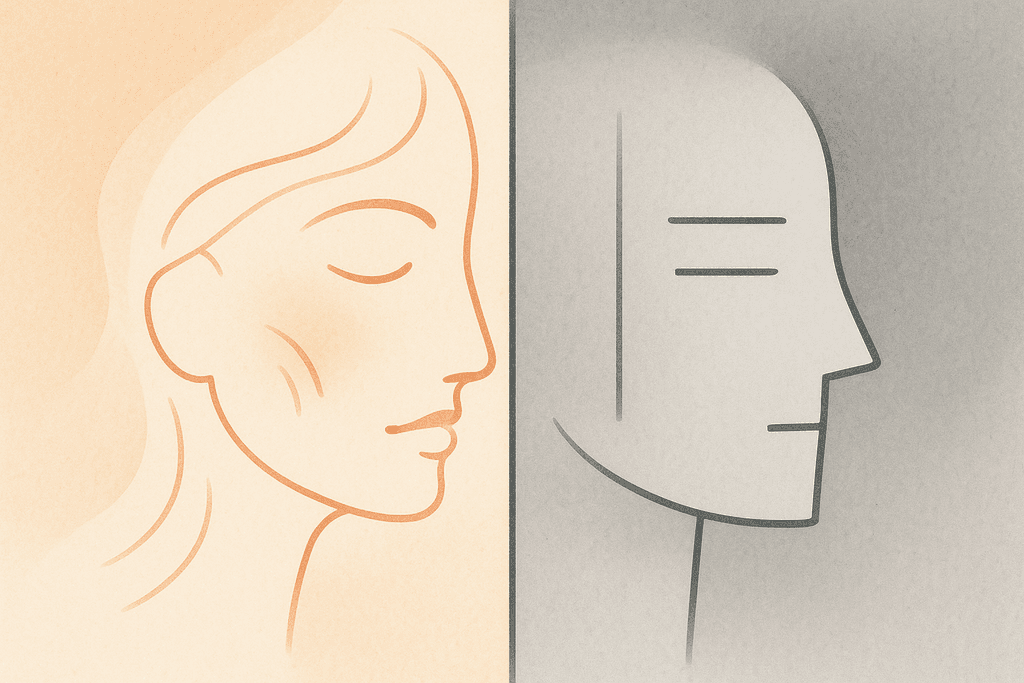
Myth 1: BOTOX Freezes Your Face and Looks Fake
The key to natural-looking results comes down to proper dosing and strategic placement. A skilled injector knows exactly how much product to use and where to place it so your facial expressions stay intact. You should still be able to smile at your kids, raise your eyebrows in surprise, and show every emotion you normally would.
- The frozen look comes from overtreatment or inexperienced injectors, not BOTOX itself
- Proper dosing and placement preserve natural facial expressions
- Results should soften lines while maintaining your ability to smile, frown, and show emotion
- You can still move your face normally with properly administered BOTOX
At Beauty & Fly, Catherine Curtin focuses on subtle enhancement rather than dramatic changes. With over 18 years of experience in aesthetic medicine, she understands that the goal isn’t to erase every line or create a completely smooth face. It’s about softening the lines that bother you while keeping your natural character and expressions.
Myth 2: BOTOX Is Dangerous and Full of Toxins
The word “toxin” in botulinum toxin definitely sounds scary. It makes people think they’re injecting something dangerous into their face, and that fear is completely understandable. But the BOTOX used in medical settings is nothing like the botulinum toxin found in nature. It’s a highly purified, controlled form of botulinum toxin type A that’s been refined specifically for medical use. The difference between the two is like comparing table salt to ocean water.

Myth 2: BOTOX Is Dangerous and Full of Toxins
BOTOX has been FDA-approved since 2002 for cosmetic use, which means it’s gone through extensive safety testing and monitoring. That’s over 20 years of data with millions of treatments performed worldwide.
The dose used for treating wrinkles is extremely small and stays localized to the treatment area. It doesn’t spread throughout your body or build up over time. When you work with a board-certified provider like Catherine Curtin, strict safety protocols are followed at every step. Serious side effects are rare when the treatment is administered by qualified medical professionals who understand facial anatomy and proper injection techniques.
- BOTOX uses a highly purified, controlled form of botulinum toxin type A
- FDA-approved since 2002 for cosmetic use with extensive safety testing
- The dose used for wrinkles is extremely small and localized
- More than 20 years of safety data with millions of treatments performed
The reality is that BOTOX has one of the best safety profiles in aesthetic medicine. Most people experience no side effects at all, and when they do occur, they’re typically minor and temporary.
Myth 3: Once You Start BOTOX You Can Never Stop
This myth makes BOTOX sound like some kind of drug you’ll become dependent on, and it keeps a lot of people from even trying it. The truth is much simpler and less dramatic. BOTOX is not addictive in any medical or chemical sense. There’s nothing in the product that creates a physical dependency or withdrawal symptoms. If you decide to stop getting treatments, nothing bad happens to your face.

Myth 3: Once You Start BOTOX You Can Never Stop
When you stop BOTOX, your muscles gradually return to normal function over three to six months. Your wrinkles will slowly come back to how they looked before you started treatment. They won’t be worse, deeper, or more noticeable than they were originally.
- If you stop treatments, your muscles gradually return to normal function
- Your wrinkles will return to their pre-treatment state, not worse
- Some people continue because they like the results, not because they have to
- You have complete control over whether and when to get treatments
- Many patients take breaks between treatments without any negative effects
The reason some people continue with regular treatments is simple: they like how they look with BOTOX. It’s a choice, not a requirement. Many patients at Beauty & Fly take breaks between treatments for various reasons, whether it’s budget, life circumstances, or just wanting to see how they feel without it. The door is always open to come back or to stop completely.
Myth 4: BOTOX Is Only for Older People or Vanity
There’s still a stigma around aesthetic treatments that makes people feel like caring about their appearance is shallow or vain. But taking care of how you look is actually a form of self-care, just like eating well or exercising. And here’s something that might surprise you: many people are now starting BOTOX in their late 20s or early 30s as a preventative measure. This isn’t about vanity at all, it’s about being proactive.
Preventative BOTOX works by relaxing the muscles that create dynamic wrinkles, which are the lines that form when you make expressions. When you treat these wrinkles early, before they become permanently etched into your skin, you can actually slow down their formation. It’s easier to prevent a wrinkle than to treat one that’s been there for years.
- Preventative BOTOX in your late 20s or early 30s can slow wrinkle formation
- Treating dynamic wrinkles early prevents them from becoming permanent
- Taking care of your appearance is self-care, not vanity
- BOTOX helps people feel confident and comfortable in their own skin
Many professionals use BOTOX to maintain a refreshed, energetic appearance, especially in careers where looking approachable and well-rested matters. Beauty & Fly focuses on helping clients age confidently with natural results, whether you’re 28 or 68. The goal is always to help you feel like the best version of yourself, not to chase some impossible standard of perfection.
Making Informed Choices About Your Appearance
Most of the scary stories you’ve heard about BOTOX come from bad information, not actual facts. The frozen face look, the permanent changes, the toxin fears—these myths keep people from considering a treatment that could actually help them feel more confident. When you understand what BOTOX really does and how it works, the decision becomes much clearer.
The truth is that proper technique and an experienced provider make all the difference between results that look natural and results that look overdone. BOTOX itself is just a tool, and like any tool, it works best in skilled hands.
At Beauty & Fly, Catherine Curtin brings 18 years of aesthetic medicine experience to every treatment. She focuses on subtle enhancements that let you look like yourself, just refreshed. The goal isn’t to erase every line or create a completely smooth face—it’s about softening the areas that bother you while keeping your natural expressions intact.
A consultation helps determine whether BOTOX fits your specific goals. Maybe you’re dealing with forehead lines that make you look tired, or maybe you’d benefit more from a combination approach with other treatments. Everyone’s face ages differently, which means everyone needs a different plan.
The questions you still have about BOTOX are probably ones other people wonder about too. Let’s address some of the most common ones below.
Your BOTOX Questions Answered
Getting BOTOX for the first time brings up a lot of questions, and that’s completely normal. Most people want to know what to expect before they commit to any cosmetic treatment. Here are the answers to the questions we hear most often from patients considering BOTOX at Beauty & Fly.
How long does BOTOX actually last?
BOTOX typically lasts between three to four months for most people. Some patients notice results lasting a bit longer with repeated treatments, while factors like metabolism, muscle strength, and the treatment area can affect duration. You’ll gradually notice your natural muscle movement returning as the effects wear off.
Does BOTOX hurt during injection?
Most patients describe BOTOX injections as a quick pinch or slight pressure. The needles used are very fine, and the entire injection process usually takes just a few minutes. Many people are surprised by how comfortable the treatment actually is compared to what they expected.
When will I see results from BOTOX?
You’ll start noticing changes within three to five days after treatment, with full results appearing around two weeks. This gradual onset is actually one reason BOTOX looks so natural—nobody will notice a sudden dramatic change. At Beauty & Fly, Catherine Curtin schedules follow-up appointments to ensure you’re happy with your results.
Can BOTOX be combined with other treatments?
Yes, BOTOX works beautifully alongside other treatments like dermal fillers, microneedling, and laser services. Many patients combine BOTOX with treatments like the NOUVAderm laser or VI Peel for comprehensive facial rejuvenation. Catherine creates custom treatment plans that address multiple concerns at once for the most natural-looking results.
What should I avoid after getting BOTOX?
For the first 24 hours after treatment, avoid lying down flat, intense exercise, rubbing the treated areas, or consuming alcohol. These precautions help prevent the BOTOX from migrating to unintended areas. You can return to most normal activities immediately, which is why many people schedule BOTOX during their lunch break.
How do I choose a qualified BOTOX provider?
Look for a provider with medical training, specific experience in aesthetic injections, and a portfolio of natural-looking results. Board certification matters, as does whether the provider takes time to understand your goals rather than rushing through appointments. Catherine Curtin is a board-certified family nurse practitioner with over 18 years of aesthetic medicine experience, and she personally performs every treatment at Beauty & Fly—you’ll never see a different provider at your appointment.