
Your cheeks start losing their natural plumpness and smoothness earlier than you might think, often showing the first signs of aging in your mid-twenties. The culprit is collagen, the protein that keeps skin firm and lifted, which quietly decreases by about 1% every year after age 20. The good news is that collagen stimulation treatments can actually trigger your body to produce fresh collagen, bringing back that smooth, youthful appearance without going under the knife.
Table of Contents
- Understanding Collagen and Your Skin
- How Collagen Stimulation Actually Works
- Top Treatments That Boost Collagen in Your Cheeks
- Creating Your Personal Collagen Boost Plan
- Why Professional Treatment Beats At-Home Options
- Your Path to Naturally Smoother Cheeks
- Common Questions About Collagen Stimulation
Understanding Collagen and Your Skin
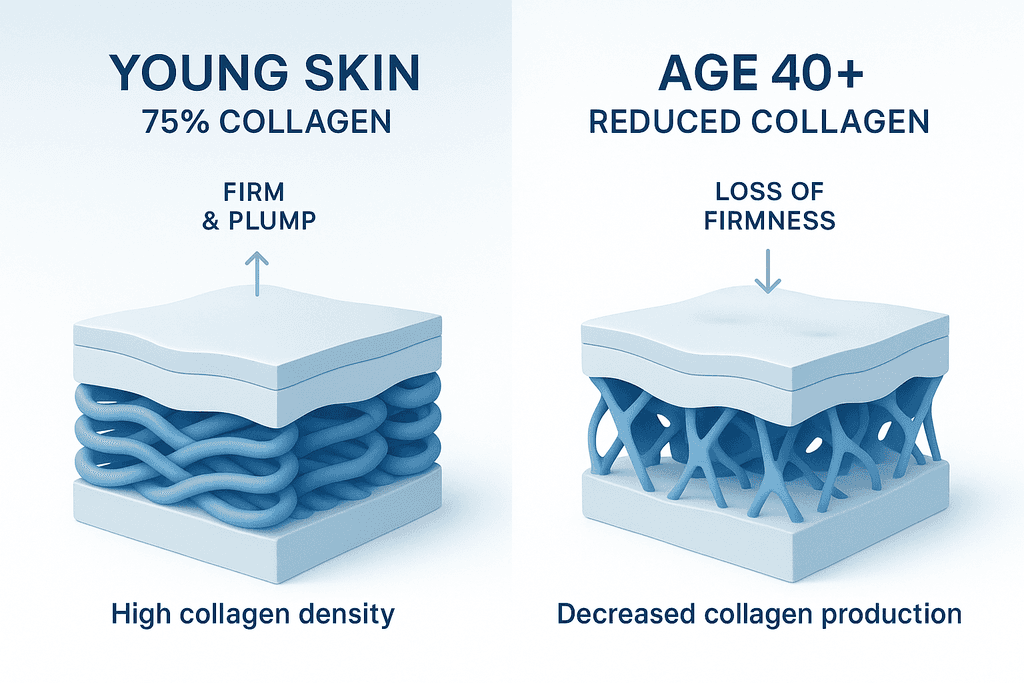
Your skin contains about 75% collagen when you’re young, which is why kids have that bouncy, smooth texture we all remember. Collagen works like tiny springs under your skin, holding everything tight and plump. When you press on young skin, it snaps right back because those collagen fibers are strong and organized. But here’s the thing nobody tells you—your body starts making less collagen every single year after you turn 25, and by the time you hit 40, you’ve lost a significant amount of what keeps your cheeks looking full and smooth.
What Collagen Actually Does
Think of collagen as the scaffolding that holds up a building. Without it, everything starts to sag and wrinkle. Collagen gives your skin its structure, firmness, and that smooth appearance you see in younger faces.
- Keeps skin tight and prevents sagging
- Fills in the space between skin cells so everything looks plump
- Helps skin bounce back when you smile or make expressions
- Creates a smooth surface that reflects light evenly
Why Your Collagen Disappears
Several things speed up collagen loss, and some of them might surprise you. Sun damage is the biggest culprit—UV rays actually break down collagen fibers faster than aging alone.
- Natural aging slows down collagen production by about 1% each year
- Sun exposure breaks down existing collagen and prevents new collagen from forming
- Smoking reduces blood flow to skin and damages collagen structure
- Sugar in your diet can make collagen stiff and weak through a process called glycation
- Stress hormones like cortisol break down collagen faster
Collagen Loss Versus Volume Loss
Many people confuse these two problems, but they’re actually different. Volume loss happens when the fat pads in your face shrink or shift downward with gravity. Collagen loss is about the quality of your skin itself—the texture, firmness, and how smooth it looks up close.
Your cheeks show aging faster than other areas because they have less natural support. The skin there is thinner and sits over fat pads that naturally deflate over time. When collagen breaks down in your cheeks, you see it as fine lines, rough texture, and that crepey look that makeup settles into.
| Age Range | Collagen Level | Cheek Characteristics |
|---|---|---|
| 20s | 100% baseline | Smooth, plump, bounces back quickly |
| 30s | 85-90% | First fine lines appear, slight texture changes |
| 40s | 70-75% | Visible lines, some sagging, rougher texture |
| 50s | 55-60% | Deeper wrinkles, noticeable volume loss, thinner skin |
| 60s+ | 40-50% | Significant sagging, crepey texture, pronounced lines |
How Collagen Stimulation Helps
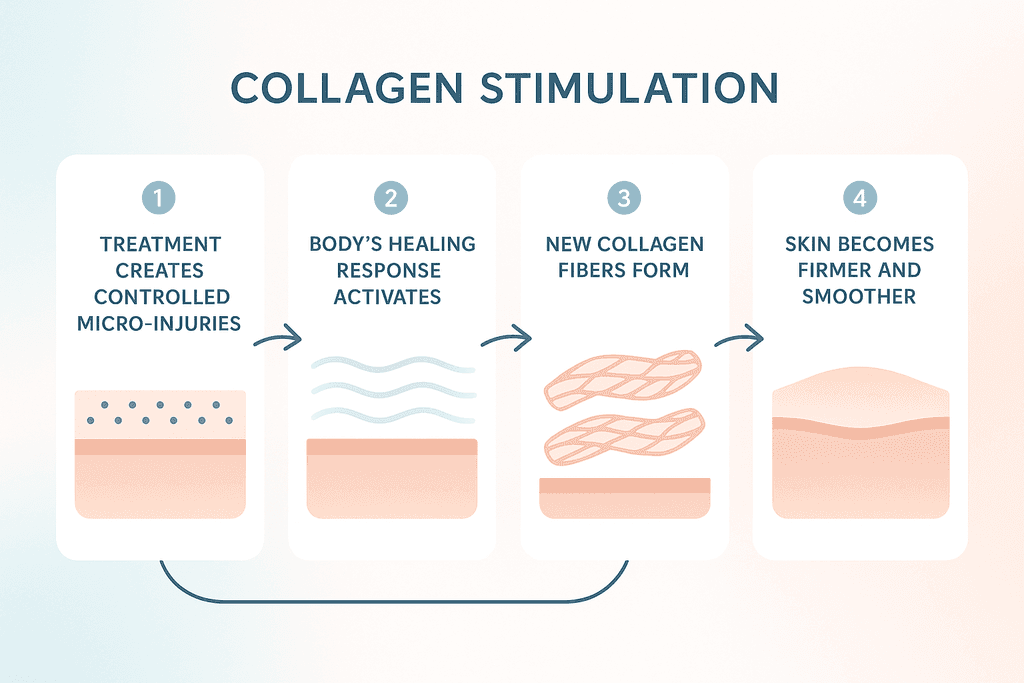
The good news is that your skin can still make new collagen at any age—it just needs the right trigger. Collagen stimulation treatments work by creating controlled micro-injuries that wake up your skin’s repair system, telling it to produce fresh collagen fibers. This is different from just adding volume with fillers.
At Beauty & Fly, treatments like Microneedling with PRP and Vivace Fractional work specifically on collagen stimulation, helping your skin rebuild its own support structure naturally. The results develop gradually over weeks as your body creates new collagen, which means you look like yourself—just with smoother, firmer cheeks.
How Collagen Stimulation Actually Works
Your skin loses about 1% of its collagen every year after age 20, which explains why cheeks that once looked plump and smooth start to show fine lines and lose their bounce. But here’s something most people don’t realize: your body never actually loses the ability to make new collagen. It just needs the right trigger to start producing it again. That’s where collagen stimulation treatments come in, and they work by tapping into something your body already knows how to do really well.
How Collagen Stimulation Actually Works
Think of it like this: when you get a small cut, your body immediately sends healing cells to repair the damage. These cells don’t just patch things up, they actually create new, stronger tissue in the process. Collagen stimulation treatments use this same natural healing response, but in a controlled way that improves your skin instead of just fixing an injury.
- Tiny, controlled micro-injuries signal your body to start the repair process
- Your skin responds by producing fresh collagen and elastin fibers
- The new collagen is more organized and structured than old, damaged collagen
- Results appear gradually as your body builds new tissue over weeks and months
The timeline matters more than you might think. Unlike fillers that give you instant volume, collagen stimulation is a gradual process that typically takes 4-12 weeks to show visible results. Some treatments continue improving your skin for up to six months after your session. This slower approach actually creates more natural-looking results because your own body is doing the work.
Top Treatments That Boost Collagen in Your Cheeks
Not all collagen treatments work the same way, and that’s actually a good thing because different approaches can address different concerns. Some use your own healing factors, while others introduce substances that your body gradually replaces with its own tissue. The key is finding which method matches what your skin needs right now. At Beauty & Fly, we offer several proven options that each trigger collagen production through different mechanisms.

Top Treatments That Boost Collagen in Your Cheeks
Microneedling with PRP combines two powerful approaches into one treatment. The microneedling creates those controlled micro-injuries we talked about, while platelet-rich plasma (drawn from your own blood) floods the area with growth factors that supercharge your healing response. Your skin gets a double signal to produce new collagen.
Biostimulators like Sculptra work differently. Instead of creating surface injuries, these injectable treatments are placed beneath the skin where they gradually stimulate collagen production from the inside out. Your body slowly replaces the biostimulator material with your own collagen over several months, restoring volume that looks completely natural because it literally is.
| Treatment | How It Works | Downtime | Results Timeline |
|---|---|---|---|
| Microneedling with PRP | Creates micro-channels plus growth factors | 1-2 days redness | 4-6 weeks |
| Biostimulators | Injectable collagen trigger | Minimal | 2-3 months |
| Vivace Fractional | Microneedling plus radiofrequency heat | 1-3 days | 4-8 weeks |
| NOUVAderm Laser | Light energy remodels collagen | Minimal to none | 6-12 weeks |
The Vivace fractional treatment takes microneedling up a notch by adding radiofrequency energy. The heat penetrates deeper into your skin layers, triggering collagen production at multiple depths for more comprehensive results. Meanwhile, the NOUVAderm laser uses light energy to remodel existing collagen while stimulating new production, with almost no downtime needed.
What makes these treatments even more effective is combining them strategically. Catherine Curtin often creates customized plans that layer different approaches over time, giving your skin multiple signals to rebuild and renew itself.
Creating Your Personal Collagen Boost Plan
Your age, skin type, and specific concerns all play a role in determining which collagen stimulation approach will work best for you. Someone in their 30s dealing with early volume loss might benefit most from preventive treatments like microneedling, while someone in their 50s might see better results from biostimulators that restore deeper structural support. There’s no one-size-fits-all answer, which is why a personalized assessment matters so much.
Sensitive skin requires special consideration when choosing collagen treatments. Some methods are gentler than others, and adjusting treatment intensity can make a big difference in how your skin responds. The NOUVAderm laser, for example, offers minimal downtime options that work well for people who can’t tolerate more aggressive approaches.
- In your 20s-30s: Focus on prevention with gentler treatments like microneedling
- In your 40s-50s: Combine surface and deep treatments for comprehensive renewal
- In your 60s+: Layer biostimulators with laser treatments for maximum collagen building
- For sensitive skin: Start with lower intensity and gradually increase as tolerated
Maintenance is where most people miss out on long-term benefits. Collagen stimulation isn’t a one-and-done treatment. Your skin continues aging, so periodic sessions help maintain the improvements you’ve achieved. Most people benefit from maintenance treatments every 3-6 months, though your specific schedule depends on which treatments you’re using.
At Beauty & Fly, Catherine Curtin spends time understanding your goals and concerns before recommending any treatment. She looks at factors like your skin’s current condition, your lifestyle, and how much downtime you can manage. This personalized approach means you’re not getting a cookie-cutter plan, you’re getting a strategy designed specifically for your cheeks and your life.
Supporting your treatments with the right skincare products makes a real difference too. SkinBetter Science products available at Beauty & Fly contain ingredients that support collagen production between treatments, helping you maintain and even enhance your results. Think of professional treatments as the foundation and daily skincare as the maintenance that keeps everything looking its best.
Why Professional Treatment Beats At-Home Options
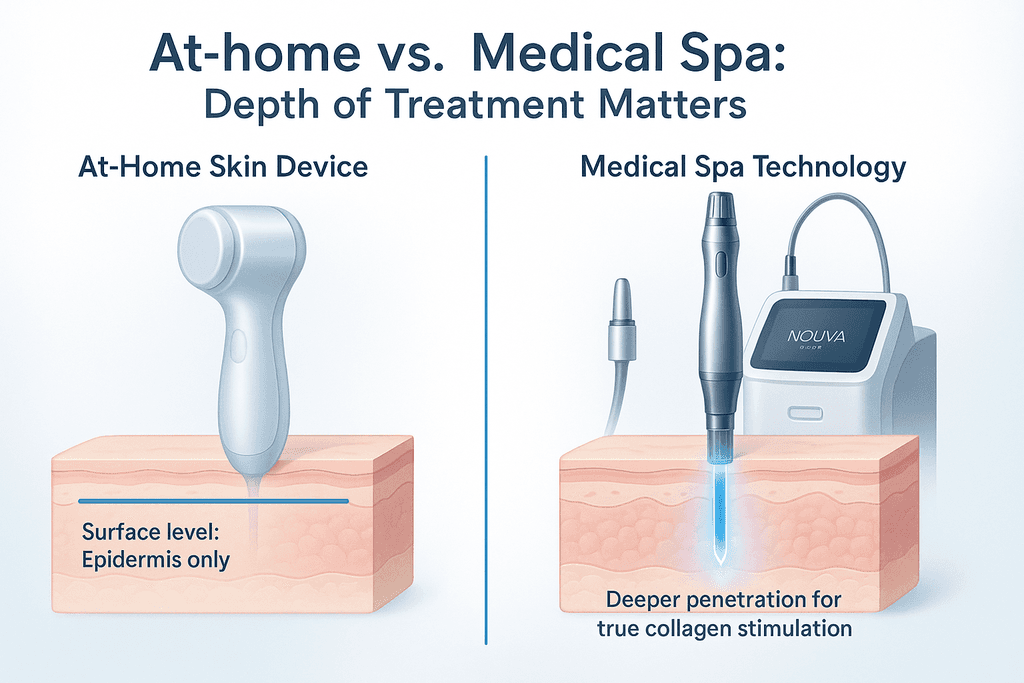
The skincare aisle is packed with devices and serums promising collagen stimulation, but there’s a massive gap between what you can buy online and what happens in a medical spa. At-home tools typically work on the surface level, reaching only the outermost layers of skin where real collagen production doesn’t happen. Professional treatments like Microneedling with PRP or the NOUVAderm laser penetrate much deeper into the dermis, where your body actually builds new collagen. That depth makes all the difference between temporary plumping and actual skin renewal that lasts.
Medical-grade technology isn’t just stronger. It’s designed to work at specific depths and temperatures that trigger your body’s natural healing response without causing damage.
What Professional Collagen Stimulation Offers
- Controlled depth and precision that reaches the dermis where collagen lives
- Medical-grade equipment calibrated for your specific skin type and concerns
- Combination treatments like PRP that amplify your body’s healing response
- Real-time adjustments based on how your skin responds during treatment
- Safety protocols that prevent scarring or hyperpigmentation
Experience matters more than most people realize. Catherine’s 18 years in aesthetic medicine means she knows exactly how deep to go, which areas need more attention, and how to layer treatments for the best results. She’s also trained other practitioners in these techniques, so she understands the nuances that make treatments work.
The Real Cost Comparison
| At-Home Approach | Professional Treatment |
|---|---|
| $50-200 per device or product | Single investment with lasting results |
| Ongoing purchases every few months | Results that build over time |
| Surface-level improvements only | Deep dermal collagen production |
| Trial and error with products | Customized plan from first visit |
When you add up all those serums, devices, and replacement parts over a year, professional collagen stimulation often costs less. Plus, you’re not wasting time on approaches that don’t work for your specific skin concerns.
Your Path to Naturally Smoother Cheeks
The truth about collagen stimulation is pretty straightforward. Your body already knows how to make collagen, it just needs the right push to start producing more of it. Whether you’re dealing with early signs of aging or trying to restore volume you’ve already lost, there are proven ways to wake up your skin’s natural repair system. The key is finding the right approach for where you are right now.
Different treatments work better at different stages. Some people need just a gentle nudge with microneedling, while others benefit more from biostimulators that build collagen over time. At Beauty & Fly, we look at your specific concerns and skin condition to figure out what makes the most sense. Sometimes it’s one treatment, sometimes it’s a combination.
Here’s what matters most when you’re thinking about collagen stimulation:
- Starting earlier means you’re working with more of your natural collagen
- Results build gradually and look natural, not overdone
- Professional guidance keeps you safe and gets you better outcomes
- Multiple options exist for every age and budget
The biggest mistake people make is waiting too long or trying to fix everything at once. Your skin didn’t change overnight, and bringing it back takes a thoughtful plan. That’s where having someone with real experience matters, someone who’s been doing this long enough to know what actually works.
If you’re in the Bronxville or Bridgehampton area and you’re curious about what collagen stimulation could do for your cheeks, the next step is just a conversation. You probably have questions about which treatment fits your situation best, and that’s exactly what we’ll cover next.
Common Questions About Collagen Stimulation
If you’re thinking about collagen stimulation for your cheeks, you probably have some questions about what to expect. Most people want to know about results, comfort levels, and how these treatments fit into their busy lives. Here are the answers to the questions we hear most often at Beauty & Fly, where Catherine Curtin has been helping patients understand their options for nearly two decades.
How long do results from collagen stimulation last?
Results typically last anywhere from six months to two years, depending on which treatment you choose and how your body responds. Treatments like Vivace Fractional and Microneedling with PRP work by triggering your body’s natural collagen production, so the improvements develop gradually and stick around longer than surface-level treatments. Your lifestyle, age, and skin condition all play a role in how long you’ll see benefits.
Is there pain or downtime with these treatments?
Most collagen stimulation treatments involve minimal discomfort and little to no downtime. We use numbing cream before procedures like microneedling, so you’ll feel pressure but not pain. You might have some redness or mild swelling for a day or two, similar to a sunburn, but most people go right back to their normal routine. The NOUVAderm laser at our practice is designed specifically for minimal downtime while still delivering real results.
When will I see results from collagen stimulation?
You’ll notice some immediate glow and texture improvement, but the real magic happens over the next few months. Your body needs time to build new collagen, so full results usually show up around the three to six month mark. Some patients see continued improvement for up to a year after their treatment series.
Can I combine collagen treatments with fillers or Botox?
Yes, and many patients get better results when they combine treatments. Collagen stimulation improves your skin quality from within, while fillers restore volume and Botox relaxes muscles that cause wrinkles. Catherine often creates custom treatment plans that layer these approaches for natural-looking results that address multiple concerns at once.
What age should I start collagen stimulation treatments?
There’s no magic number, but most people start noticing collagen loss in their late twenties or early thirties. Starting treatments in your thirties can help maintain what you have, while starting later can help rebuild what you’ve lost. The best time to start is when you notice changes in your skin texture or firmness that bother you.
How many treatments will I need for smooth cheeks?
Most people see good results with a series of three to four treatments spaced about four to six weeks apart. After your initial series, you might want maintenance treatments once or twice a year to keep your results going. Catherine evaluates your skin during your consultation and creates a plan based on your specific goals and how your skin responds to treatment.