
Most people spend hundreds of dollars on skincare products that sit unused in their bathroom cabinets because they never matched their skin’s actual needs in the first place. A personalized skin care protocol considers your unique concerns, lifestyle, and goals rather than following generic routines that promise results for everyone. At Beauty & Fly, Catherine Curtin builds custom treatment plans that combine professional assessments with targeted therapies to address what your skin actually needs right now.
Table of Contents
What Makes Your Skin Unique
Your skin is as unique as your fingerprint, and that’s exactly why cookie-cutter skincare routines rarely work for everyone. What clears up your friend’s acne might make yours worse, and the moisturizer your sister swears by could leave your face feeling greasy. The truth is, dozens of factors shape how your skin looks, feels, and responds to treatment. Understanding these differences is the first step toward building a personalized skin care routine that actually delivers results instead of just sitting on your bathroom counter.
The Basic Building Blocks
Before you can create an effective treatment plan, you need to know what you’re working with. Your skin type forms the foundation of any good skincare protocol, but it’s just the starting point.
- Skin type ranges from oily to dry to combination, with each requiring different product formulations
- Skin tone affects how your skin responds to sun exposure and certain treatments like chemical peels
- Texture issues like large pores, roughness, or smoothness change what products and procedures work best
- Sensitivity levels determine which ingredients you can tolerate without irritation or reactions
At Beauty & Fly, Catherine Curtin evaluates all these factors during your consultation to design treatments that match your specific needs. This personalized approach means you’re not getting a one-size-fits-all solution that might work against your skin’s natural characteristics.
What Shapes Your Skin Over Time
Your skin didn’t just appear one day looking the way it does now. Years of different influences have shaped its current condition, and these factors keep changing as you age.
- Genetics determine your baseline skin type, collagen production, and how quickly you show signs of aging
- Environmental exposure to sun, pollution, and climate affects pigmentation, texture, and overall skin health
- Lifestyle choices including diet, sleep, stress levels, and smoking directly impact skin appearance
- Previous skincare habits and treatments create a history that influences how your skin responds now
According to dermatologist-designed skincare experts, understanding this personal history helps predict which treatments will be most effective. What worked five years ago might not be right for your skin today.
The Changing Nature of Skin
Here’s something most people don’t realize: your skin’s needs shift constantly throughout your life. Age and hormones play a massive role in these changes, which is why your teenage skincare routine won’t cut it in your thirties or forties.
| Skin Factor | How It Varies | Impact on Treatment |
|---|---|---|
| Age | Collagen decreases 1% yearly after 20 | Older skin needs volume restoration and firming |
| Hormones | Fluctuate monthly, during pregnancy, menopause | Can trigger acne, dryness, or sensitivity at different times |
| Sun Damage | Accumulates over lifetime | Requires pigment correction and texture treatments |
| Product History | Past reactions and sensitivities | Guides ingredient selection and treatment intensity |
| Lifestyle | Stress, diet, sleep patterns | Affects healing time and treatment frequency |
Hormonal shifts during pregnancy, perimenopause, or even monthly cycles can completely change your skin’s behavior. That’s why a truly personalized skin care protocol needs regular adjustments, not just a set-it-and-forget-it approach.
- Younger skin typically needs prevention and maintenance treatments
- Middle-aged skin often requires correction of early signs of aging
- Mature skin benefits from restoration and volume replacement procedures
The bottom line is this: your skin is constantly evolving, and your skincare should evolve with it. Understanding these unique factors sets the stage for building a treatment plan that actually works for you, not just for someone else.
The Professional Assessment Process
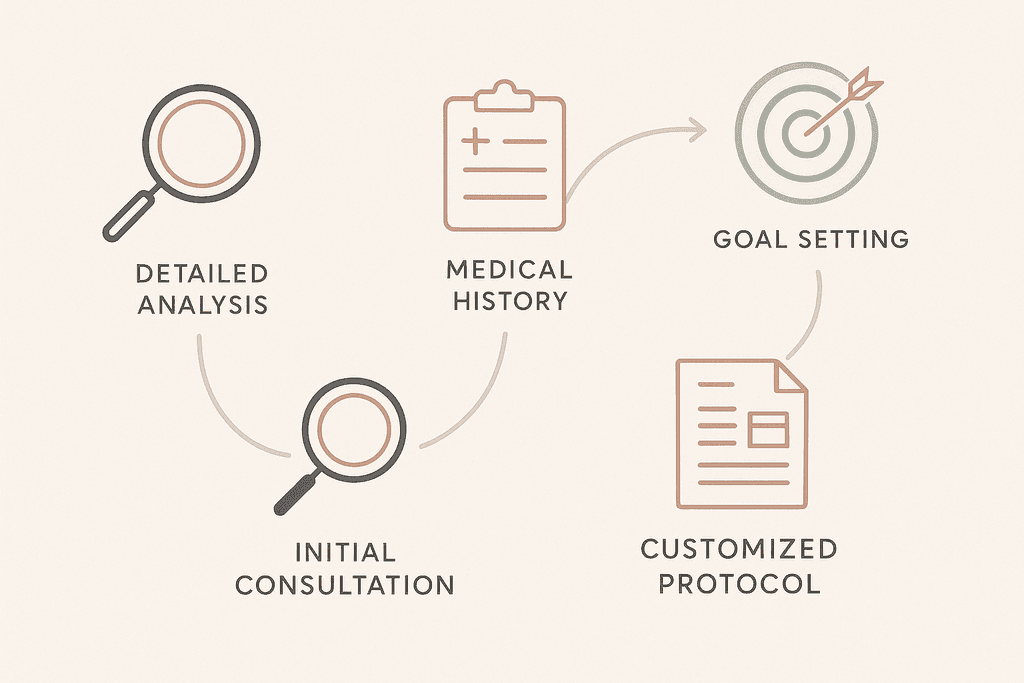
Your skin tells a story that goes way beyond what you see in the mirror each morning. A proper skin evaluation looks at everything from how your pores behave to the way light reflects off different areas of your face. When you sit down with an experienced provider, they’re reading patterns that most people miss—subtle signs of sun damage, early volume loss, or texture changes that haven’t fully surfaced yet. This initial assessment becomes the blueprint for everything that follows. Without it, you’re basically guessing at what might work instead of knowing what will.
The Professional Assessment Process
The evaluation process considers multiple layers of information that work together to create your unique skin profile. Your medical history matters more than you’d think—things like past sun exposure, hormonal changes, stress levels, and even your sleep patterns all leave their mark.
- Skin type and current condition assessment
- Areas of concern like fine lines, pigmentation, or texture issues
- Lifestyle factors including sun exposure and skincare habits
- Medical history that might affect treatment options
- Realistic timeline expectations for your specific goals
Working with someone like Catherine Curtin at Beauty & Fly means you’re getting 18 years of aesthetic medicine experience focused entirely on you during each visit. There’s no rushing through appointments or cookie-cutter treatment plans. The one-on-one approach allows for the kind of detailed conversation that actually uncovers what you want to achieve, not just what you think you should want.
This personalized attention makes a real difference when building a protocol that fits your life. Some people need treatments that work around busy schedules with minimal downtime. Others have specific events they’re preparing for or particular concerns that bother them most.
What to Expect at Your First Consultation
- Arrive with a clean face (no makeup if possible)
- Bring a list of current skincare products you use
- Note any medications or supplements you take regularly
- Think about your main concerns and what bothers you most
- Prepare questions about treatments you’ve heard about
- Be ready to discuss your budget and time availability
Matching Treatments to Your Specific Concerns
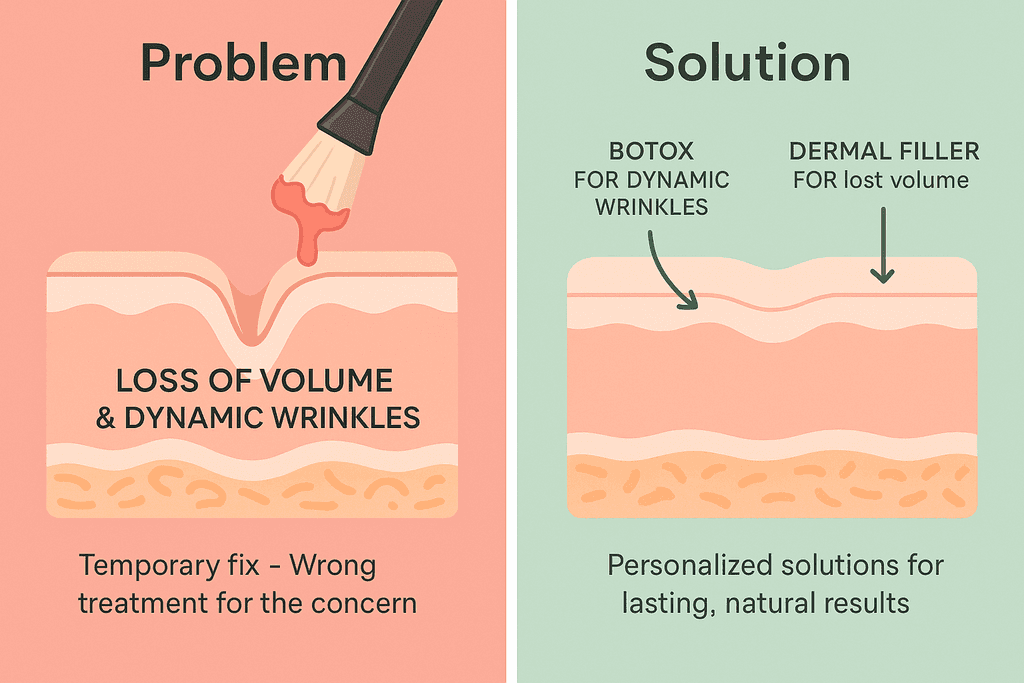
Not every skin concern needs the same solution, and that’s where personalized skin care gets interesting. Neuromodulators like BOTOX work on dynamic wrinkles—the ones that form from repeated muscle movements like frowning or squinting. Dermal fillers address a completely different issue by restoring volume that’s been lost over time. Using the wrong treatment for your specific concern is like trying to fix a leak with paint. It might look better temporarily, but you’re not solving the actual problem.
Matching Treatments to Your Specific Concerns
The texture and tone of your skin respond best to treatments that work at different depths. Microneedling with PRP uses your own platelet-rich plasma to trigger natural healing and collagen production from within. It’s particularly effective for acne scarring and overall skin quality improvements that you can’t get from surface treatments alone.
For pigmentation issues and pore refinement, the NOUVAderm laser offers targeted improvement with minimal downtime. This matters because not everyone can take a week off for recovery. The laser addresses concerns at the cellular level while keeping disruption to your daily routine manageable.
| Treatment Type | Best For | Typical Results Timeline |
|---|---|---|
| Neuromodulators | Dynamic wrinkles, prevention | 3-5 days |
| Dermal Fillers | Volume loss, deep lines | Immediate to 2 weeks |
| Microneedling with PRP | Texture, scars, overall quality | 4-6 weeks |
| VI Peel | Acne, pigmentation, sun damage | 7-10 days |
| NOUVAderm Laser | Pores, tone, pigment | 2-4 weeks |
VI Peels target specific concerns like stubborn acne, hyperpigmentation, and sun damage through professional-grade chemical exfoliation. The beauty of a personalized protocol is knowing when to use a peel versus when laser treatment makes more sense for your particular skin type and concern.
In-office treatments work better when supported by the right products at home. SkinBetter Science and Alumier MD aren’t just retail add-ons—they’re medical-grade formulations that extend and enhance what happens during your appointments. Research shows that customized skincare plans deliver better long-term results when professional treatments and daily care work together as a system.
Creating Your Treatment Timeline
Real skin improvement doesn’t happen overnight, and anyone promising instant transformation is selling you something that won’t last. Your skin needs time to respond, heal, and build new collagen between treatments. Rushing the process or stacking too many treatments too close together can actually set you back instead of moving you forward. The goal is steady, sustainable improvement that looks natural as it develops. This is where patience becomes your best tool, even though it’s probably the hardest part of the whole process.
Treatments get spaced based on how your skin heals and responds. Safety and effectiveness trump speed every time. For example, microneedling sessions typically happen four to six weeks apart to allow full collagen remodeling. Fillers might need touch-ups at specific intervals, while neuromodulators work on a different schedule entirely.
Sample Six-Month Protocol Timeline
Month 1: Initial consultation and skin analysis, start medical-grade skincare routine
Month 2: First treatment session (e.g., microneedling with PRP or laser), adjust home care as needed
Month 3: Follow-up assessment, possible neuromodulator treatment, continue skincare protocol
Month 4: Second major treatment session, evaluate progress and adjust plan
Month 5: Maintenance treatments begin, refine results with targeted approaches
Month 6: Results review, establish ongoing maintenance schedule
The concept of building results gradually means each treatment builds on what came before. You’re creating a foundation first, then adding layers that enhance and refine. Quick fixes might seem appealing, but they rarely address underlying issues or create results that age well with you.
Knowing when to introduce new treatments or products depends on how your skin responds. Some people see dramatic improvement quickly and can move to maintenance sooner. Others need more time between sessions or benefit from adjusting the approach midway through. Personalized skin care protocols are becoming more sophisticated as providers learn to read these individual response patterns better.
Maintenance schedules keep your results lasting long after the initial protocol is complete. This isn’t about becoming dependent on treatments—it’s about protecting the investment you’ve made in your skin. Just like you wouldn’t stop brushing your teeth after getting them cleaned, ongoing care preserves what you’ve achieved.
Your protocol will adjust as your skin changes over time. What works perfectly now might need tweaking in six months or a year. Seasonal changes, life stress, hormonal shifts—all of these affect your skin and might require modifications to your plan. That’s why working with the same provider who knows your history makes such a difference in maintaining results that continue to look natural as you age.
Why Personalization Outperforms Generic Routines
Studies show that up to 70% of people who follow generic skincare routines see minimal to no improvement in their skin concerns. The reason is simple: your skin is as unique as your fingerprint, with its own combination of genetics, environmental exposure, lifestyle factors, and aging patterns. When you use a one-size-fits-all approach, you’re essentially guessing at what might work instead of addressing what your skin actually needs. This explains why so many bathroom cabinets are filled with half-used products that promised results but never delivered. The science behind personalized skin care reveals that targeted treatments based on individual assessment produce measurably better outcomes because they account for your specific skin type, concerns, and goals.
The Cost of Guessing Wrong
Most people spend years cycling through retail products, hoping to find the right combination. This trial-and-error approach wastes both time and money while potentially making skin issues worse. Medical-grade personalized care eliminates this guesswork by starting with professional assessment and evidence-based treatment selection.
- Generic products often contain lower concentrations of active ingredients that can’t penetrate deeply enough
- Retail skincare rarely accounts for how different ingredients interact with your specific skin chemistry
- Without professional guidance, people often use products in the wrong order or combination
- Over-the-counter solutions can’t address deeper structural concerns like volume loss or collagen depletion
What Makes Medical Grade Different
The gap between retail skincare and professional protocols isn’t just about product quality. It’s about having someone who understands skin biology at a clinical level. At Beauty & Fly, Catherine Curtin’s 18 years of aesthetic medicine experience means she can identify underlying causes that aren’t visible on the surface and adjust your protocol as your skin changes over time.
Research from companies exploring personalized approaches to skin care confirms what aesthetic professionals have known for years. Customized protocols that evolve with your skin produce consistently better results than static routines. This is why the provider-patient relationship matters so much for long-term outcomes.
- Professional-grade products contain higher concentrations of proven active ingredients
- Medical providers can combine in-office treatments with at-home care for synergistic effects
- Regular follow-ups allow for protocol adjustments based on how your skin responds
The difference becomes clear when you consider that personalized protocols address not just symptoms but root causes. Instead of temporarily masking issues, they work to improve skin health at a cellular level.
Your Path to Lasting Skin Health
Building a personalized skin care protocol isn’t about following the latest trend or buying every product on the shelf. It’s about understanding what your specific skin needs and creating a plan that actually works for you. The difference between generic routines and personalized skin care is the difference between hoping for results and actually seeing them.
Working with an experienced aesthetic provider changes everything. Someone like Catherine Curtin, who has spent over 18 years in aesthetic medicine, can spot issues you might miss and recommend treatments that target your exact concerns. At Beauty & Fly, every consultation is one-on-one with Catherine herself, which means you get her full attention and expertise without feeling rushed through an appointment.
The best part is that personalized care doesn’t have to be complicated. It starts with a simple conversation about your skin goals, followed by a customized plan that might include professional treatments like Microneedling with PRP or the NOUVAderm laser, paired with medical-grade products like SkinBetter science or Alumier MD that you use at home.
Your skin is unique, and it deserves a protocol designed specifically for it. Whether you’re dealing with aging concerns, texture issues, or pigmentation problems, the right combination of professional treatments and daily care can make a real difference. The question isn’t whether personalized skin care works, but rather what your skin could look like six months from now with the right plan in place.
Common Questions About Personalized Skin Care
Starting a personalized skin care routine brings up a lot of practical questions. Most people want to know what to expect before they commit to a new protocol, and that makes sense when you’re investing time and money into your skin. Here are the answers to the most common questions we hear at Beauty & Fly about building and maintaining a customized approach to skin wellness.
How long before I see results from a personalized protocol?
Most clients notice initial improvements within 2-4 weeks, but significant changes typically appear around the 8-12 week mark. Your skin needs time to respond to treatments and regenerate, so patience pays off. Some treatments like neuromodulators work faster (within days), while others like microneedling with PRP build results gradually as collagen production increases.
Do personalized treatments cost more than standard options?
Not necessarily, because you’re only paying for what your skin actually needs. A customized protocol eliminates wasted money on products or treatments that won’t work for your specific concerns. At Beauty & Fly, Catherine creates treatment plans based on your goals and budget, and we offer memberships and financing to make care more accessible over time.
How often do protocols need to be adjusted?
Your skin changes with seasons, stress levels, hormones, and age, so expect adjustments every 3-6 months. Catherine evaluates your progress at each visit and tweaks your protocol as needed. Sometimes it’s adding a new product, other times it’s spacing treatments differently or switching to a maintenance schedule once you’ve reached your goals.
What happens if a treatment doesn’t work as expected?
This is exactly why working with an experienced provider matters. If something isn’t delivering results, Catherine will identify why and adjust your approach rather than continuing with what isn’t working. Sometimes it’s a matter of timing, sometimes a different modality works better, and occasionally your skin just needs a different combination of treatments.
Are at-home products necessary with professional treatments?
Yes, because professional treatments work best when supported by quality daily care. Think of it like going to the gym with a trainer but eating poorly the rest of the week. At Beauty & Fly, we carry SkinBetter science and Alumier MD products that complement in-office treatments and extend your results between visits.
How do I maintain results long term?
Maintenance looks different for everyone, but most clients transition to less frequent professional treatments once they reach their goals. You’ll likely continue with at-home products daily and schedule treatments quarterly or seasonally. The key is staying consistent rather than stopping completely, which is why personalized skin care protocols include a realistic maintenance plan from the start.