
Your face loses volume in ways that simple filler injections can’t always fix. As bone shrinks and fat pads shift with age, the gaps and hollows that appear need more than a basic approach to look natural again. Advanced filler techniques work with your facial structure in layers, creating results that actually match how your face is built instead of just filling in lines.
Table of Contents
- How Facial Aging Creates Gaps and Volume Loss
- Strategic Placement Methods for Natural Results
- Layering Techniques for Complex Concerns
- Addressing Asymmetry and Facial Balance
- Why Expertise Matters in Advanced Filler Work
- Your Path to Natural, Lasting Enhancement
- Common Questions About Advanced Fillers
How Facial Aging Creates Gaps and Volume Loss
Your face sits on a foundation of bone, fat, and connective tissue that changes more than most people realize. Starting around age 25, your facial bones actually begin to shrink and pull back, creating spaces where fullness used to be. At the same time, the fat pads in your cheeks and temples start sliding downward like melting ice cream, leaving hollow spots behind. This combination of bone loss and fat movement is why faces can look “deflated” or “tired” even when you feel great inside.
The Foundation Shifts Beneath Your Skin
Think of your facial structure like a house. When the foundation changes, everything above it shifts too. Bone resorption happens gradually but consistently, especially around your eye sockets, cheekbones, and jawline. This creates a domino effect that no amount of good skincare can fix on its own.
The fat compartments in your face are separated into distinct pockets, and each one ages differently. Some shrink while others sag, creating an uneven appearance that makes you look older than you feel.
- Cheek fat pads descend toward the nasolabial folds
- Temple hollows deepen as volume disappears
- Under-eye areas develop shadows and bags
- Jawline loses definition as jowls form
Collagen Loss Removes Your Natural Scaffolding
Your skin loses about 1% of its collagen every year after age 20. Collagen and elastin work like springs and support beams under your skin, keeping everything tight and lifted. When these proteins break down, your skin can’t bounce back the way it used to, and those structural gaps become more visible.
Different parts of your face age at different speeds, which is why some areas need attention before others. Your forehead might look great while your cheeks are hollowing, or vice versa. At Beauty & Fly, Catherine Curtin uses advanced filler techniques that address these specific zones based on how your unique facial anatomy is changing.
- Upper face typically shows movement lines first
- Mid-face experiences the most volume loss
- Lower face develops sagging and jowling
Aging Timeline by Decade
Understanding what happens during each decade helps explain why strategic filler placement matters more than just filling every line. The changes build on each other, which is why early intervention often gives the most natural results.
| Age Range | Primary Changes | Visible Effects |
|---|---|---|
| 20s-30s | Early collagen loss begins, minor fat pad shifting | Fine lines around eyes, slight volume loss in temples |
| 40s | Noticeable bone resorption, fat pads descend, collagen drops significantly | Hollow cheeks, deeper nasolabial folds, under-eye hollows |
| 50s | Accelerated bone loss, major fat redistribution, elastin breakdown | Jowls form, jawline blurs, mid-face flattens considerably |
| 60s+ | Continued structural changes across all layers | Overall volume depletion, skin laxity, pronounced facial sagging |
The good news is that modern dermal fillers can replace lost volume and provide structural support where your natural foundation has changed. But it takes someone who really understands facial anatomy to know where those gaps are and how to fill them naturally.
Strategic Placement Methods for Natural Results
Most people don’t realize that the difference between a natural-looking filler result and an overdone appearance comes down to millimeters. The depth at which filler is placed, the angle of the needle, and the exact location on your face all matter more than the amount of product used. When you understand facial anatomy the way an experienced injector does, you start to see the face as a series of layers, each requiring a different approach. Deep injections target bone and foundational structures, while superficial ones address fine lines and surface concerns. Getting this wrong can lead to lumps, bumps, or that puffy look nobody wants.
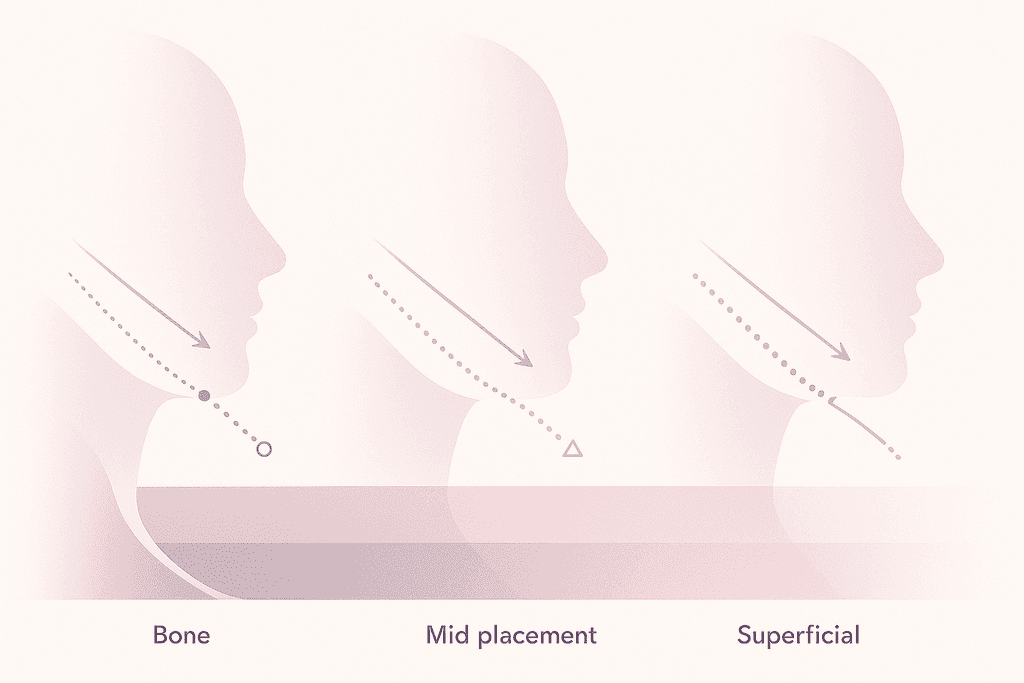
Strategic Placement Methods for Natural Results
The secret to natural results starts with treating the foundation first. Think of it like building a house—you wouldn’t start with the roof.
- Deep placement restores volume loss at the bone level, where aging actually begins
- Mid-layer injections rebuild fat pad volume that diminishes over time
- Superficial techniques smooth surface lines and refine contours
- Injection angles determine how the product spreads through tissue
At Beauty & Fly, we customize every injection based on your unique facial proportions and how your features move when you talk and smile. Your face isn’t symmetrical, and your treatment plan shouldn’t be cookie-cutter either. The angle of approach changes depending on whether we’re lifting a cheek, defining a jawline, or softening a nasolabial fold. Some areas need a fanning technique, while others require precise bolus placement.
What really prevents that overfilled look is knowing when to stop. Restraint is just as important as skill, which is why working with someone who sees you as an individual rather than following a template makes all the difference.
Layering Techniques for Complex Concerns
Here’s something most people don’t know about advanced filler techniques: different products work better at different depths because they have different thicknesses. A dense, cohesive filler placed deep can rebuild cheekbone structure, while a softer hyaluronic acid filler near the surface smooths fine lines without looking heavy. When you layer these strategically, you’re addressing multiple concerns at once without overloading any single area. This approach mimics how youthful faces naturally have volume—distributed across layers, not concentrated in one spot. The result looks like you, just more rested and refreshed.

Layering Techniques for Complex Concerns
Combining different filler types creates results that last longer and look more natural than using just one product everywhere.
| Filler Type | Ideal Depth | Best For |
|---|---|---|
| High-density HA fillers | Deep (bone level) | Cheek projection, chin augmentation |
| Medium-density HA fillers | Mid-layer | Nasolabial folds, marionette lines |
| Low-density HA fillers | Superficial | Fine lines, lip definition |
| Biostimulators | Deep to mid | Gradual collagen building, overall volume |
Biostimulators like Sculptra work differently than traditional fillers because they trigger your own collagen production over time. When layered with hyaluronic acid fillers, you get immediate improvement plus long-term benefits. This combination addresses both structural volume loss and surface texture concerns in one treatment plan.
Building volume gradually over multiple sessions prevents that sudden, obvious change that screams “I had work done.” Your friends will notice you look great but won’t be able to pinpoint why. This staged approach also gives your skin time to adapt and allows for adjustments based on how you’re settling. The pillow face effect happens when too much filler goes into one layer—layering distributes volume naturally across depths.
Addressing Asymmetry and Facial Balance
Nobody’s face is perfectly symmetrical, and that’s actually a good thing. Your natural asymmetries give you character and make you recognizable as you. But age-related asymmetries are different—they happen when one side loses volume faster than the other, or when muscle movement patterns create uneven lines over time. Advanced filler techniques can correct these imbalances while preserving what makes your face uniquely yours. The goal isn’t to make both sides identical, but to restore harmony and proportion. Understanding the difference between natural variation and correctable asymmetry takes experience and a trained eye.

Addressing Asymmetry and Facial Balance
The concept of facial thirds helps guide balanced treatment. Your face divides into three roughly equal sections from hairline to brows, brows to nose tip, and nose tip to chin.
- Assess overall proportions before treating individual features
- Identify which areas have lost volume versus which never had it
- Balance projection so no single feature dominates
- Maintain your natural contours while improving symmetry
- Correct previous filler complications if needed before adding more
Sometimes the best treatment for one area is actually addressing a different area first. A weak chin can make a normal nose look larger, or flat cheeks can make jowls appear more prominent. This is where Catherine’s 18 years of experience at Beauty & Fly becomes invaluable—she sees your face as a whole rather than treating isolated concerns.
Correcting previous filler complications requires even more precision than initial treatment. Dissolving old product, waiting for tissue to settle, then rebuilding with proper technique takes patience but delivers results that finally look right. The key is maintaining your individual character throughout the process, because the best aesthetic work enhances who you already are rather than trying to make you look like someone else.

Why Expertise Matters in Advanced Filler Work
A single millimeter can make the difference between a natural enhancement and an obvious mistake when it comes to dermal fillers. The truth is that advanced filler techniques require far more than just knowing where to inject. They demand years of hands-on experience, a deep understanding of how faces age differently, and the artistic eye to see what will look right six months from now. At Beauty & Fly, Catherine Curtin brings over 18 years of aesthetic medicine experience to every treatment, which means she’s seen thousands of faces and understands the subtle differences that make each one unique.
The gap between basic injections and advanced filler techniques comes down to knowledge of facial anatomy. When you understand how muscles move, where blood vessels run, and how fat pads shift with age, you can prevent complications before they happen.
- Knowing the exact depth to inject for natural-looking results
- Understanding how different filler products behave in various facial areas
- Recognizing when less filler will actually create better outcomes
- Identifying which concerns need fillers versus other treatments
Customization separates good results from great ones. Cookie-cutter approaches might work for some basic treatments, but faces are too complex for one-size-fits-all solutions. This is where artistic vision meets technical skill, and it’s something that only develops after years of practice and ongoing training.
What to Look for in a Filler Practitioner
- Board certification and specialized training in aesthetic medicine
- At least 10+ years of hands-on experience with injectable treatments
- Regular participation in advanced training courses and new technique workshops
- A portfolio showing natural-looking results, not overdone appearances
- Solo practitioner model for consistent care and personalized attention
Working with the same practitioner every visit matters more than most people realize. When Catherine sees you for each treatment, she remembers exactly what was done before, how your skin responded, and what adjustments might improve your results. That consistency simply isn’t possible when you see different providers each time.
Your Path to Natural, Lasting Enhancement
The difference between good filler results and great ones comes down to technique and experience. Advanced filler techniques aren’t just about injecting product into your face. They’re about understanding facial anatomy, knowing how different fillers behave in different areas, and having the artistic eye to see what will look natural on your unique features. When done right, people won’t notice you had work done, they’ll just think you look refreshed and well-rested.
At Beauty & Fly, our dermal filler treatments focus on enhancing what you already have rather than creating something artificial. Catherine Curtin’s 18 years of experience means she knows exactly where to place product, how much to use, and which type of filler works best for your specific concerns. That kind of expertise makes all the difference between results that look obvious and results that simply make you look like yourself, just better.
The key things to remember are pretty straightforward. Proper assessment matters because your face is unique and deserves a custom plan. Working with someone who really knows what they’re doing keeps you safe and gets you the results you actually want. And most importantly, the goal should always be to enhance your natural features, not change who you are.
If you’re thinking about fillers, you probably have questions about what to expect, how long results last, and whether it’s right for you. Let’s address some of the most common concerns people have before their first treatment.
Common Questions About Advanced Fillers
If you’re thinking about getting fillers, you probably have some questions about what makes certain techniques more advanced than others. The truth is, not all filler treatments are created equal, and understanding the differences can help you make better choices for your face. Here are the most common questions we hear from patients considering advanced filler techniques at Beauty & Fly.
What makes advanced filler techniques different from regular fillers?
Advanced filler techniques involve more precise placement methods and often use multiple products in strategic layers to create natural-looking results. Instead of just filling a line or adding volume to one spot, advanced techniques consider your entire facial structure and how different areas work together. Catherine uses specialized injection methods that address the deeper support structures of your face, not just surface-level concerns.
How long does recovery take and what side effects should I expect?
Most people see some mild swelling and maybe light bruising that lasts about 3-5 days. You can usually go back to work the same day or the next, though you might want to avoid big social events for about a week. Some areas like under the eyes or lips tend to swell more than others, but ice and keeping your head elevated helps a lot.
How long will my results last?
It depends on which filler is used and where it’s placed, but most advanced filler techniques last anywhere from 12 to 24 months. Deeper structural fillers tend to last longer than those placed closer to the surface. Your body’s metabolism and the area treated both play a role in how long you’ll see results.
Can filler treatments be reversed if I don’t like the results?
Yes, hyaluronic acid fillers can be dissolved with an enzyme called hyaluronidase if needed. This is one reason why choosing an experienced injector like Catherine matters so much, because proper technique means you’re far less likely to need reversal. Other types of fillers like biostimulators work differently and can’t be reversed the same way.
What should I do to prepare for my filler appointment?
Avoid blood-thinning medications and supplements like aspirin, ibuprofen, fish oil, and vitamin E for about a week before your appointment to reduce bruising risk. Skip alcohol for 24 hours before treatment, and come to your appointment with a clean face and realistic expectations. During your consultation at Beauty & Fly, Catherine will give you a complete prep list based on your specific treatment plan.
How much do advanced filler techniques typically cost?
Cost varies based on how many syringes you need and which products are used for your custom treatment plan. Advanced techniques often require more product and expertise, but they also deliver more natural and longer-lasting results. Beauty & Fly offers financing options and membership programs to make treatments more accessible, and Catherine will discuss all costs during your consultation so there are no surprises.