
In your twenties, your face begins to lose fat pads, leading to flattened cheeks and hollows under your eyes as time goes on. This loss creates shadows and sagging, making you appear older. Dermal fillers provide a solution to naturally restore that lost fullness, bringing back the soft contours you recall without looking too done or fake.
Table of Contents
- Understanding Facial Volume Loss
- Where Dermal Fillers Work Best for Volume
- Types of Dermal Fillers for Volume Restoration
- What to Expect During Volume Restoration Treatment
- Why Natural Results Matter in Volume Restoration
- Your Path to Restored Facial Volume
- Common Questions About Dermal Fillers for Volume
Understanding Facial Volume Loss
You start losing facial volume in your mid-twenties, although you might not notice until a decade later. Beneath your skin, fat pads, which once made your face smooth and plump, begin to decrease and shift. Meanwhile, bones decrease in density and collagen and elastin production declines. This combination of factors leads to a hollow look that may make others question if you are getting enough rest. 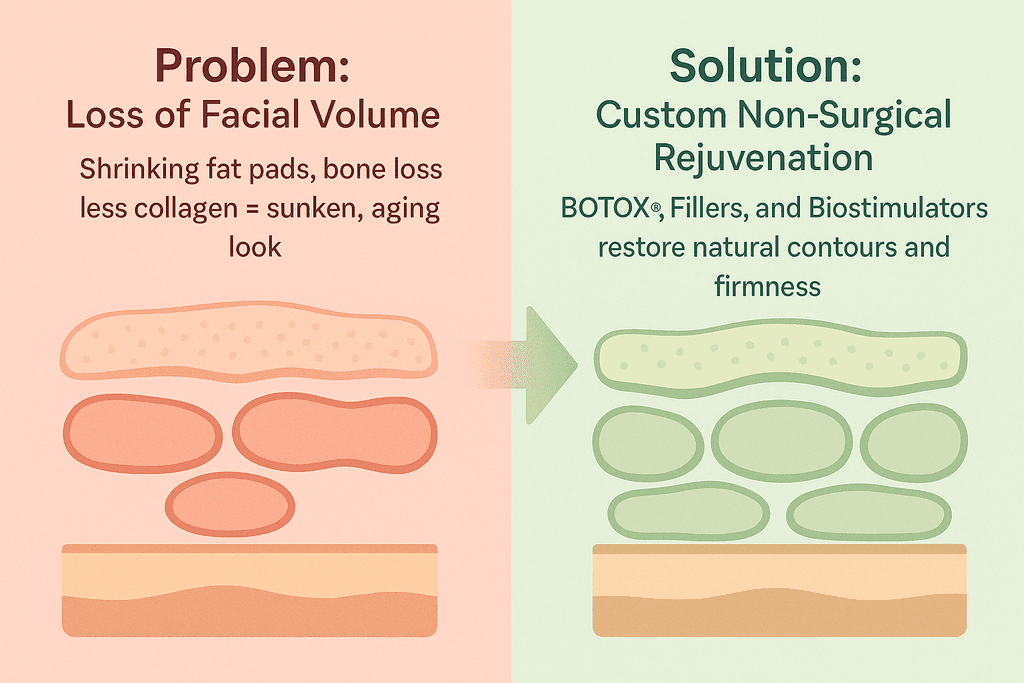
What Happens Beneath the Surface
Think of your face like a house with three layers. The foundation is your bone structure, the insulation is your fat pads, and the exterior is your skin. As you age, all three layers change differently.
- Bones lose density, reducing support especially around your eyes and jawline
- Fat compartments like those in your cheeks, temples, and under-eyes shrink and shift downward
- Your body makes 1% less collagen yearly after age 20, thinning your skin and reducing its elasticity
- The increased gaps between layers create shadows and hollows
Volume loss is different from wrinkles—it creates a sunken look, while wrinkles are more about surface texture.
Where Volume Disappears First
Facial regions age at varying speeds. Some areas reveal volume loss earlier, making certain features look different as early as your forties.
| Facial Area | Typical Age of Onset | Visible Signs |
|---|---|---|
| Under Eyes | Late 20s – Early 30s | Hollowing, dark circles, tear troughs |
| Temples | Early 30s | Sunken appearance, visible veins |
| Cheeks | Mid 30s – Early 40s | Flattening, loss of apple shape |
| Lips | Late 30s – 40s | Thinning, loss of definition |
| Jawline | 40s – 50s | Jowling, less definition |
Why Dermal Fillers Make Sense
Volume loss affects specific areas under the skin, making it logical to restore volume in those spots. That’s where dermal fillers come in—they’re injected to fill in these deflated areas. Harvard Health highlights that experienced professionals can use these treatments to address age-related facial changes safely.
At Beauty & Fly, Catherine Curtin uses custom dermal filler treatments for targeted volume restoration, such as under the eyes, cheeks, or jawline. The goal is not to add volume where it never was but to replace what’s been lost.
- Fillers work with your body’s natural structure
- Results appear gradually and look natural
- Different fillers suit different areas
Not all facial aging is the same. Treating wrinkles won’t solve volume loss, and fixing sagging won’t address hollow features. This is why proper assessment is crucial for any treatment.
Where Dermal Fillers Work Best for Volume
After age 30, you lose about 1% of facial volume yearly, making photos from years back look fuller. This gradual deflation follows predictable patterns. Dermal fillers replace lost volume in areas where fat pads shrink and bone recedes. This can subtract years from your appearance without going overboard.

Where Dermal Fillers Work Best for Volume
The cheeks and midface respond well to volume restoration, acting as the foundation for the rest of your facial structure. When this area deflates, everything below begins to sag.
Main treatment areas:
- Cheeks and midface to restore youthful contours
- Temples to counter act a sunken look
- Under-eye area to eliminate tired appearances
- Jawline and chin to enhance definition
- Nasolabial folds where volume highlights nose-to-mouth creases
At Beauty & Fly, each face is treated uniquely. Catherine evaluates how volume loss affects your features, crafting a plan tailored to your needs while maintaining harmony.
The under-eye area requires special attention since it can be tricky to treat. Research on hyaluronic acid fillers emphasizes the skill needed for placing fillers to avoid an overfilled look.
Types of Dermal Fillers for Volume Restoration
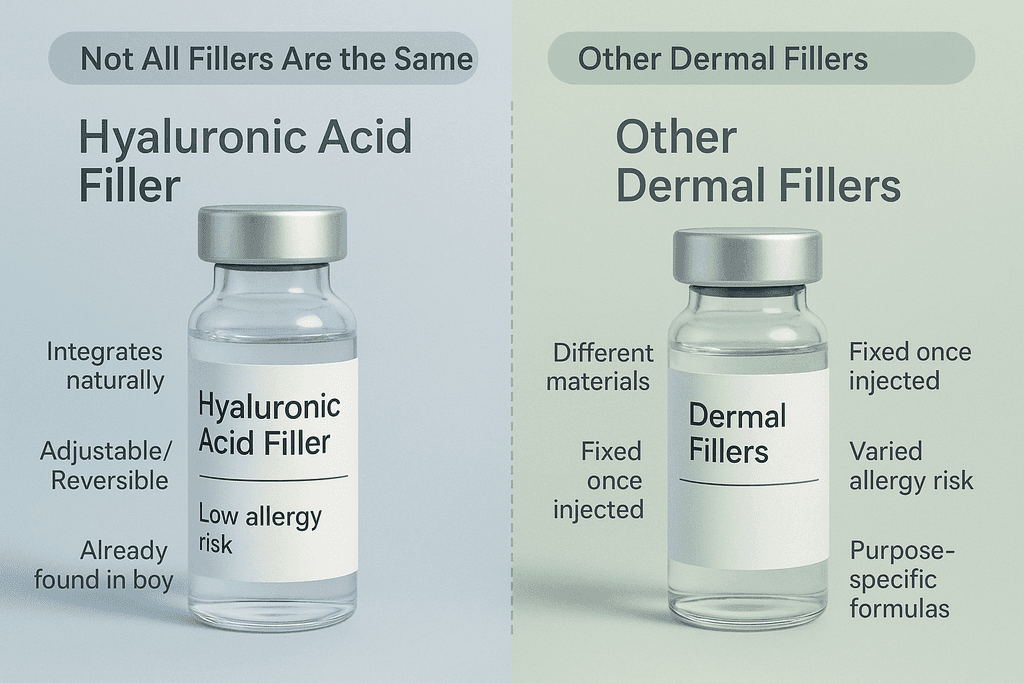
Not all dermal fillers are alike. Understanding their differences matters more than you might think. Hyaluronic acid fillers are popular for volume restoration because they naturally blend in and can be adjusted if needed. This substance is already part of your body, rarely causing allergic reactions. Various formulations serve distinct purposes, from subtle smoothing to dramatic lift.
Types of Dermal Fillers for Volume Restoration
The consistency of a filler influences its suitability. Thicker formats offer strong support in cheeks and jawline, while softer versions suit the under-eye or lips.
| Filler Type | Best For | Duration |
|---|---|---|
| High-density HA fillers | Cheeks, jawline, chin | 12-18 months |
| Medium-density HA fillers | Nasolabial folds, temples | 9-12 months |
| Low-density HA fillers | Under eyes, fine lines | 6-9 months |
Results generally last from six months to two years, based on the product, area treated, and individual metabolism. Your body breaks down hyaluronic acid fillers slowly over time, allowing results to fade naturally. This process also means you can adjust at follow-up visits to maintain your look.
The safety of modern dermal fillers has improved greatly. Studies highlight that with experienced hands, complications remain rare and results stay natural.
What to Expect During Volume Restoration Treatment
Stepping into a filler appointment might feel daunting without knowing what’s ahead. The procedure starts with a detailed consultation where your provider examines your face, discusses your concerns, and identifies areas for volume restoration. This assessment is as crucial as the injection because it determines whether you’ll look refreshed or overdone. Catherine invests time on this initial visit to understand not just what you want but what you want to preserve.
On a treatment day, injections take 15 to 45 minutes, depending on the areas involved. Modern fillers often include lidocaine for comfort, and numbing cream can be applied if you are sensitive.
Treatment steps:
- Facial cleansing and optional numbing cream
- Marking injection points strategically
- Placing filler with fine needles or cannulas
- Massaging gently for proper distribution
- Assessment and realizing minor adjustments
Immediate results appear as the filler is placed, but the final look takes shape over two weeks as slight swelling eases, and the product settles. Most experience minimal downtime, with temporary redness, swelling, or bruising that fades within a few days.
Recovering requires light steps like avoiding heavy exercise for 24 hours and keeping your head elevated the first night. You can typically return to work right after, but some prefer scheduling it before the weekend to allow marks to heal.
Catherine’s method at Beauty & Fly focuses on conservative treatment and natural results. Instead of overhauling in one go, she often suggests gradual enhancements that visibly refresh without dramatic changes. Each decision is a collaboration based on your desired mirror image.
Why Natural Results Matter in Volume Restoration
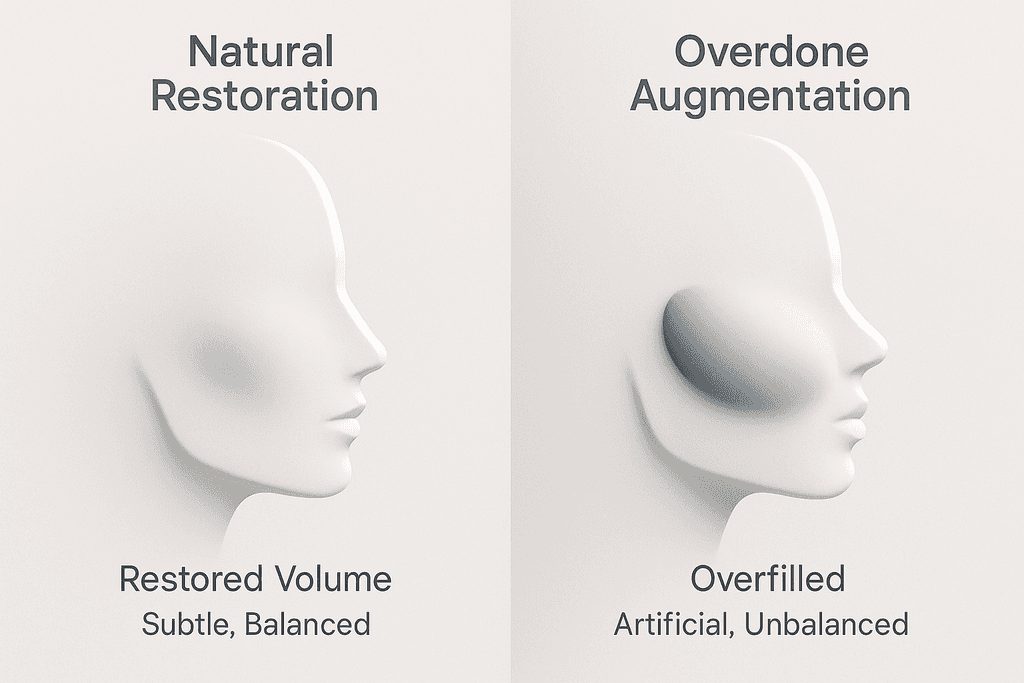
The biggest error with dermal fillers isn’t the wrong product—it’s using too much. When you notice someone had work done, it’s usually because they shifted from restoring to augmenting. True volume restoration restores what time took, not adding features that never existed. The difference between looking fresh and artificial often hinges on mere milliliters and skilled injection.
Restoration Versus Overfilling
This understanding shifts how you address facial volume loss. Research on face treatments with hyaluronan dermal fillers reveals the best results when treating the face holistically rather than isolated sections.
| Natural Restoration | Aggressive Overfilling |
|---|---|
| Gradually brings back lost volume | Quickly adds excessive volume |
| Maintains original face proportions | Creates unnatural fullness |
| Looks like you, just refreshed | Looks clearly “done” |
| Respects bone and anatomical structure | Ignores natural architecture |
The Role of Expert Technique
Placement is more crucial than the filler amount. An experienced provider like Catherine Curtin knows precisely where to add volume for lift without puffiness.
- Proper depth avoids lumps
- Strategic foundational placement offers natural lift
- Knowing anatomy prevents vascular issues
- Knowing when to stop is as vital as starting correctly
Facial Balance and Proportion
Your face has unique ratios that define it. Good filler work respects those proportions. Adding volume randomly leads to imbalance and seems artificial.
- Cheek volume balances jawline definition
- Lip enhancement fits facial thirds
- Temple hollowing affects midface look
Why Experience Creates Better Outcomes
Years of expertise with dermal fillers make a big difference. At Beauty & Fly, Catherine’s 18 years in aesthetic medicine means she’s treated varied faces and understands unique aging patterns. She customizes your plan according to your anatomy and preferences, ensuring enhanced yet natural results.
Your Path to Restored Facial Volume
Dermal fillers allow the subtle return of facial fullness lost over time. They align smoothly with your body’s structure, easing hollows and smoothing lines to restore your familiar contours. Importantly, you see results without surgery or extensive recovery time.
The difference between good and outstanding outcomes often lies in the expertise of the injector. Professional knowledge of facial structure, behavior of fillers, and tailored treatment sets you apart. At Beauty & Fly, Catherine Curtin’s extensive 18 years in aesthetic medicine secures natural volume restoration in every session.
Reasons to consider dermal fillers:
- Minimal downtime fits regular schedules
- Customizable results tackle specific volume concerns
- Natural look crafted by expert hands
- Gradual improvement ensures no obvious signs of work done
If you notice hollows, thinning, or flattening, the right volume restoration can help you look rejuvenated. Find an expert listener with the skill for safe results.
Still curious about how dermal fillers work for you? The answers below cover common queries from first-time treatment seekers.
Common Questions About Dermal Fillers for Volume
Thinking about dermal fillers to restore lost facial volume? You probably have questions. Most people do. Good news—dermal fillers have been safely used for years. These are questions we hear most often from those considering volume restoration at Beauty & Fly.
How long do volume-restoring fillers last?
Most dermal fillers aimed at volume restoration remain for 12 to 24 months. This depends on the type and placement. Areas like the mouth, with more movement, see faster breakdowns than the cheeks or temples. Your body gradually absorbs the filler, fading results naturally over time instead of disappearing all at once.
Is the treatment painful?
Most describe the sensation as a light pressure or small pinch rather than pain. Many filler products include lidocaine, a numbing substance. We also apply a numbing cream before starting to ensure you’re comfortable, making this experience easier than expected.
How much filler is needed for volume restoration?
The amount varies based on how much volume you’ve lost and your goals. Some achieve great results using one syringe, while others might need two or three over different facial areas. Catherine sticks to a cautious approach, starting with what’s necessary and building gradually upon request for more.
Can fillers look natural or will people notice?
With an experienced provider, dermal fillers should appear completely natural. People might think you’ve become more rested, but they shouldn’t spot aesthetic work. The goal is using the right amount correctly, which is where a seasoned professional, like Catherine with 18 years’ experience, makes a final results difference.
What is the difference between fillers and other treatments?
Dermal fillers bring back volume to areas that have thinned, while treatments such as BOTOX® work by relaxing muscles causing wrinkles. Other options, like microneedling or lasers, improve skin tone and texture but don’t address lost volume. Combining treatments often offers the best results, an idea we’ll discuss during your consultation.
Are there any side effects or risks?
The typical side effects are mild and temporary, such as slight swelling, redness, or bruising where injected, fading within a few days. Serious complications when an experienced practitioner administers fillers are rare. Catherine’s comprehensive training and meticulous injection technique reduce risks and enhance safety and results.