
Your jawline and chin area can lose up to 30% of their bone density by age 50, which is why the lower face often shows aging signs before your forehead or cheeks do. Most people don’t realize that simply adding volume isn’t enough to restore a youthful lower face shape. Advanced filler techniques work differently by rebuilding the underlying structure, much like how Catherine Curtin approaches facial rejuvenation at Beauty & Fly—focusing on bone architecture rather than just filling wrinkles.
Table of Contents
How Lower Face Fillers Have Changed
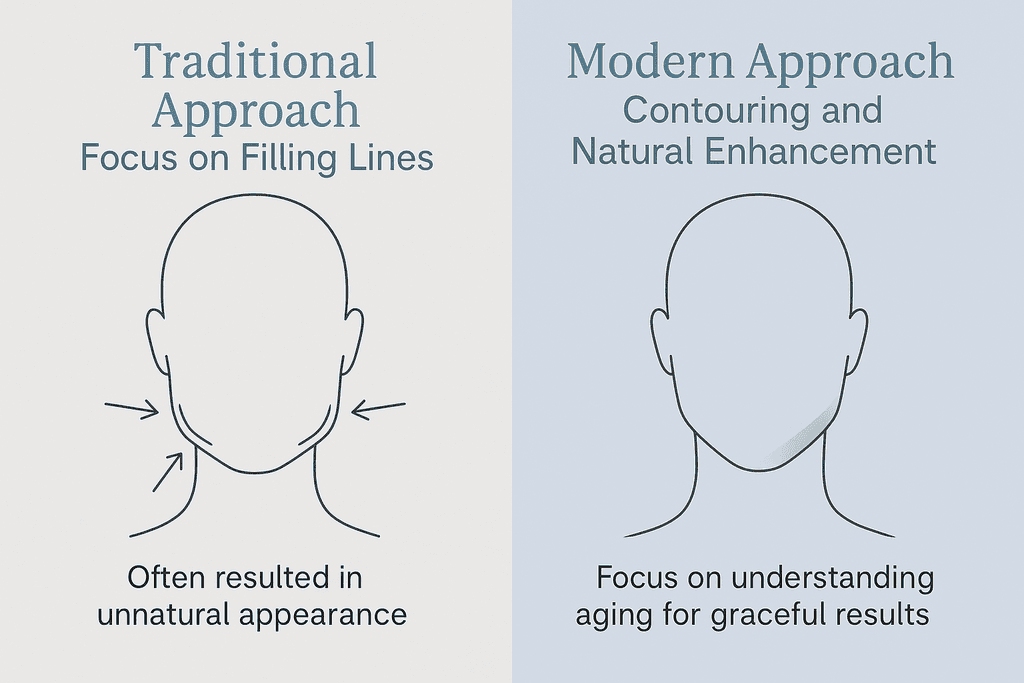
Twenty years ago, doctors treated wrinkles by simply filling them in with whatever filler they had on hand. The goal was straightforward: see a line, fill the line. But this approach often left people looking puffy or unnatural, especially around the jawline and chin. The problem wasn’t the fillers themselves—it was that practitioners didn’t understand how aging actually changes the face from the inside out.
What Early Filler Treatments Missed
The first generation of filler treatments focused only on what you could see on the surface. Doctors would inject product directly into wrinkles or folds without thinking about what was happening underneath. This created some pretty obvious problems that people still worry about today.
- Fillers were placed too shallow, creating bumps you could see and feel
- No attention was paid to bone loss that happens as we age
- Everyone got the same treatment regardless of their face shape
- Results often looked overfilled rather than refreshed
How Modern Techniques Work Differently
Today’s advanced filler techniques start with understanding facial anatomy at a deeper level. We now know that aging isn’t just about wrinkles—your bones actually shrink, fat pads shift downward, and the support structure of your face changes. At Beauty & Fly, Catherine Curtin uses this knowledge to create treatment plans that rebuild support from the foundation up, not just fill in lines.
Modern approaches use different types of fillers for different jobs. Some products work better for deep structural support along the jawline, while others are perfect for smoothing fine lines around the mouth.
Traditional vs Advanced Approaches
| Aspect | Traditional Method | Advanced Technique |
|---|---|---|
| Focus Area | Surface wrinkles only | Bone and structural support |
| Placement Depth | Shallow injection | Multiple layers |
| Filler Selection | One product for everything | Specific products per area |
| Treatment Goal | Fill visible lines | Restore facial architecture |
| Results | Often overfilled look | Natural, lifted appearance |
Understanding facial anatomy has become the biggest game-changer in lower face treatments. When you know where bone loss happens and how fat pads move, you can place fillers strategically to recreate youthful contours. This is why choosing an experienced provider matters so much—someone who’s spent years studying facial structure will get results that look like you, just refreshed. You can see examples of this approach in action through face rejuvenation case studies that show the difference proper technique makes.
Jawline Definition and Contouring Methods
The lower face loses definition over time as bone resorbs and soft tissue descends, but strategic filler placement can restore structure without surgery. Creating a defined jawline isn’t about adding volume everywhere. It’s about understanding where support matters most and how different products work with your natural anatomy. The goal is always to enhance what’s already there, not to create something that looks artificial or overdone.

Jawline Definition and Contouring Methods
Think of jawline contouring as building a foundation. Strategic injection points along the mandible create the framework that supports everything above it. Most practitioners focus on the angle of the jaw and work forward, placing product deep along the bone to mimic natural structure.
- Layering techniques build gradual definition rather than creating sudden changes
- Product viscosity determines how well fillers provide structural support
- Balancing both sides ensures facial symmetry that looks natural
- Pre-jowl sulcus treatment prevents that sagging appearance near the chin
The pre-jowl sulcus is that hollow area right before your chin starts, and it’s often overlooked. When this area gets addressed along with the jawline, the entire lower face appears lifted. At Beauty & Fly, we use advanced filler techniques that consider how each injection point affects the surrounding areas, creating harmony rather than isolated improvements.
Product selection matters more than most people realize. Research on hyaluronic acid fillers for lower jaw reshaping shows that higher viscosity products provide better structural support for the jawline. The wrong product in the right place won’t give you the results you’re looking for.
Chin Projection and Balance Techniques
Your chin affects how your entire face looks in profile and straight on. A weak chin makes the nose appear larger, while an overly projected chin can throw off facial proportions completely. Chin projection isn’t just about moving one point forward. It’s about understanding how that change ripples through your facial balance. Most people don’t realize their chin could use adjustment until they see how different their whole face looks with proper projection.

Chin Projection and Balance Techniques
There are two main approaches to chin enhancement. Vertical augmentation adds length to a short chin, while horizontal augmentation brings a recessed chin forward. Sometimes you need both, and that’s where experience really matters.
| Technique | Best For | Duration |
|---|---|---|
| Vertical augmentation | Short chin | 12-18 months |
| Horizontal projection | Recessed chin | 12-18 months |
| Combined approach | Multiple concerns | 12-18 months |
Chin asymmetry is more common than you’d think. One side might be slightly flatter or the point might sit off-center. Correcting these imbalances requires precise assessment before any filler touches your face. The mental crease, that horizontal line some people have across their chin, needs special attention too. Adding volume without managing this crease can make results look unnatural.
The magic happens when chin and jawline work get combined. These areas don’t exist in isolation, and treating them together creates facial harmony that single-area treatment can’t achieve. Anatomy-based injection techniques emphasize this connected approach for optimal lower face results.
Marionette Lines and Lower Face Lifting
Marionette lines run from the corners of your mouth down toward your chin, and they’re one of the most aging features of the lower face. But here’s what most people get wrong about treating them. Filling the line itself rarely works well and can actually make things worse. The line exists because of volume loss and tissue descent happening above and around it, not because the line itself needs to be filled. This is where advanced techniques separate mediocre results from truly natural-looking improvements.
Deep plane support is the real solution. By placing filler in the deeper layers of tissue, we create a lifting effect that addresses the cause rather than just the symptom. This prevents the filler from migrating downward over time, which is what happens when product gets placed too superficially.
- Treating the cheek and mid-face often improves marionette lines more than direct treatment
- Deep plane support prevents downward migration of filler
- Combination approaches work better than single-area treatment
- Biostimulators complement hyaluronic acid fillers for longer-lasting results
Biostimulators like Sculptra work differently than traditional fillers. Instead of just adding volume, they stimulate your own collagen production over time. When combined with hyaluronic acid fillers, you get immediate improvement plus gradual enhancement that looks increasingly natural. We use this combination approach at Beauty & Fly for clients who want results that last and improve over time.
Maintenance matters more than the initial treatment in some ways. Preserving natural results means treating before things slip back to where they started. Most people do best with touch-ups every 12 to 18 months, but this varies based on your metabolism, the products used, and how your body responds. The goal is always to maintain that lifted, defined look without anyone being able to tell you’ve had work done.
What Makes Advanced Techniques More Effective
The difference between a natural-looking lower face enhancement and an overdone result often comes down to one thing: the practitioner’s depth of anatomical knowledge. Advanced filler techniques require understanding not just where to inject, but how the face moves, how different tissue layers interact, and how aging affects each person differently. At Beauty & Fly, Catherine Curtin’s 18 years of experience in aesthetic medicine means she approaches each lower face treatment with this comprehensive understanding, rather than following a one-size-fits-all template.
Why Anatomical Expertise Matters
Basic practitioners might know where to place filler, but advanced practitioners understand the why behind every injection. The lower face contains complex structures including muscles, fat pads, and blood vessels that all need consideration.
- Knowing facial anatomy prevents complications like vascular occlusion
- Understanding muscle movement patterns ensures fillers don’t migrate
- Recognizing individual bone structure variations allows for proper support
- Identifying safe injection planes protects nerves and vessels
Customization Creates Better Outcomes
Your face isn’t identical to anyone else’s, so why would your treatment plan be? Advanced filler techniques for the lower face start with analyzing your unique facial proportions, skin thickness, and aging patterns.
| Factor | Impact on Treatment |
|---|---|
| Skin Thickness | Determines filler depth |
| Bone Structure | Guides volume placement |
| Muscle Activity | Affects product longevity |
| Tissue Elasticity | Influences product selection |
Product Selection and Technique Depth
Not all dermal fillers work the same way in different areas of the lower face. Choosing the right product viscosity and injection depth separates mediocre results from exceptional ones. Thicker fillers work better for deep structural support in the jawline, while softer formulas suit delicate areas like the lips.
- Hyaluronic acid fillers vary in cross-linking and particle size
- Injection depth ranges from subcutaneous to supraperiosteal
- Layering techniques create more natural transitions
The four key areas of lower face contouring each require different approaches based on these factors. Experience with managing complications also plays a huge role in safety. Knowing how to reverse filler immediately if needed, or how to handle swelling and bruising, makes all the difference in patient outcomes and peace of mind.
Getting Natural Lower Face Results
The lower face is one of the trickiest areas to treat with fillers, which is why advanced filler techniques make such a difference in the final outcome. You can’t just inject product and hope for the best. It takes someone who understands how the jawline, chin, and mouth area all work together to create balance. The wrong approach can make you look overdone or unnatural, but the right technique brings out your best features without anyone knowing you had work done.
Here’s what really matters when it comes to lower face shaping:
- Training and experience with advanced injection methods
- Understanding facial architecture and how different areas connect
- Choosing the right practitioner over just picking a product brand
- Personalized treatment plans based on your unique face shape
At Beauty & Fly, we focus on creating results that look like you, just refreshed. Catherine Curtin brings over 18 years of experience in aesthetic medicine and actually trains other practitioners in these advanced filler techniques. That level of expertise means you’re getting someone who knows exactly how to work with your facial structure.
The truth is, two people can use the same filler product and get completely different results. The skill of the injector matters more than anything else. You want someone who will listen to your concerns, assess your face properly, and create a plan that makes sense for your goals.
Common Questions About Lower Face Fillers
If you’re thinking about getting lower face fillers, you probably have some questions about how the whole process works. Most people want to know what to expect before they commit to any treatment. Here are the answers to the most common questions we hear from patients considering advanced filler techniques for their lower face.
How long do lower face fillers last?
Lower face fillers typically last between 12 to 18 months, though some advanced products can last up to two years. The longevity depends on the type of filler used, where it’s placed, and how your body metabolizes it. Areas with more movement, like around the mouth, may break down fillers faster than areas like the jawline.
Is there downtime after lower face filler treatment?
Most people can return to normal activities right away, though you might have some mild swelling or bruising for a few days. We usually recommend avoiding intense exercise for 24 hours and staying upright for a few hours after treatment. Some patients schedule their appointments before a weekend just to be safe, but it’s not usually necessary.
Can fillers really lift the lower face?
Yes, when placed strategically using advanced filler techniques, fillers can create a lifting effect without surgery. The key is placing product in specific areas that provide structural support, like the prejowl area and along the jawline. At Beauty & Fly, Catherine uses precise injection techniques that work with your facial anatomy to restore volume and create natural-looking lift.
What is the difference between basic and advanced techniques?
Basic filler techniques focus on simply adding volume to one area at a time. Advanced techniques take a comprehensive approach, considering how different areas of the face work together and using specialized injection methods like deep structural placement, layering, and contouring. This approach creates more natural, longer-lasting results that enhance your overall facial balance.
How do you choose between different filler products?
Different fillers have different properties that make them better suited for specific areas and goals. Some are thicker and better for structural support, while others are softer and ideal for fine lines. Your provider should assess your unique anatomy and goals to select the right product for each area being treated.
When will I see final results?
You’ll see immediate improvement after your treatment, but final results appear after any swelling subsides, usually within one to two weeks. Some fillers also stimulate collagen production over time, so you may notice continued improvement for several weeks after your appointment.