
Your face loses about 1% of its volume every year after you turn 30, which is why cheeks flatten and hollows appear where your skin used to look full. The best dermal fillers work by gently restoring that lost volume in ways that look completely natural, taking years off your appearance without changing who you are. At Beauty & Fly, Catherine Curtin uses precise placement techniques to deliver natural-looking results that enhance your features rather than transform them.
Table of Contents
- Understanding Facial Volume Loss
- Strategic Placement Creates Natural Contours
- Customized Filler Selection for Your Unique Needs
- Gradual Enhancement Over Time
- Balancing Facial Proportions and Symmetry
- Advanced Injection Techniques for Smooth Results
- Your Path to Natural Looking Results
- Common Questions About Dermal Fillers
Understanding Facial Volume Loss
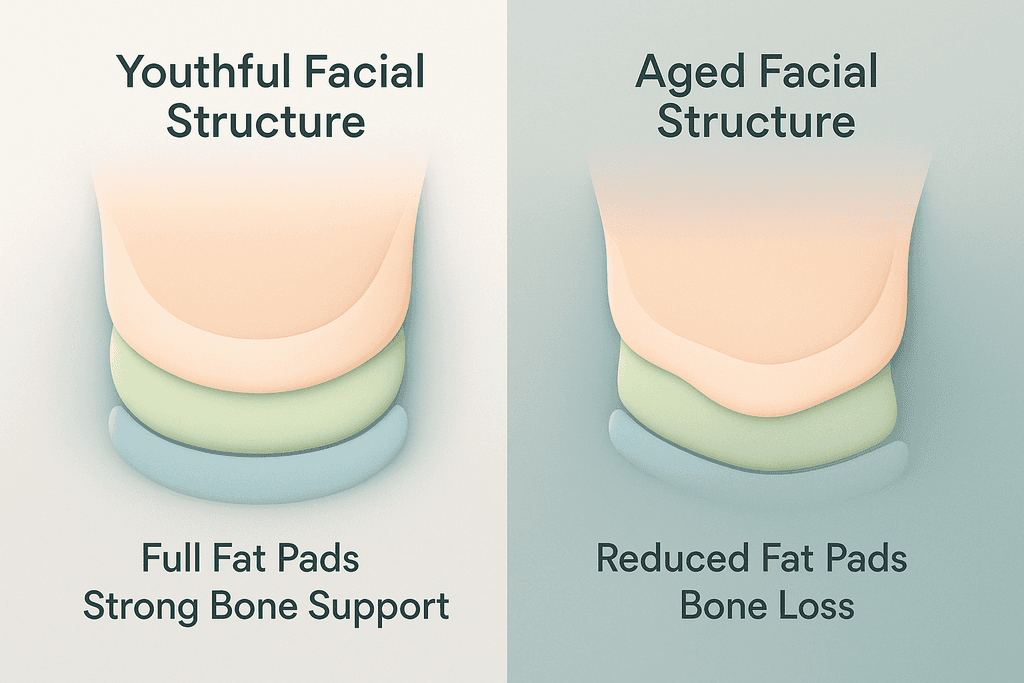
Your face doesn’t just wrinkle as you age—it actually deflates. Starting around your mid-twenties, the fat pads that give your face its youthful fullness begin to shrink and slide downward, like melting wax on a candle. At the same time, your facial bones start to resorb, creating hollows where there used to be support. This combination of changes is why someone can look “tired” or “sad” even when they feel great, and it’s exactly what dermal fillers are designed to address.
What Happens Beneath the Surface
The aging process affects multiple layers of your face at once. Your skin loses collagen and elastin, which are the proteins that keep everything tight and bouncy. Without enough of these building blocks, your skin starts to sag and can’t hold its shape as well.
But the real story happens deeper down. Here’s what’s going on underneath:
- Fat compartments in your cheeks, temples, and under your eyes get smaller and drop lower
- Bone loss around your eye sockets, cheekbones, and jawline creates a sunken appearance
- The spaces between facial structures get wider, creating shadows and changing your proportions
- Your face literally loses its scaffolding, which makes everything above it collapse inward
Different Areas Age at Different Speeds
Not every part of your face ages on the same schedule. Some areas start showing volume loss in your thirties, while others hold up until your fifties or beyond. This is why a personalized approach matters so much when considering treatments like the dermal fillers offered at Beauty & Fly.
| Facial Area | Typical Age of Onset | What You Notice |
|---|---|---|
| Under Eyes | Late 20s – Early 30s | Hollowing, dark circles, tired appearance |
| Temples | Mid 30s – Early 40s | Sunken areas, more visible bone structure |
| Cheeks | Late 30s – Mid 40s | Flattening, loss of the “apple” shape |
| Nasolabial Folds | Early 40s – Late 40s | Deeper lines from nose to mouth |
| Jawline | Mid 40s – Early 50s | Jowling, less defined contour |
Why Volume Matters More Than You Think
When your face loses volume, it changes more than just how full your cheeks look. The shadows get deeper, your features shift, and your whole facial balance changes. Think of it like a balloon that’s losing air—the surface gets wrinkly, but the real problem is what’s missing inside.
This is where modern treatments come in. Instead of just treating surface wrinkles, restoring volume addresses the root cause of many aging concerns. The goal isn’t to look different or overdone—it’s to look like yourself, just refreshed.
Strategic Placement Creates Natural Contours
The difference between looking refreshed and looking overdone often comes down to millimeters. When dermal fillers are placed with precision, they work with your natural facial structure instead of against it. Think of it like a sculptor who knows exactly where to add clay to bring out the best features of their work. The same principle applies to your face, where strategic placement follows natural facial anatomy and proportions to create results that look like you, just more rested.

Strategic Placement Creates Natural Contours
Most people don’t realize that less is often more when it comes to facial volume. Small amounts in multiple strategic points create better results than large amounts in one area, which is why experienced injectors take a measured approach. The depth of injection matters just as much as the location.
- Superficial placement works best for fine lines and surface-level concerns
- Mid-depth injection supports facial contours and smooths moderate wrinkles
- Deep placement provides structural support and lifts sagging areas
- Each layer requires different techniques and filler types
With over 18 years of experience, Catherine Curtin at Beauty & Fly understands that the goal is to support facial structure, not create artificial fullness. This expertise means knowing when to stop, which is just as important as knowing where to start.
Customized Filler Selection for Your Unique Needs
Not all dermal fillers are created equal, and that’s actually a good thing. Different formulations have unique properties that make them better suited for specific areas of your face. Some are thick and robust, perfect for adding structure to cheekbones or jawlines. Others are soft and flexible, ideal for delicate areas like under the eyes or around the lips. Matching filler type to treatment area is essential for natural movement, because your face needs to express emotions without looking stiff or frozen.

Customized Filler Selection for Your Unique Needs
The beauty of hyaluronic acid fillers is their flexibility. These fillers can be adjusted or reversed if needed, which provides a safety net that other types don’t offer. This reversibility makes them a smart choice for anyone trying fillers for the first time.
| Filler Type | Best For | Consistency |
|---|---|---|
| Thin HA Fillers | Fine lines, tear troughs, lip lines | Soft, spreadable |
| Medium HA Fillers | Nasolabial folds, lip volume, marionette lines | Moderate firmness |
| Thick HA Fillers | Cheeks, chin, jawline definition | Firm, structural |
Beauty & Fly uses premium filler brands and Catherine customizes filler selection based on individual facial anatomy. This personalized approach means you’re not getting a one-size-fits-all treatment.
Gradual Enhancement Over Time
There’s wisdom in taking things slow, especially when it comes to your face. The best results from dermal fillers often come from building volume gradually through multiple sessions rather than trying to achieve everything in one appointment. Starting conservatively allows for adjustments and refinement as you and your provider see how your face responds to treatment. This measured approach also gives you time to get used to your new look, which matters more than most people think.
The gradual method prevents the overdone look that makes it obvious someone has had work done. Your face needs time to integrate the filler, and this allows time to assess how filler settles and integrates with your natural tissues.
- Initial treatment establishes a foundation
- Follow-up sessions add refinement and balance
- Each appointment builds on previous results
- Natural-looking results develop over weeks, not hours
This collaborative process builds trust between provider and patient, which is central to Beauty & Fly’s philosophy of natural enhancement. You’re never rushed into decisions or pressured to do more than feels right.
Balancing Facial Proportions and Symmetry
Your face is a connected system where everything relates to everything else. When an experienced injector looks at you, they’re not just seeing the area you want treated. They’re assessing how that area fits into your overall facial harmony. Facial beauty relies on proportion and balance between features, which is why treating just one isolated spot rarely gives the best results. Sometimes adding a tiny bit of volume to your chin makes your lips look better, or lifting your cheeks slightly reduces the appearance of lines around your mouth.
Treating one area often requires subtle adjustments in related areas to maintain natural proportions. This whole-face perspective is what separates good results from great ones.
Facial Assessment Checklist
- Upper face volume and temple hollowing
- Cheek projection and midface support
- Under-eye hollows and tear troughs
- Nasolabial fold depth
- Lip volume and proportion
- Marionette lines and jowl formation
- Chin projection and jawline definition
Catherine’s artistic eye ensures harmonious overall results that prevent the problem of one feature standing out awkwardly. The goal is for people to notice you look great, not to notice your filler.
Advanced Injection Techniques for Smooth Results
The technical skill behind the syringe makes all the difference in how natural your results look and feel. Proper injection technique prevents lumps and irregularities that can make filler obvious to the touch or visible in certain lighting. It’s not just about what goes into your skin, but how it gets there. Slow, controlled injection allows precise product placement and gives the injector real-time feedback about how the filler is distributing.
After the filler is placed, the work isn’t done. Massage and molding techniques ensure even distribution and help integrate the product with your natural tissues.
- Cannulas create smoother results in certain areas compared to needles
- Blunt-tip cannulas reduce bruising and swelling
- Needle techniques offer more precision in targeted spots
- Experienced injectors know when to use each tool
Catherine’s extensive training and her role teaching other aesthetic professionals means she’s mastered these advanced techniques. Following proper post-treatment care instructions helps maintain smooth results as your filler settles over the first few days.
Your Path to Natural Looking Results
Getting subtle volume back in your face isn’t something you want to leave to chance. It takes real skill to know exactly where to place fillers, how much to use, and which products work best for your specific concerns. The difference between looking refreshed and looking overdone often comes down to the expertise of the person holding the syringe.
The goal with dermal fillers should always be natural-looking results that make people wonder if you got more sleep or started a new skincare routine. Nobody should be able to point at your face and say “that person got work done.” At Beauty & Fly, Catherine Curtin’s 18 years of experience means she knows how to restore volume in a way that respects your natural features instead of fighting against them.
Here’s what makes the biggest difference in achieving subtle results:
- Working with someone who sees hundreds of faces and understands facial anatomy deeply
- Taking time during consultation to map out a personalized treatment plan
- Using the right type and amount of filler for each specific area
- Building volume gradually rather than trying to fix everything at once
The modern approach to facial rejuvenation focuses on enhancing what you already have rather than creating something entirely new. Your consultation is where you’ll learn exactly what’s possible for your unique face and goals.
If you’ve been thinking about addressing volume loss but worry about looking artificial, you probably have questions about how the process actually works and what to expect.
Common Questions About Dermal Fillers
If you’re thinking about dermal fillers, you probably have some questions about how they work and what to expect. Most people want to know if the results will look natural, how long they’ll last, and whether there’s any way to undo them if needed. These are all smart things to consider before your first appointment. Here are the answers to the most common questions we hear from patients at Beauty & Fly.
How long do dermal filler results last?
Most dermal fillers last anywhere from six months to two years, depending on the type of filler used and where it’s placed on your face. Areas with more movement, like around your mouth, tend to break down filler faster than areas like your cheeks. Your body gradually absorbs the filler over time, so results fade naturally rather than disappearing all at once.
Will dermal fillers make my face look puffy or overdone?
Not when they’re done right. The key to natural-looking results is working with an experienced provider who understands facial anatomy and uses a conservative approach. At Beauty & Fly, Catherine Curtin focuses on subtle enhancements that restore your natural contours rather than creating an artificial appearance. Most people won’t even know you had anything done—they’ll just think you look well-rested.
How much filler do I need for natural-looking results?
This depends entirely on your individual goals and facial structure. Some people only need one syringe to address a specific concern, while others might need two or three syringes spread across different areas for balanced results. A good provider will create a customized treatment plan during your consultation and can always start conservatively, adding more later if needed.
What’s the difference between fillers and Botox?
Dermal fillers add volume to areas that have lost fullness, while Botox relaxes muscles that cause wrinkles from repeated facial expressions. Think of fillers as filling in hollow areas and smoothing static lines, while Botox prevents dynamic wrinkles from forming when you smile or frown. Many people use both treatments together for complete facial rejuvenation.
Is there downtime after dermal filler treatment?
Most people return to their normal activities right away. You might have some minor swelling, redness, or bruising at the injection sites, but these side effects typically resolve within a few days. Some patients schedule their appointments before a weekend just to be safe, but it’s not usually necessary.
Can dermal fillers be reversed if I don’t like the results?
Yes, most dermal fillers made with hyaluronic acid can be dissolved with an enzyme called hyaluronidase if needed. This gives you peace of mind knowing that results aren’t permanent if something doesn’t look right. That said, when you work with an experienced provider like Catherine, who has over 18 years in aesthetic medicine, the likelihood of needing reversal is extremely low.